
Review · THE USA
Boston: Underground Railroad History Tour of Beacon Hill
Boston’s Beacon Hill looks polished today, but this small-group walk reveals the tense, determined community that lived behind those handsome brick facades. You’ll follow Boston’s Black Heritage Trail from Boston Common to homes tied to the Underground Railroad, then finish at the memorial to the 54th Massachusetts Regiment.
I like the strong local focus and the way the tour connects daily struggles, political arguments, and national events before the Civil War. I also like the manageable two-mile route, with time inside the African Meeting House and plenty of chances to ask questions. The drawback is simple: steep hills, uneven sidewalks, and an all-outdoor format make this a poor choice for anyone with limited mobility or low walking fitness.
Key points
- Start at the Soldiers and Sailors Monument: The tour begins in central Boston Common, close to the Boston Common Visitors Center.
- Walk through Black Beacon Hill: See homes linked to John J. Smith, John Coburn, Lewis and Harriet Hayden, and George Middleton.
- Visit the African Meeting House: Set aside about 20 minutes for the tour and a break at this essential site.
- Follow the road toward the Civil War: The route explains education, segregation, abolition, political movements, and the 54th Massachusetts.
- Expect lively guiding: Will, Dana, Joe, and William have led tours praised for clear explanations, visual aids, dramatic storytelling, and thoughtful answers.
- Plan for outdoor walking: The route covers about 2 miles and operates rain or shine, with no luggage or large bags allowed.
Why Beacon Hill tells a different Boston story

Many Boston walks focus on the Revolution, Paul Revere, and colonial landmarks. This one shifts the clock forward to the three decades before the Civil War, when slavery divided the country and Black Bostonians pushed hard for equal rights close to the center of political power.
That setting matters. Beacon Hill was home to a free African-American community just blocks from some of Boston’s wealthiest residents. The narrow streets and elegant squares are not just pretty scenery here. They frame stories about school access, racial integration, abolition, political organizing, and the risks faced by people helping freedom seekers.
The guide’s job is to connect those local places to the national crisis. A good stop is not just a date and a name. It shows you how a school, church, private home, or meeting hall became part of a larger fight over citizenship and human freedom.
The tour has a 4.9 rating from 38 bookings, and the strongest praise centers on the guides’ command of the subject and their ability to answer questions. Several guides are named in the feedback, including Will, Dana, Joe, and William. Your assigned guide may differ, but you can expect an English-language tour led by a local historian.
History tours around the USA:
- Beneath The Streets Underground History Tour
★ 4.5 · 8,006 reviews - Emerald Cave Express Kayak Tour with Scenic & Historic Stops
★ 5.0 · 1,522 reviews - Delicious Donuts of Boston: A Sweet History Walking Tour
★ 5.0 · 1,038 reviews
Starting in Boston Common at the Soldiers and Sailors Monument
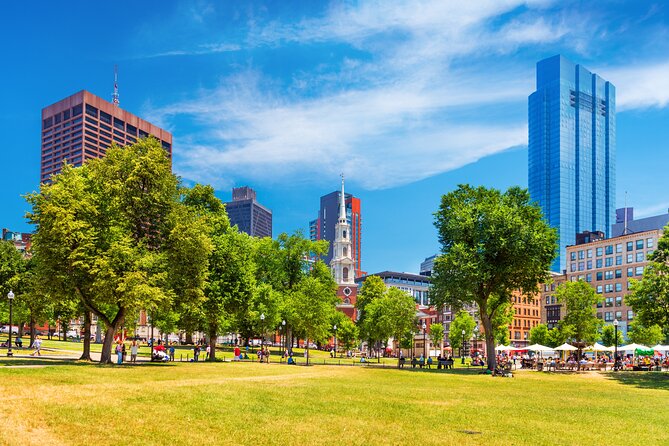
Meet at the Soldiers and Sailors Monument in the center of Boston Common. Look for the white granite column topped by a female figure holding a flag, with four bronze figures around its base. It is only steps from the Boston Common Visitors Center at 139 Tremont Street.
This is a useful meeting point if you are already sightseeing downtown. Give yourself time to find the monument, since Boston Common has several statues and broad paths. Comfortable shoes are essential from the first minute.
The opening section takes place in Boston Common, where the Black Heritage Trail begins. You’ll spend about 10 minutes getting the historical frame before moving into Beacon Hill. The tour later returns to the Common, so the walk forms a loop rather than ending in a distant part of the city.
Mount Vernon Street, Acorn Street, and Louisburg Square
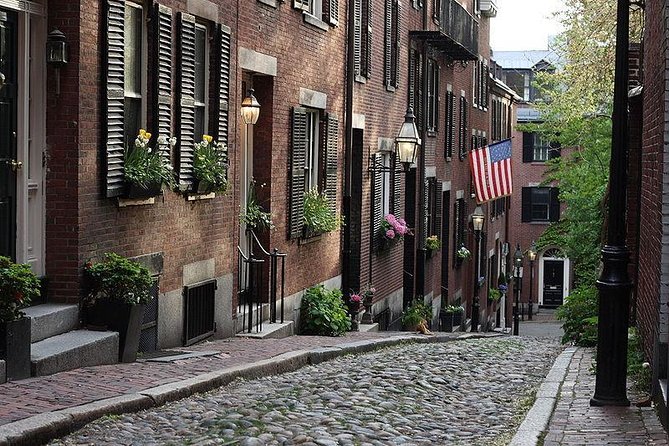
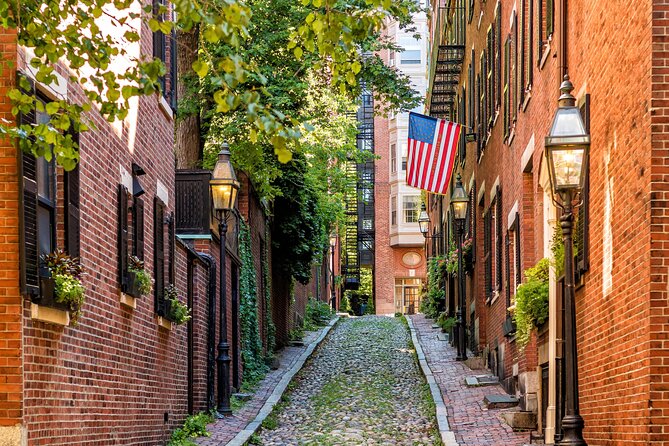
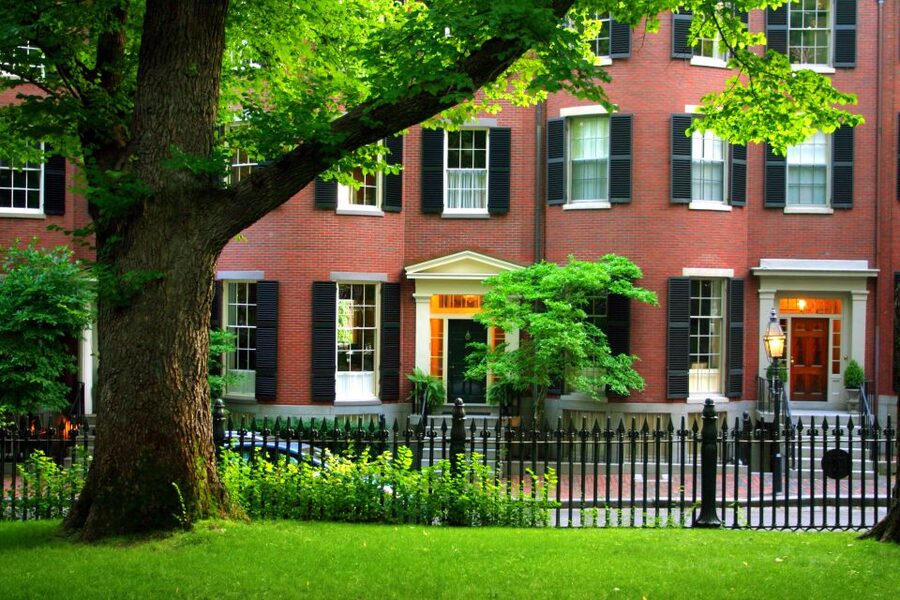
The route enters Beacon Hill through Mount Vernon Street, then reaches Acorn Street and Louisburg Square. These are some of the area’s most photographed corners, with brick buildings, small lanes, and an unmistakable old-Boston look.
The guide uses these attractive streets for a more serious purpose. You’ll hear how the neighborhood’s built environment held sharply different lives close together. The wealth and power associated with Beacon Hill existed alongside a free Black community organizing for education, employment, political rights, and personal safety.
The stop at Mount Vernon Street lasts about five minutes, followed by roughly five minutes on Acorn Street and 10 minutes at Louisburg Square. That may sound brief, but the short stops help keep the walk moving. You will not spend the entire afternoon standing in one spot while the rest of Beacon Hill waits.
Acorn Street can be narrow, and sidewalks throughout the neighborhood are not consistently easy to navigate. Stay close to the group and listen for directions when the guide moves you between locations.
Phillips School and the fight over education
The Phillips School receives about 15 minutes, giving the guide room to explain Boston’s struggle over racial integration in education. This is one of the tour’s most important themes because it shows that freedom after slavery was not the end of the fight.
Black families and community leaders challenged unequal schooling and segregation in Boston. The issue was not abstract. It affected children, families, opportunity, and the meaning of equal citizenship in a city that often presented itself as a center of liberty.
I find this kind of stop especially useful if you know Boston mainly through its Revolutionary past. It corrects the easy version of the city’s story. Boston could oppose slavery while still arguing over where Black children should attend school and how Black residents should be treated.
Same rock, a different way in:
- Best Niagara Falls US Tour W/Boat Ride, Cave & More Wonders!
★ 5.0 · 8,372 reviews - Half-Day Emerald Cave Kayak Tour with Optional Hotel Pickup
★ 5.0 · 4,978 reviews - Niagara Falls USA: Maid of the Mist & Cave Adventure
★ 5.0 · 3,924 reviews - New York Catacombs by Candlelight
★ 4.5 · 2,863 reviews
Homes of John J. Smith and John Coburn
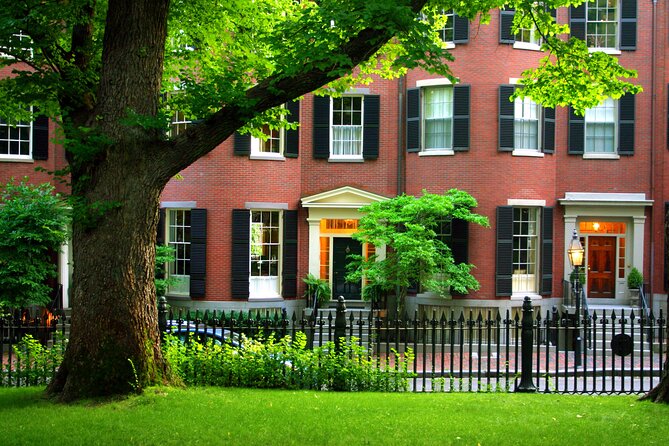
The walk then turns to residences connected with John J. Smith and John Coburn. These are not museum interiors with large displays. Their value comes from the people who lived there and the work that took place in and around these homes.
The guide explains how Black Bostonians built networks of support and resistance. You may hear about political activity, aid for freedom seekers, and the practical courage required to challenge slavery from a northern city. The house locations make those stories easier to picture. You are not studying distant names in a book. You are standing on the same streets where these decisions unfolded.
The tour does not present the Underground Railroad as a single secret railway with neat stations. Instead, the homes point toward a wider network of people, meetings, shelter, information, and risk. If you are hoping for a long treatment of railroad routes and escape logistics, the coverage may feel lighter than expected. The emphasis is broader: how Boston’s Black community and its allies opposed slavery and defended freedom.
Charles Street Meeting House and the Charles Street corridor
The Charles Street Meeting House gets about 15 minutes. This stop adds a religious and civic dimension to the walk, showing how churches and meeting spaces could serve as centers for public debate and reform.
From there, the tour continues along Charles Street before reaching more residences. The pace is described as steady rather than hurried, which matters on a route with hills and frequent stops. You have time to listen without sprinting to catch up, and you can ask questions as the group moves.
The meeting house also helps explain the tension between public ideals and social practice. Anti-slavery politics, racial integration, and religious life were linked in complicated ways. The guide’s best work here is to show those connections without reducing the story to a list of famous white reformers.
Lewis and Harriet Hayden House
The Lewis and Harriet Hayden House receives about 15 minutes and is one of the key Underground Railroad stops. The Haydens were part of Boston’s determined anti-slavery community, and the home helps put faces and personal stakes on the larger movement.
This is where the walk feels most direct. You learn about people who made choices that could bring danger to themselves and their families. The tour places the house within the wider argument over the Fugitive Slave Act and the rights of freedom seekers, giving you a clearer sense of why Boston’s anti-slavery activity was politically explosive.
The stop is also a reminder that the Underground Railroad depended on ordinary buildings and personal networks. There may be no dramatic tunnel to enter. The important point is the human network behind the phrase.
Along the way, you pass the Otis House Museum and Old West Church. These are passing views rather than interior visits, so do not plan on museum admission being part of your $35 ticket.
Charles Sumner House and Smith Court
The Charles Sumner House gets about 15 minutes. Sumner’s name is tied to the anti-slavery political movement, and the stop helps shift the story from neighborhood action to national debate.
You’ll hear how arguments over slavery grew more bitter in the years before the Civil War. Boston’s politicians, reformers, Black leaders, churches, schools, and private citizens were not operating in separate worlds. Their choices fed into a wider political crisis that eventually split the country.
The route then reaches the Smith Court residences. These smaller residential spaces are useful because they show community life rather than only grand public landmarks. Beacon Hill’s Black residents worked, organized, raised families, and supported one another in a neighborhood shaped by both opportunity and discrimination.
This section rewards attention to names. The tour is not simply about buildings that survived. It is about the people who made those addresses matter.
Abiel Smith School and the African Meeting House
The Abiel Smith School is one of the central sites on the Black Heritage Trail. It connects directly to the earlier discussion of segregated education and the push for equal schooling.
From there, you visit the African Meeting House for about 20 minutes. This is the longest scheduled stop, and for good reason. The building is a major landmark in Boston’s Black history and gives the tour an indoor anchor after a long stretch of outdoor walking.
Expect guided interpretation and a short break here. Museum admission is not included, so check the current arrangements when you book if entering the interior is important to you. The activity information specifically says that admission inside museums is separate.
The African Meeting House ties together several threads from the walk: worship, community organization, anti-slavery work, education, and public speech. It is also the point where the tour’s subjects feel most concentrated. If you have limited time in Boston, this stop alone gives you a strong reason to consider the walk.
George Middleton House and the return toward Boston Common
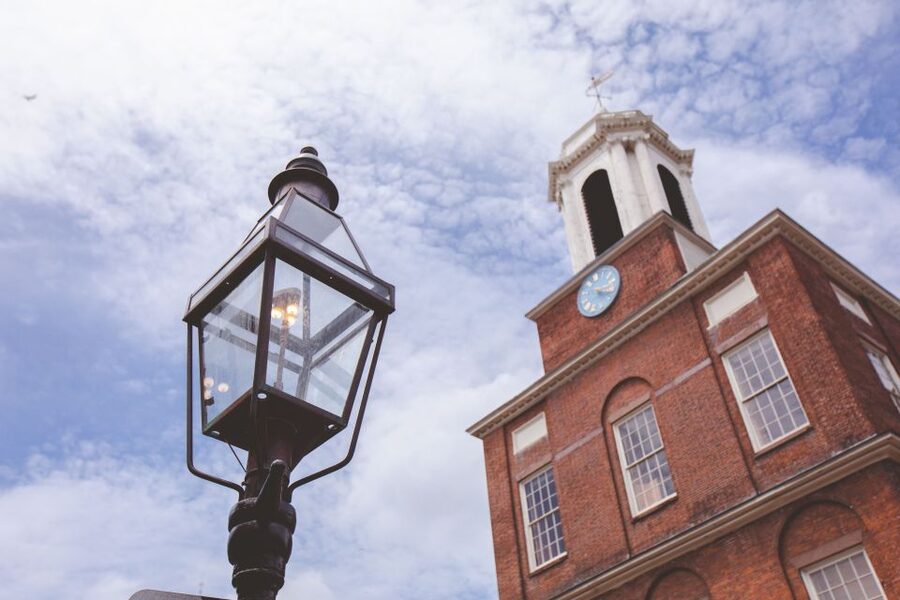
The George Middleton House receives about 15 minutes. Middleton is another reminder that Black Boston’s story reaches back into the city’s earlier years and includes military service, civic participation, and leadership.
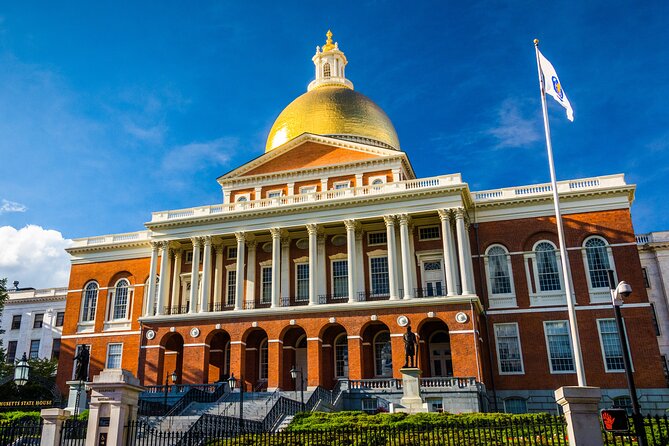
The route then passes Park Street Church on the way back toward the Common. You also see the Massachusetts State House, with about 15 minutes of passing views rather than an interior visit. These sights help connect neighborhood history to Boston’s larger civic center.
This return section is well placed. You have just visited community landmarks, and now the route points toward the institutions where laws and public decisions were made. The walk keeps asking the same question in different forms: who counted as a citizen, and who got to claim the city’s promises of liberty?
Ending at the 54th Massachusetts Regiment Memorial
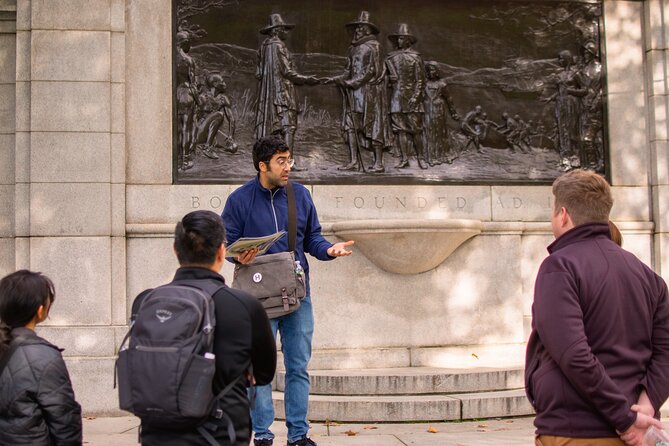
The tour finishes at the Robert Gould Shaw and the 54th Massachusetts Regiment Memorial on Boston Common, just up Beacon Street from the starting point. The final guided section lasts about 20 minutes.
This is a powerful ending because it carries the story from the pre-war struggle over slavery into the Civil War itself. The 54th Massachusetts Regiment was one of the best-known African-American units in the Union Army, and the memorial gives the guide a natural place to discuss Black military service and the fight for the nation’s future.
You finish near the same part of Boston Common where you began, which makes the walk easy to pair with other downtown plans. The total duration is listed as 150 minutes, though the tour can vary and will not run longer than three hours.
What $35 gets you
At $35 per person, this is a fair price for a two-and-a-half-hour guided walk with a local historian, a small group, and access to a focused set of Black Heritage Trail landmarks. You are paying for interpretation, not transport or a string of paid attractions.
The value depends on how much help you want making sense of the places. You can walk through Beacon Hill for free, but the homes and streets will not explain themselves. A strong guide turns them into a connected story about education, abolition, civil rights, and the Civil War.
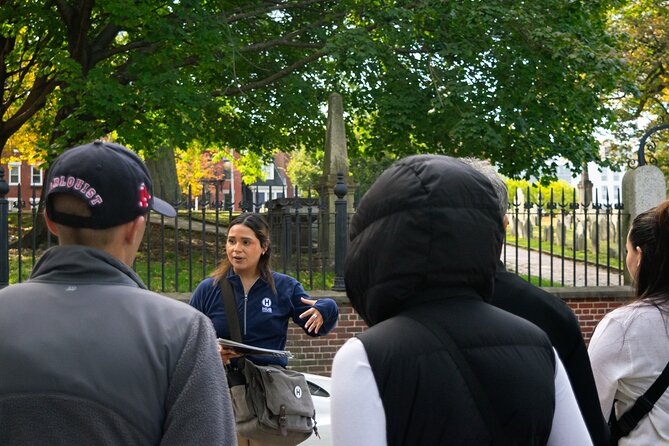
The tour also avoids the feel of a large procession. Small groups fit better on narrow sidewalks and make it easier to ask questions. Guides have been praised for using visual aids, answering detailed questions, and making events feel immediate through lively storytelling and occasional acted-out scenes.
Still, $35 does not include museum entry or gratuity. If you want a full interior museum program, budget separately. If you prefer to explore quietly at your own speed, a self-guided visit may suit you better.
Who should book this Beacon Hill walk
I would choose this tour if you want Boston history beyond the familiar Revolutionary landmarks. It suits adults, older children over six, students, and anyone interested in Black history, abolition, education, or the causes of the Civil War.
It is also a good fit if you have only a few hours in the city. The route covers major subjects without requiring a full day, and the central start and finish make it easy to continue sightseeing afterward.
You should think twice if hills and uneven sidewalks are a problem. The tour is not accessible for wheelchair users or people with mobility impairments, and it is not designed for a low level of fitness. Bring weather-appropriate clothing because the activity runs rain or shine and is entirely outdoors apart from the possible museum component.
Children under six are not suitable for this activity. Large bags and luggage are not allowed, and video recording is prohibited. The tour is conducted in English.
Should you book it?
Book this walk if you want a focused, people-centered look at Boston’s role in the fight against slavery and the long road to the Civil War. The African Meeting House, Phillips School, Hayden House, and 54th Massachusetts Memorial give the route real weight, while the small group keeps the experience personal.
The main caution is physical rather than historical. You will walk about 2 miles over steep Beacon Hill streets in changing weather, with no promise of museum interiors. If you can handle that, $35 buys a useful dose of Boston history that many standard sightseeing routes leave out.
FAQ
Where does the Boston Underground Railroad History Tour begin?
Meet at the Soldiers and Sailors Monument in the center of Boston Common, near the Boston Common Visitors Center at 139 Tremont Street.
How long is the tour?
The scheduled duration is 150 minutes. The exact length can vary, but it will not exceed three hours.
How far do you walk?
The route covers approximately 2 miles, or 3.2 kilometers, through Boston Common and Beacon Hill.
Is the tour accessible for wheelchair users?
No. The route includes steep hills and sidewalks that are not ADA compliant. It is not suitable for wheelchair users or people with mobility impairments.
Is museum admission included?
No. Admission inside museums is not included in the tour price. The African Meeting House is included as a guided landmark stop, but any separate admission should be checked when booking.
What happens if it rains?
The tour operates rain or shine and is entirely outdoors. Wear weather-appropriate clothing and comfortable walking shoes.
Newly added caves around the USA
- Niagara Falls Walking Tour with Maid of the Mist & Cave★ 4.1 · 24 reviews
- Niagra Falls, USA Side: Boat, Cave and Shuttle pass Tour★ 4.6 · 653 reviews
- Niagara Falls, USA: Maid of Mist & Cave of Winds Combo Tour★ 4.7 · 443 reviews
- Niagara Falls, USA: Guided Tour With Boat, Cave & More★ 4.5 · 239 reviews
- Niagara Falls USA: Cave of the Winds & Maid of the Mist Ride★ 4.8 · 550 reviews
- New York City: Catacombs by Candlelight★ 4.4 · 536 reviews
- NYC: History of Slavery & Underground Railroad Walking Tour★ 4.7 · 87 reviews
- Nā Pali Coast Zodiac Raft Sea Caves Expedition on Kauai★ 4.6 · 15 reviews
USA Cave Tours worth comparing.

Half-Day Emerald Cave Kayak Tour with Optional Hotel Pickup
Read our review →

Emerald Cave Kayak Tour: Scenic Paddle with Optional Shuttle
Read our review →

Emerald Cave Express Kayak Tour with Scenic & Historic Stops
Read our review →
Kona Snorkel Tour: Captain Cook Reef Snorkel, Dolphin & Sea Caves
Read our review →Lists this cave tour appears in