
Review · LECCE
Lecce guided tour with underground discoveries
Lecce’s best surprise is below street level. This two-hour walk pairs the city’s theatrical Baroque façades with the Faggiano Archaeological Museum, where layers of older buildings and daily life sit beneath a private home. It gives you both the grand view and the small, human details.
I like the way the tour explains what you are looking at rather than simply pointing out pretty buildings. I also like the mix of open-air streets, churches and palaces, and an included museum visit. Guides such as Fabio Grasso, Elena, Antonella, and Francesca are praised for clear English, strong local knowledge, and patience with questions.
The main caution is the title. The walking portion is above ground, and the underground visit comes at the museum near the end. If you expect a long subterranean expedition, you may find the museum section more modest than the name suggests. Paid church admission is also not included.
Key points to know before booking
- Lecce’s Baroque center in two hours: Cover Piazza Duomo, Corso Vittorio Emanuele, Piazza Sant’Oronzo, churches, palaces, and major façades without spending half a day on the basics.
- Faggiano Museum admission included: Your $41 fee includes the museum ticket and its underground archaeological area.
- Strong English-language guiding: Fabio Grasso is often praised for architecture and city planning, while Elena, Ilenia, Antonella, and Francesca are noted for clear, friendly explanations.
- A useful tour for a short stay: The route gives you a solid first look at Lecce if your time in Salento is limited.
- Church entry costs extra: The outside architecture is part of the walk, but paid church interiors are not included.
- Flexible booking: You can cancel up to 24 hours before the tour for a full refund and reserve now while paying later.
Why Lecce works so well on foot
Lecce is a city best understood at walking speed. Its old center is threaded with cobbled lanes, open squares, ornate churches, and palaces covered in carved stone details. The tour stays within this historic core, so you spend your time looking up, turning corners, and listening rather than waiting for transport.
That matters because Lecce’s Baroque style can seem busy at first glance. Facades are packed with columns, flowers, figures, animals, scrolls, and other decorations. A guide helps separate the important details from the visual noise and explains how the buildings reflect noble power, religious devotion, and local craftsmanship.
I would take this tour early in your Lecce visit. You will get a basic map of the old center and a better sense of which churches, squares, and streets deserve a second look. The tour is also a practical choice if you have only a morning or afternoon in town.
The advertised length is two hours, long enough to cover the main sights without turning into an exhausting history lecture. The route does include cobbled streets, so comfortable shoes are sensible. One review describes a group of 10 to 12 people, a size that allows questions without making the guide difficult to hear, though the exact group size can vary.
Guided tours around Italy:
- Naples: Naples Underground Entry Ticket and Guided Tour
★ 4.4 · 21,781 reviews - Naples: Catacombs of San Gennaro Entry Ticket & Guided Tour
★ 4.6 · 7,941 reviews - Naples: Spanish Quarters Underground Guided Tour
★ 4.8 · 5,064 reviews
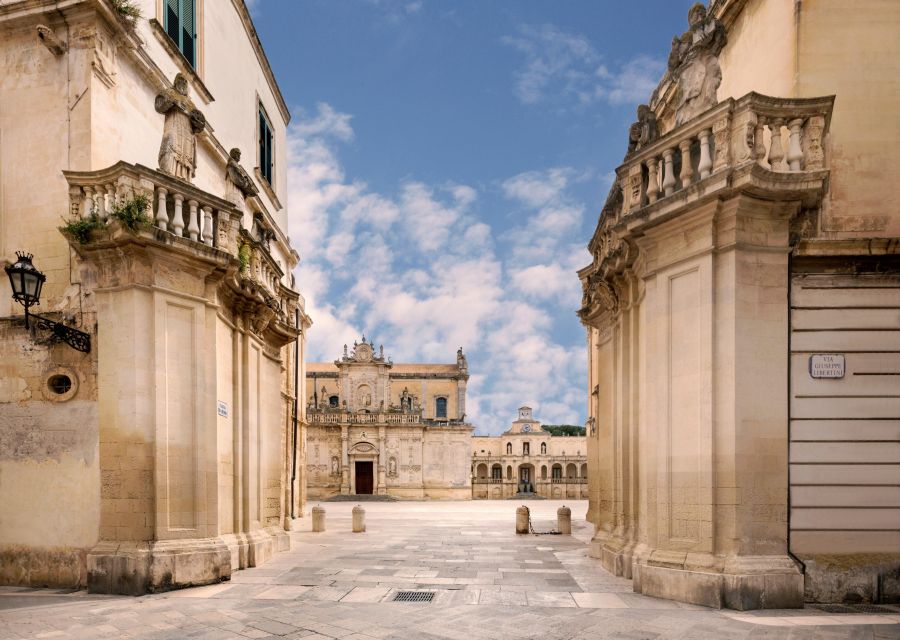
Piazza Duomo and Lecce’s theatrical Baroque
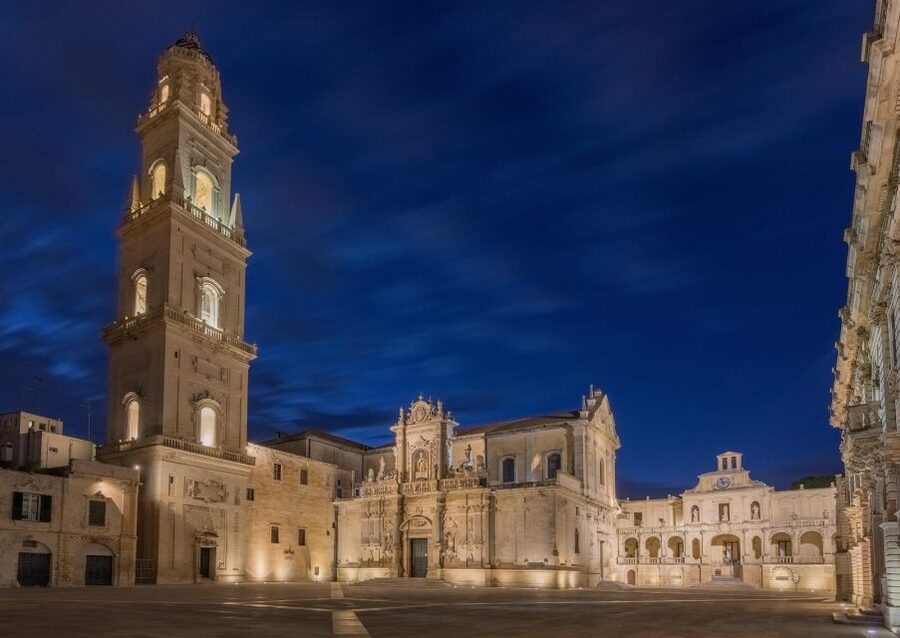
The walk brings you into the grand setting of Piazza Duomo, one of the city’s most memorable spaces. Here, the Lecce Cathedral and its tall bell tower provide the vertical drama, while the surrounding buildings create an enclosed stage of pale local stone.
This is a good place to learn how Lecce’s Baroque works as a complete setting rather than as a single church façade. The square gives you scale. You can see how the tower, cathedral, and adjoining structures relate to one another, rather than viewing each building as an isolated monument.
The guides are especially useful here because the details can be hard to read without context. Fabio Grasso, who is described as an architect and historian, is praised for explaining not only individual buildings but also how the historic center was designed. That broader view is valuable if you want more than a list of dates and names.
Do not expect a long interior visit at every church along the route. The tour focuses on the city center and its architecture, and entry fees for paid churches are not included. If a particular interior matters to you, ask the guide about it and budget separately.
Corso Vittorio Emanuele and the art of looking up
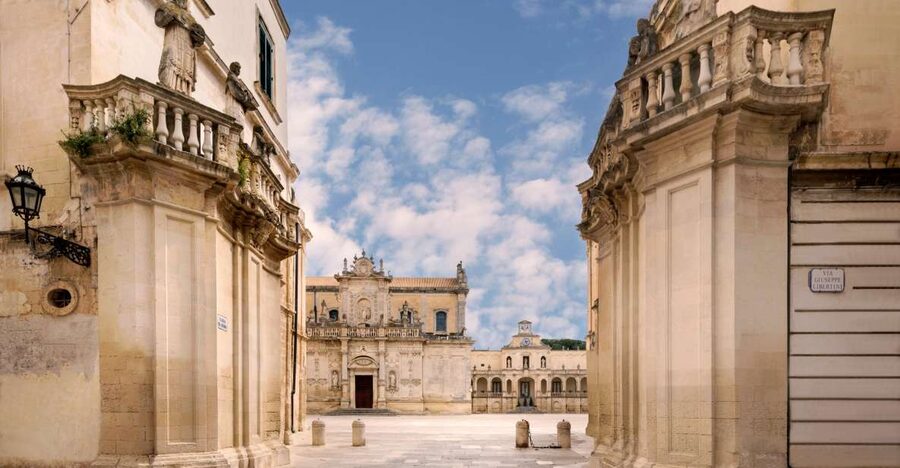
From the cathedral area, the walk continues through Lecce’s streets toward Corso Vittorio Emanuele. This part of the route helps connect the major monuments with the everyday fabric of the old center.
I like this kind of stop because it slows you down. Instead of rushing from one famous square to the next, you get time to notice doorways, balconies, carved stone, and the relationship between grand palaces and narrower lanes. The streets themselves become part of the lesson.
The Baroque style here is not shy. You may see elaborate decorative work placed above eye level, where it is easy to miss when walking alone. A good guide points out the symbols and explains what the decoration was meant to communicate. Several guides have been praised for making architecture easy to understand, which is helpful if you are not used to reading historic buildings.
This is also where guide quality matters most. The strongest feedback goes to guides who speak clearly, check that everyone can follow, and leave room for questions. Fabio, Elena, Ilenia, Antonella, Francesca, and Fabrizio are all identified in the feedback as engaging and well prepared, though your assigned guide will depend on the date and language.
Santa Croce and the details behind the façade
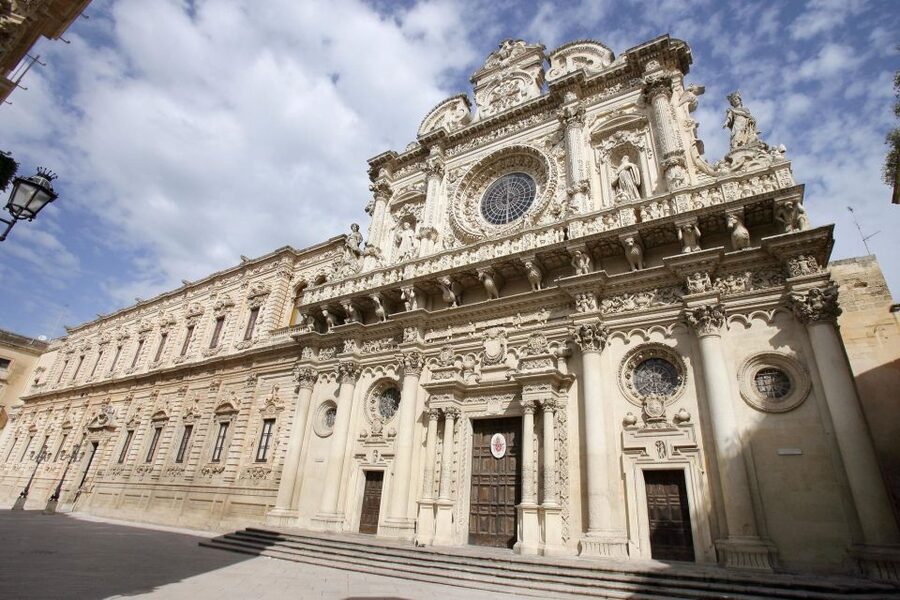
The Basilica of Santa Croce is one of the tour’s major visual rewards. Its façade is crowded with sculpted decoration, and a quick look does not tell you why all those figures and patterns are there.
The guide’s explanation gives the façade a purpose. One visitor specifically valued learning the meaning behind its details, rather than simply hearing that it was beautiful. That is the difference between a guided walk and a photo stop. You begin to notice how the design expresses religious ideas, local pride, and the skill of Lecce’s stone carvers.
Allow yourself time to look from bottom to top. Start with the lower entrance and columns, then move through the central decoration and up toward the more theatrical upper section. The exact commentary can vary by guide, but the tour is built around this sort of close reading.
Santa Croce is also a reminder that Lecce can be visually demanding. There is a lot to take in, and a two-hour tour cannot explain every church, palace, and symbol in equal depth. If you prefer a slow architectural study, you may want to return later with your own time.
Same rock, a different way in:
- Colosseum: Underground and Ancient Rome Tour
★ 4.7 · 12,691 reviews - Matera: Sassi Tour with Cave House and Rupestrian Church
★ 4.7 · 6,618 reviews - Rome: Capuchin Crypts and Catacombs Tour with Transfers
★ 4.6 · 6,456 reviews - Expert Guided Tour of Colosseum Arena OR Underground, and Forum
★ 4.5 · 5,041 reviews
Piazza Sant’Oronzo and the city’s public face
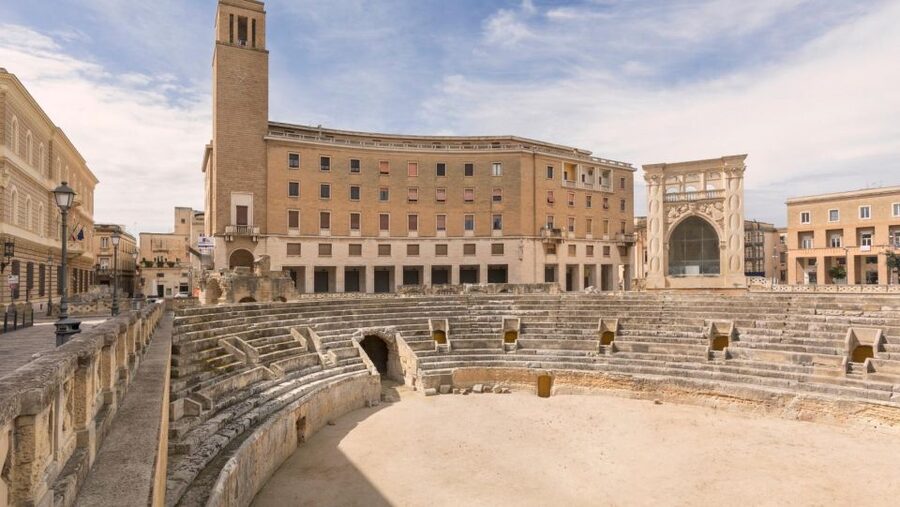
Piazza Sant’Oronzo gives the walk a different mood. Piazza Duomo feels controlled and ceremonial, while Sant’Oronzo is a more open public meeting point within the historic center.
The square helps place Lecce’s monuments in the life of the city. You see how people move between streets, cafés, shops, and historic buildings, rather than viewing the old center as a museum frozen in time. The guide uses the square as part of the wider story of Lecce and Salento.
This is a useful stop for orientation. If you are staying in Lecce, you will likely pass through the piazza again, and the guide’s explanation can help you recognize the surrounding streets. You may also get suggestions for local food or places to visit. One guide, Elena, even helped a couple with a dinner reservation and offered ideas for street food, though that sort of extra assistance should be treated as a pleasant bonus rather than a promised part of the tour.
The route’s six or so principal stops keep the pace moving. You will not spend the entire two hours in one square, but you should have enough time at each key site to hear the main story and ask a question.
The Faggiano Archaeological Museum and its underground rooms
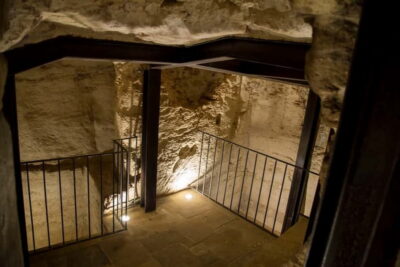
The most unusual part of the outing comes at the Faggiano Archaeological Museum. The museum developed from discoveries beneath a building, where work revealed older structures and objects from different periods. The result is an archaeological site woven into a domestic setting rather than a grand state museum.
Your included ticket takes you inside without the need to purchase a separate museum entry. This is an important part of the $41 value, especially if you are interested in the layers beneath historic cities.
Inside, you can see archaeological remains, corridors, chambers, and objects connected with earlier periods of Lecce’s past. The underground section offers a different kind of history from the Baroque streets above. Instead of looking at noble façades and church decoration, you get clues about construction, domestic life, buried traditions, and the repeated changes made to the same patch of ground.
Keep your expectations in proportion. The underground area is a museum visit with archaeological remains, not a vast network of tunnels. One piece of feedback found the tour title slightly misleading because the main walk was above ground and the underground portion was relatively brief. I think that is a fair point.
Still, the contrast makes the museum worthwhile. Above ground, Lecce presents its polished public face. Below ground, you see fragments and repairs from earlier lives. The two parts complement each other, even if the museum visit does not occupy most of the two hours.
The guide may leave you at the museum at the end rather than escorting you through a long final section. That arrangement is convenient if you want to continue looking around, but it is worth knowing in advance so you do not expect the guide to remain with you throughout every museum room.
How much the $41 price buys you
At $41 per person, this is not the cheapest way to stroll around Lecce, since you can walk through the old center on your own. The value comes from the explanation, the organized route, and the included Faggiano Museum ticket.
I would consider it a fair price for a first visit, particularly if architecture is not your strong subject. A guide can show you why Santa Croce matters, explain the design of Piazza Duomo, and point out details you might otherwise walk past. You are paying for interpretation, not just admission.
The price is easier to justify if you have limited time. Lisa from Australia described the tour as especially useful for gaining insight during a short stay, and that matches my view. Two focused hours can give you a working introduction to Lecce, after which you can choose where to spend more time.
The value is weaker if you already know the city well or plan to visit every church and museum independently. Remember that paid church entries are extra, so add those costs if you want to go inside particular buildings.
Guide quality, language, and group comfort
The tour is offered in English and Italian. The English feedback is consistently positive, with special praise for clear speech, good pronunciation, patience, and the ability to answer questions.
Fabio Grasso receives the most specific praise. He is described as an architect and historian who explains buildings, monuments, art, and the design of the old center. Other guides, including Elena, Ilenia, Antonella, Francesca, and Fabrizio, are praised for enthusiasm and strong explanations.
That does not mean every tour will feel identical. A guide’s personality affects the pace and amount of detail. One criticism concerned a rainy, windy day when the route was not adjusted for comfort. In hot weather, the lack of shade can also matter, as the walk is outdoors for much of its length.
If you are sensitive to weather, choose your starting time carefully when possible and bring water. The tour can still be worthwhile in poor weather, but the experience depends partly on how comfortable you are standing outside while listening.
Who should book this Lecce tour?
I would recommend it to first-time visitors, architecture fans, history-minded walkers, and anyone with only a short time in Lecce. It is also a good fit if you want an English-speaking guide who can answer questions rather than simply recite a script.
Families with older children may appreciate the change of scene from squares and churches to underground rooms. The museum section gives the tour a physical mystery that can help hold attention, though the architectural explanations may appeal more to adults.
You may want to skip it if you dislike guided walking tours, prefer to explore at your own pace, or expect an extensive underground site. It is also less suitable if your main goal is to tour church interiors, since those admission fees are separate and the focus remains on the wider city center.
The free-cancellation policy gives you some protection: you can cancel up to 24 hours ahead for a full refund. You can also reserve now and pay later, useful when you are still arranging an Apulia itinerary.
Should you book it?
Book this tour if you want Lecce explained rather than merely photographed. The strongest reason to go is the combination of Baroque streets above and archaeological remains below, with a guide who can connect the two.
I would book it near the start of your stay, especially if Fabio Grasso or another highly praised guide is available in your language. Go in expecting a focused two-hour introduction, not an all-day museum tour or a lengthy tunnel expedition. With that expectation, the $41 price is reasonable, the route is efficient, and the Faggiano Museum adds a distinctive finish.
FAQ
How long is the Lecce guided tour?
The tour lasts two hours.
What sites are included on the route?
The route includes Piazza Duomo, Corso Vittorio Emanuele, Piazza Sant’Oronzo, churches and palaces, and the Faggiano Archaeological Museum with its underground area.
Is the Faggiano Museum ticket included?
Yes. The tour price includes admission to the Faggiano Archaeological Museum.
Are church entrance fees included?
No. Entry tickets for paid churches are not included.
What languages are available?
The live tour guide is available in English and Italian.
Can I cancel the booking?
Yes. You can cancel up to 24 hours in advance for a full refund. You can also reserve now and pay later.
Newly added caves around Italy
- Perugia: Entry Ticket and Guided Tour of Perugia Underground★ 4.6 · 579 reviews
- Palermo Experience: Monreale, Catacombe e Mondello con Cibo★ 5.0 · 31 reviews
- Palermo: Boat Tour With Aperitif Snorkeling And Cave Tour★ 4.8 · 381 reviews
- Palinuro: Boat Trip along the Coast & Blue Grotto Visit★ 4.4 · 63 reviews
- Orvieto: 2-Hour Cathedral and Underground Tour★ 4.8 · 24 reviews
- Naxos: Isola Bella, Blue Grotto, & Mazzarò Bay Boat Tour★ 4.6 · 568 reviews
- Narni: Guided underground Experience★ 4.6 · 66 reviews
- Naples Top Sights & Underground small group tour★ 4.7 · 59 reviews
Lecce Cave Tours worth comparing.
Lecce: Baroque Architecture and Underground Walking Tour
Read our review →
Small group tour of the caves of Santa Maria di Leuca
Read our review →
3 Hour Group Tour by Boat to the Caves of Santa Maria di Leuca
Read our review →
Mini-cruise tour to the Caves of Santa Maria di Leuca
Read our review →Lists this cave tour appears in