
Review · LECCE
Lecce: Baroque Architecture and Underground Walking Tour
Lecce’s most striking surprise is how much history is packed into a compact old center. In 90 minutes, you move from the carved stonework of Santa Croce Church to Roman ruins, Baroque palaces, and an underground Jewish museum. Guides such as Max and Massimiliano add the local stories that help these handsome façades make sense.
I like the clear route and the mix of Roman, Baroque, and Jewish history. I also like that the museum ticket is included, and that you can choose a shared group or private tour. The main limitation is simple: most churches are viewed from outside, and some visitors find the underground museum less impressive than Lecce’s grand squares and ornate architecture.
Key points
- Ninety minutes well used: The route covers Lecce’s central sights without hotel transfers or wasted travel time.
- Three layers of Lecce: Roman remains, Baroque architecture, and Jewish history all appear on one short walk.
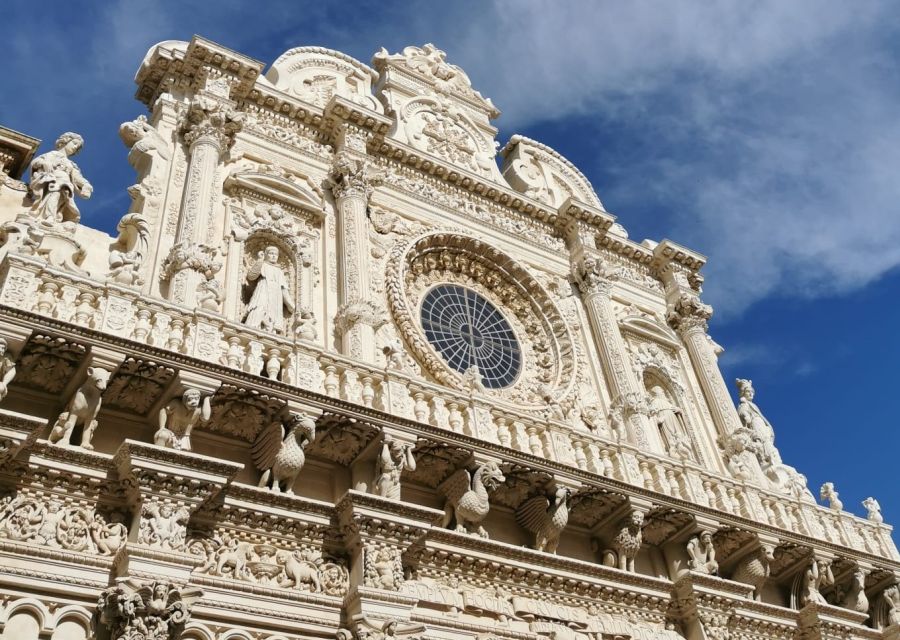
- Santa Croce sets the tone: Its elaborate exterior gives you an immediate lesson in Lecce’s famous stone carving.
- Piazza Duomo is the visual high point: The cathedral, bell tower, seminary, and Archbishop’s Residence form one of Italy’s finest architectural groups.
- The Jewish Museum changes the focus: The underground visit adds a less visible but important part of Lecce’s past.
- A good first look, not a full church tour: For interiors, you may need separate LecceEcclesiae tickets.
Why Lecce works so well on foot
Lecce is a city best understood at walking pace. Its historic center is compact, and the main sights sit close enough together that a short guided route can cover a surprising amount of ground.
The city is famous for its soft local limestone and the playful Baroque style built from it. Stone façades twist, curl, and sprout with columns, masks, flowers, angels, and other carved details. Without a guide, you can admire the surfaces. With a good guide, you begin to understand why the buildings look so theatrical and how Lecce grew from its Roman roots into the Baroque city you see today.
This tour is especially useful at the start of a stay. You get your bearings, learn the names of the main squares, and receive a basic timeline for the city. Later, you can return to the churches, museums, and cafés that caught your attention.
The experience lasts about 90 minutes. That timing is accurate, so plan for a brisk introduction rather than a slow half-day outing. Several guides, including Max, Fabrizio, and Massimiliano, have been singled out for clear explanations, humor, and strong command of Lecce’s past. Guide quality can vary from person to person, but the repeated praise for the local staff is one of this tour’s strongest points.
More ways underground around Italy:
- Naples: Naples Underground Entry Ticket and Guided Tour
★ 4.4 · 21,781 reviews - Colosseum: Underground and Ancient Rome Tour
★ 4.7 · 12,691 reviews - Naples: Catacombs of San Gennaro Entry Ticket & Guided Tour
★ 4.6 · 7,941 reviews
Santa Croce Church and Lecce’s carved stone
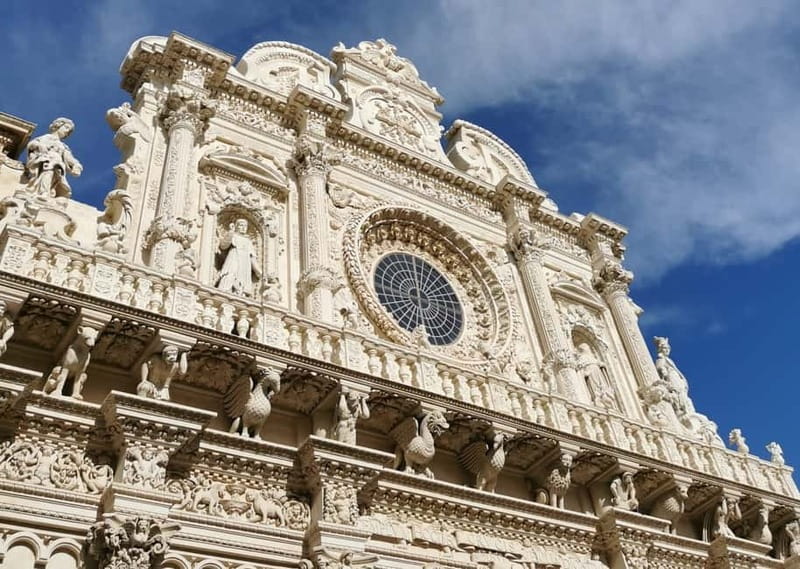
The tour begins with an exterior visit to Santa Croce Church, often treated as the great showcase of Lecce Baroque. Even if you know little about architecture, the façade is hard to miss. It is crowded with carved figures and decorative details, yet the design has an underlying order that a guide can point out.
This is where the tour’s focus on architecture becomes useful. You are not simply told that the church is beautiful. You can learn to look at the stonework, the layers of decoration, and the way local limestone allowed sculptors to create unusually fine details.
The drawback is that the church visit is external. You will not automatically see the interior as part of this walking tour. Several people who enjoyed the route still wished they had more time inside Santa Croce or other churches. If church interiors matter to you, consider adding a separate ticket covering Lecce’s churches and bell tower after the walk.
That arrangement has one benefit: the tour stays focused and keeps moving. You see more of the city instead of spending much of your 90 minutes inside one building.
Piazza Sant’Oronzo and the Roman heart of Lecce
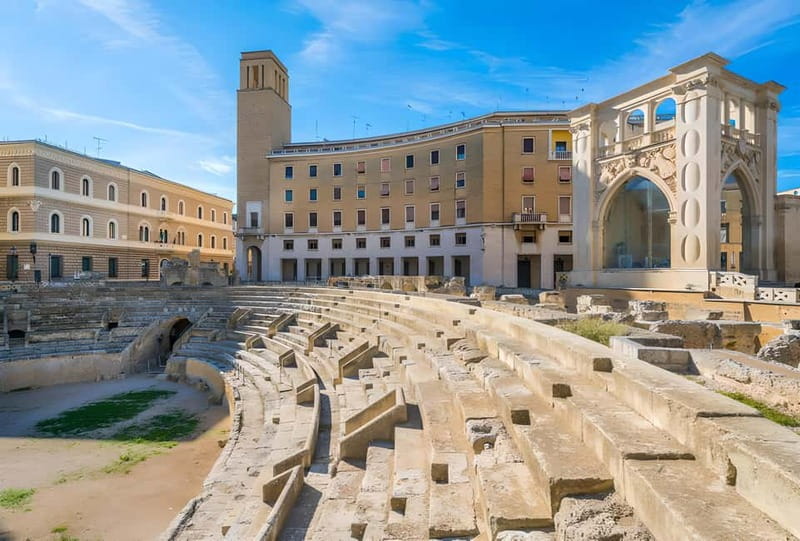
From Santa Croce, the route continues to Piazza Sant’Oronzo, the former market square and one of the central meeting places in old Lecce. Here you see the Old Town Hall, the Roman Column, and the remains of a large Roman amphitheater.
The square gives you a useful lesson in Lecce’s layered past. Elegant later buildings sit beside remains from the Roman period, so the city’s story is visible in fragments rather than confined to one museum. The Roman Column is a particularly helpful marker. It connects modern Lecce to the ancient settlement beneath and around it.
The amphitheater remains are another important stop. You see only part of the ancient structure, but its scale helps explain the size and importance of Roman Lecce. Ongoing restoration and excavation work may affect what you can see at certain points, so do not expect a fully open archaeological site.
This section also shows why a guide adds value. Roman ruins can be easy to pass without context, especially when they sit in a busy civic square. A good explanation helps you picture the original structure and understand how later generations built around it.
Corso Vittorio Emanuele and the Baroque city
The walk then follows Corso Vittorio Emanuele, lined with Baroque palaces and leading toward Sant’Irene Church. This stretch is less about one famous monument and more about reading the city as a whole.
Look upward as you walk. Lecce’s best details are often above street level, where balconies, cornices, carved faces, and ornamental flourishes compete for attention. The guide can point out details you might miss while navigating the street.
Sant’Irene Church adds another major façade to the route. As with Santa Croce, the main visit is an exterior look, so the tour gives you architectural context without turning into a full religious-art itinerary.
I find this part valuable because it connects the grand monuments. Piazza Sant’Oronzo and Santa Croce can feel like separate stops when you explore alone. Corso Vittorio Emanuele shows how they belong to one larger Baroque center, with palaces and churches shaping the streets between them.
The walk is also paced for conversation. Guides have been praised for answering questions, giving restaurant and gelato suggestions, and using humor to keep the history from becoming a list of dates. On hot days, one guide was careful to stop in shaded areas while explaining the sights. That small detail matters in Lecce, where summer sun can make a stone-paved walk tiring.
Same rock, a different way in:
- Matera: Sassi Tour with Cave House and Rupestrian Church
★ 4.7 · 6,618 reviews - Rome: Capuchin Crypts and Catacombs Tour with Transfers
★ 4.6 · 6,456 reviews - Naples: Spanish Quarters Underground Guided Tour
★ 4.8 · 5,064 reviews - Expert Guided Tour of Colosseum Arena OR Underground, and Forum
★ 4.5 · 5,041 reviews
Piazza Duomo, Lecce’s grandest ensemble
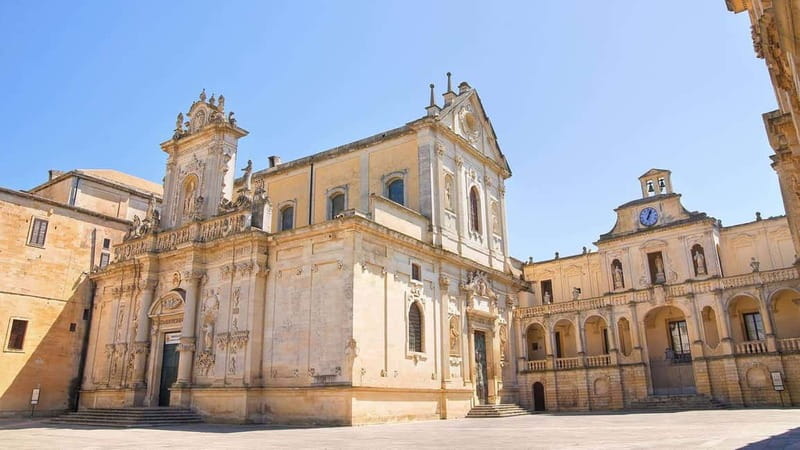
Piazza Duomo is the architectural high point of the tour. It is not just a square with a cathedral in it. The surrounding buildings form a carefully composed group that includes the cathedral, bell tower, Seminary, and Archbishop’s Residence.
The square feels more enclosed and theatrical than the open space of Piazza Sant’Oronzo. This change in atmosphere gives the walk a strong visual progression. You begin with the elaborate façade of Santa Croce, move through the city’s Roman center, and finish the above-ground portion in a controlled Baroque setting.
The guide explains the exterior of each main building and helps you see how the buildings work together. You can take in the bell tower’s height, the cathedral’s façade, and the formal arrangement of the square without rushing from one isolated landmark to the next.
Again, do not assume that the cathedral interior is included. The tour is designed around exterior architecture, with the Jewish Museum as the included indoor visit. If you want to compare exterior and interior Baroque decoration, plan an additional church visit on your own.
For many people, Piazza Duomo is the moment when Lecce’s style fully clicks. The architecture is not subtle, but it is remarkably coherent. A guide’s explanation helps you appreciate the choices behind all that ornament rather than treating it as decoration without meaning.
Going below street level at the Jewish Museum
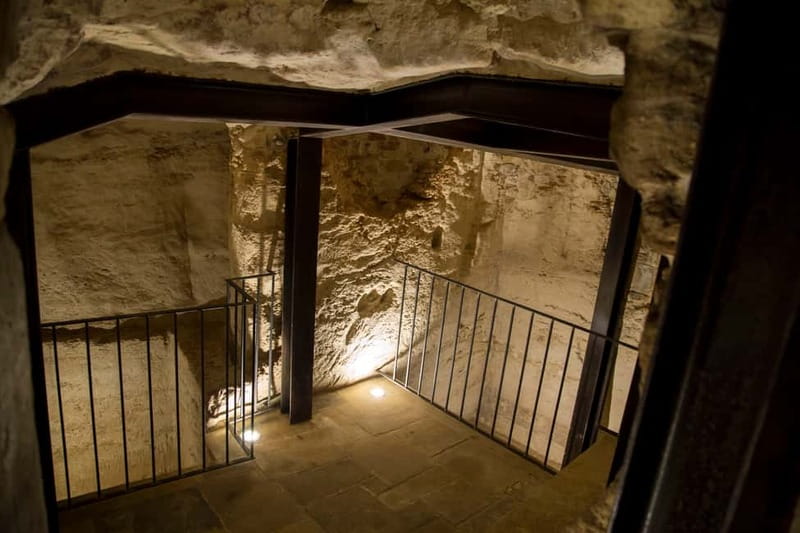
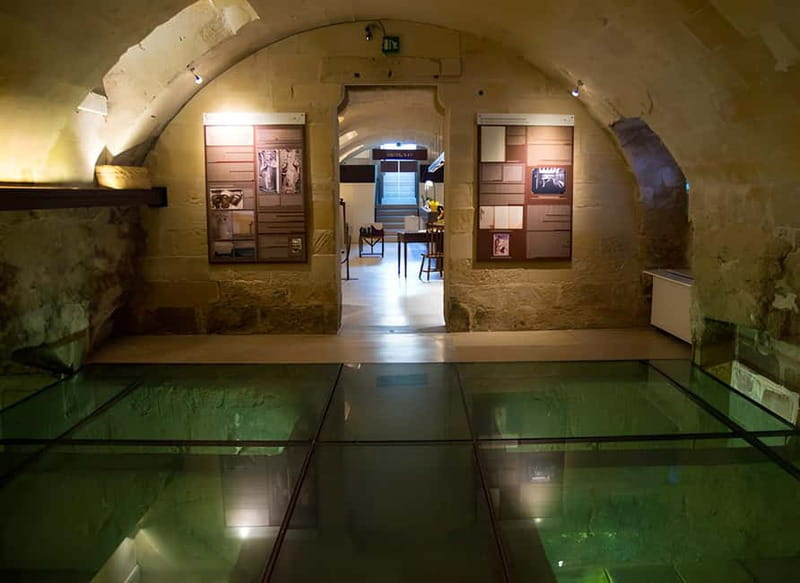
The final stop is the underground Jewish Museum, which adds a different kind of history to the route. Instead of looking at grand façades, you move below the modern street and learn about Lecce’s Jewish past.
This is an important counterweight to the Baroque focus. The churches and palaces tell you how later Lecce displayed wealth, faith, and civic pride. The museum introduces a community and a period that are less visible in the city’s present-day streets.
Some people may expect a large underground complex and find the visit modest in scale. The museum is not the biggest or most dramatic part of the experience. Its value comes from the subject and the change of perspective. You are not simply seeing another ornate building. You are learning about a part of Lecce that can easily be missed when you focus only on churches and Roman remains.
The museum is included in the price, which makes the short visit worthwhile. It also provides indoor time during rain or intense heat. One rainy tour still worked well partly because the group spent time inside.
The order of the tour can vary. Some departures begin at the museum and then continue through the city, while the general route description places it at the end. Check the meeting details for your selected departure so you know where to go first.
What the guides add to the walk
The strongest part of this experience is the guiding. Max is frequently praised for combining information with a light sense of humor. Massimiliano has led walks with a more formal, highly detailed approach, and Fabrizio has been noted for explaining the architecture in an authentic and approachable way.
Other guides, including Angela, Antonio, Alex, Ilena, and Mario, have also led well-received tours. The exact style will depend on who is working that day. You might get an archaeologist and architect, a lively storyteller, or a more serious history specialist.
English, Italian, and French are available. English-speaking guides have been described as easy to follow, and the route leaves time for questions. That matters because Lecce’s architecture contains plenty of terms and historical references that can blur together during a fast walk.
I would ask questions as you go. This is not a headset tour where you simply receive a fixed speech. The best moments come when you ask about a carved figure, a Roman fragment, a church façade, or the difference between one Baroque building and another.
The activity can be booked as a shared group or private tour. A private option should suit you if your party wants to set the pace or spend more time on a particular subject. A shared tour is a sensible choice if you want an affordable introduction and enjoy hearing other questions.
Is $29 a fair price?
At $29 per person, the tour is reasonably priced for a 90-minute guided walk that includes the Jewish Museum admission. You are paying for a local guide, a planned route, and explanations that connect several periods of history.
The value depends on what you want. If you mainly want a quick orientation to Lecce, the price works well. You see the city’s main squares, learn the route between them, and finish with a museum visit. If you want church interiors, extensive archaeology, or a long architectural lecture, the tour may feel too short.
Some people have found lower prices available directly at a local guide office, so it is sensible to compare the total cost and what each booking includes before you pay. The convenience of reserving online, the available cancellation terms, and the private option may also affect the value.
Unexpected tastings have sometimes been added at the end, including olive oil, wine, or another local sample. Treat this as a pleasant possibility rather than part of the published package. Food and drinks are not included, so do not book the tour mainly for a tasting.
Who should book this Lecce walk?
I would recommend it to first-time visitors, history fans, architecture lovers, and anyone with only a short time in Lecce. It is also a good choice if you prefer to understand a city before exploring its museums and churches alone.
Families with older children and teenagers may like the mix of ruins, dramatic façades, and underground history. The 90-minute length is manageable, and the guide can keep the walk moving. The activity is listed as wheelchair accessible, though you should still confirm the meeting point and route details for your particular departure.
You may want something else if your main goal is to see church interiors. The tour gives you strong exterior coverage but only limited indoor access. Add a separate church ticket if you want to enter more buildings and climb the tower.
Wear comfortable shoes and bring water, especially in warm weather. The route is not a mountain hike, but you are walking over historic streets and stopping repeatedly while the guide explains each site.
Practical details before you reserve
The meeting point can change according to the option you select, so check it carefully before heading out. Hotel pickup and drop-off are not provided, and food and drinks are extra.
You can cancel up to 24 hours before the start for a full refund. A reserve-now, pay-later option is also available, which helps if your Apulia plans are still shifting.
The overall rating is 4.6 from 1,248 ratings, a strong result for a short city walk. The consistent strengths are the guides, the amount of information covered, the sensible pacing, and the chance to see several parts of Lecce without planning the route yourself.
The main cautions are just as clear: the tour lasts 90 minutes, many church visits are exterior only, and the underground museum may feel less dramatic than the Baroque squares. Knowing that in advance lets you judge the experience fairly.
Should you book it?
Book this tour if you want a well-paced introduction to Lecce’s Roman, Baroque, and Jewish past, especially early in your visit. The combination of Santa Croce, Piazza Sant’Oronzo, the amphitheater, Corso Vittorio Emanuele, Piazza Duomo, and the underground museum gives you a useful first map of the city.
Skip it if you already know Lecce well or want a detailed interior tour of its churches. For most first-time visitors, though, $29 buys a practical orientation, strong local commentary, and enough historical background to make the rest of your time in Lecce more rewarding.
FAQ
How long does the Lecce walking tour last?
The tour lasts 1.5 hours, or about 90 minutes.
What sights are included on the route?
You visit the exterior of Santa Croce Church, Piazza Sant’Oronzo, the Old Town Hall, the Roman Column, the remains of the Roman amphitheater, Corso Vittorio Emanuele, Sant’Irene Church, Piazza Duomo, and the exteriors of the cathedral, bell tower, Seminary, and Archbishop’s Residence.
Is the Jewish Museum included?
Yes. Entry to the underground Jewish Museum is included in the tour price.
Are church interiors included?
The published tour focuses on exterior visits to the churches and monuments. Additional tickets may be needed to enter churches or visit the tower.
Which languages are available?
Live guided tours are available in English, Italian, and French.
Can I choose a private tour?
Yes. You can choose between a shared group tour and a private tour, depending on the option available when you book.
Is the tour wheelchair accessible?
Yes, the activity is listed as wheelchair accessible. The meeting point may vary according to the option selected, so check the specific booking details before arrival.
Newly added caves around Italy
- Perugia: Entry Ticket and Guided Tour of Perugia Underground★ 4.6 · 579 reviews
- Palermo Experience: Monreale, Catacombe e Mondello con Cibo★ 5.0 · 31 reviews
- Palermo: Boat Tour With Aperitif Snorkeling And Cave Tour★ 4.8 · 381 reviews
- Palinuro: Boat Trip along the Coast & Blue Grotto Visit★ 4.4 · 63 reviews
- Orvieto: 2-Hour Cathedral and Underground Tour★ 4.8 · 24 reviews
- Naxos: Isola Bella, Blue Grotto, & Mazzarò Bay Boat Tour★ 4.6 · 568 reviews
- Narni: Guided underground Experience★ 4.6 · 66 reviews
- Naples Top Sights & Underground small group tour★ 4.7 · 59 reviews
Lecce Cave Tours worth comparing.
Small group tour of the caves of Santa Maria di Leuca
Read our review →
3 Hour Group Tour by Boat to the Caves of Santa Maria di Leuca
Read our review →
Mini-cruise tour to the Caves of Santa Maria di Leuca
Read our review →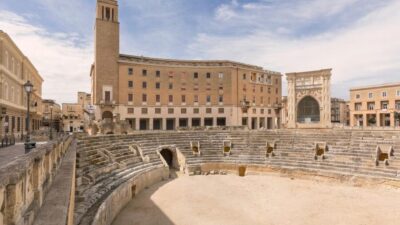
Lists this cave tour appears in