
Review · PARIS
Paris: Small-Group Catacombs Tour with Skip-the-Line Entry
Paris’s Catacombs are not a polished museum visit. You descend 133 steps into a cold, narrow maze where the walls give way to carefully arranged human bones. The scale is sobering: the tunnels hold the remains of roughly six million Parisians.
I like the separate skip-the-line entrance, which saves precious Paris time, and I like the tiny group, limited to six people. Guides such as Maria, Leo, Remi, and Michelle can explain small details that an audio guide would miss, from bone arrangements to cataphile graffiti. The drawback is the price: $227 per person is a serious splurge for a 90-minute outing, even with access to restricted areas.
Key points to know before you go
- The tour begins at 1 Avenue du Colonel Henri Rol-Tanguy: Meet in front of the main entrance, where your guide carries a LivTours sign.
- You’ll walk down 133 steps: The underground route is not a casual stroll, and the return route includes a climb.
- The group is limited to six: That makes it easier to hear stories and ask questions in the narrow passages.
- Restricted areas are part of the appeal: You may see sections not included with the regular public route.
- The history reaches beyond the bones: Expect stories about limestone quarrying, the French Revolution, World War II, and cataphiles.
- The tour lasts 1.5 hours: It is compact enough to fit into a busy Paris day, but the subject matter is intense.
What the Paris Catacombs reveal beneath the city
Paris above ground is grand and bright. Below it lies a second city, shaped first by quarry workers and later by the dead.
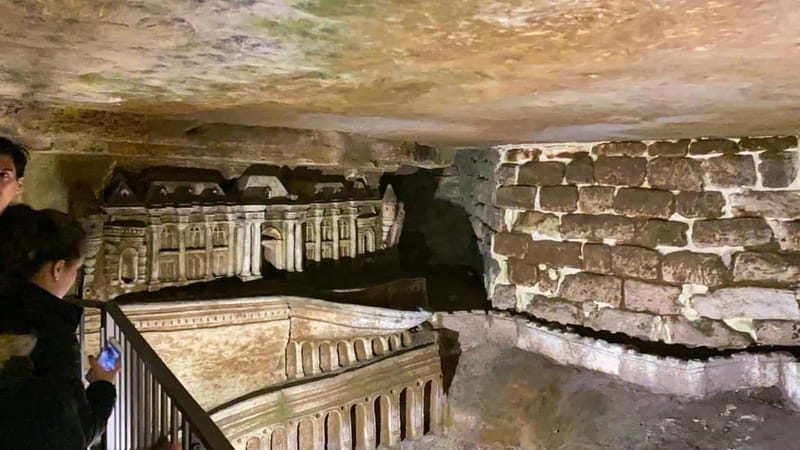
The tunnels began as limestone quarries, supplying stone for major Paris buildings as early as the 13th century. Over time, quarrying created an underground network that stretched for roughly 200 miles. Only a small portion is open to the public, but even the official route gives you a powerful sense of how much lies under the streets.
In the late 18th century, Paris cemeteries became overcrowded and unsanitary. Bad weather in the 1780s worsened the problem, and authorities began moving bones underground. The remains were eventually organized into the bone-lined galleries associated with the Catacombs today.
That context matters. This is not simply a spooky attraction built around old skeletons. It is also a story about city planning, public health, religious custom, construction, war, and the uneasy relationship between modern Paris and its buried past.
Your guide helps connect those subjects. Maria is praised for using illustrations and lively stories. Leo, also known as Eleonore, is especially good at pointing out details such as differences between male and female bones, children’s remains, older individuals, and traces of disease. Those observations give the displays a human scale without turning the visit into a cheap scare show.
More Catacombs and Underground City Tours in France:
- Paris: Catacombs Entry & Seine River Cruise with Audio Guide
★ 4.4 · 1,150 reviews - Paris: Catacombs, Audio Guide, and River Cruise Option
★ 4.6 · 966 reviews - Paris: Catacombs Ticket and Seine River Cruise
★ 4.1 · 853 reviews
Meeting at the former armored division memorial
The meeting point is in front of the Catacombs’ main entrance at 1 Avenue du Colonel Henri Rol-Tanguy, beside the House Veterans of the 2nd Armored Division.
You’ll need to arrive with enough time to find the guide. Look for the LivTours sign, though one useful tip is that the sign may be smaller than expected and not held high. A guest had trouble spotting it, so do not wait casually at the edge of the crowd. Stand near the main entrance and keep an eye out for your guide.
The activity ends back at the same meeting point. Hotel pickup and drop-off are not included, and neither are food or drinks. Plan your transportation before the tour, especially if you have a timed museum visit or dinner reservation afterward.
The Catacombs are in a central Paris neighborhood, so the location works well as part of a day focused on the Left Bank and southern central Paris. Still, the tour’s 1.5-hour duration refers to the experience itself, not the time you need to reach the meeting point or continue afterward.
The 133-step descent into the underground
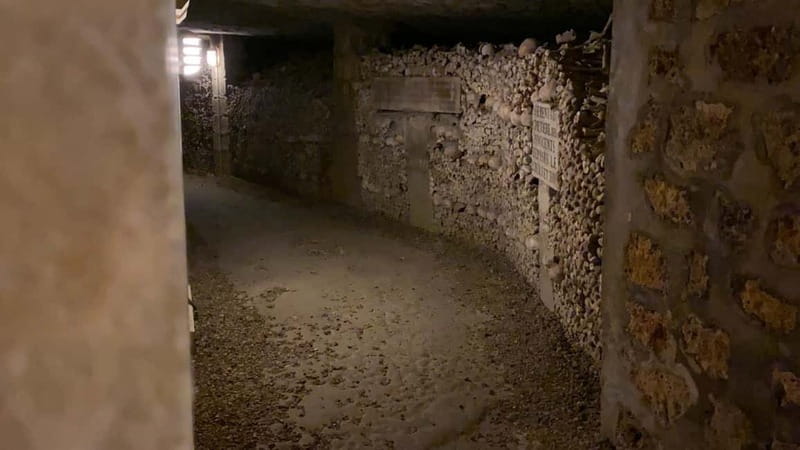
The first physical challenge comes immediately. You’ll walk down 133 steps before reaching the underground route.
That descent sets the mood better than any dramatic introduction could. The city noise fades, daylight disappears, and the tour moves from Paris streets into rougher passages cut through limestone. If stairs are difficult for you, take this seriously. The route is not described as accessible, and the number of steps alone makes the visit unsuitable for anyone unable to manage a steep descent and later climb back out.
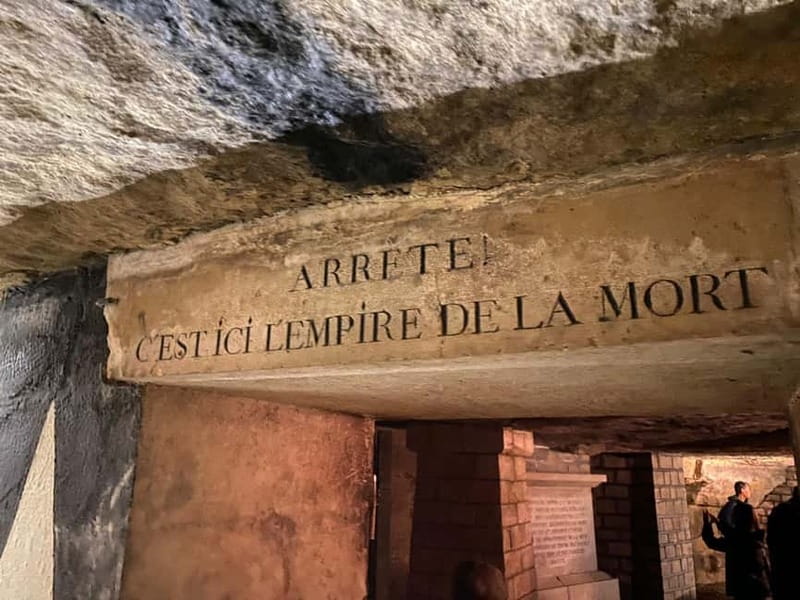
Once below ground, you’ll move through narrow tunnels and galleries. The setting is dark, enclosed, and at times emotionally heavy. If you dislike confined spaces or find displays of human remains upsetting, the Catacombs may not be your best Paris stop.
For many people, that discomfort is part of the point. The surroundings strip away the polished surface of the city and make you think about how Paris was built, how its dead were treated, and how much urban life is hidden beneath your feet.
Bone walls, religious symbols, and The Barrel
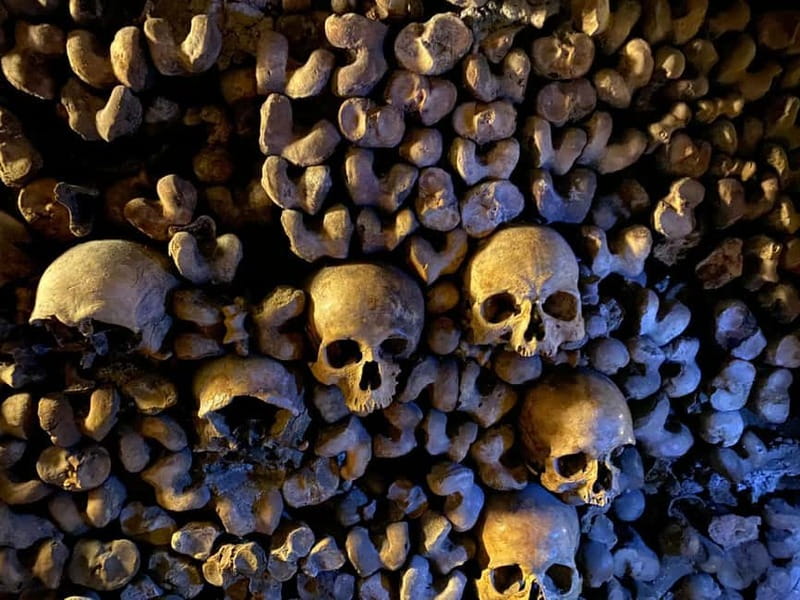
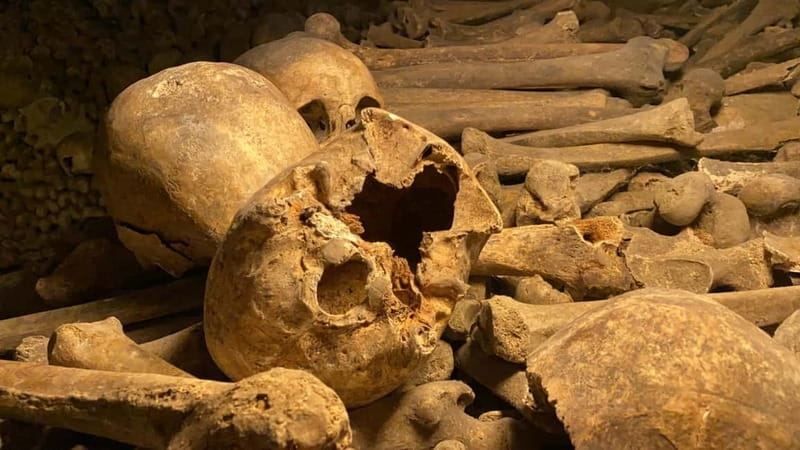
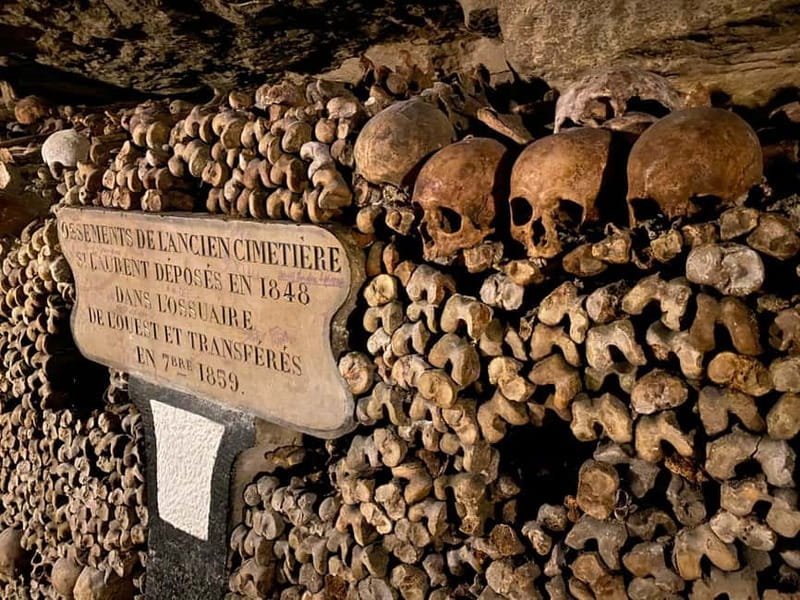
The most famous section contains rows of bones arranged along the walls. Workers did not simply pile the remains without order. They created patterns and decorations, including religious imagery and heart shapes.
Your guide can help you read those arrangements rather than seeing only a wall of skulls. You may learn how the bones were organized and what details can reveal about the people they belonged to. That kind of explanation is one of the strongest reasons to choose a live guide instead of walking through with an audio guide.
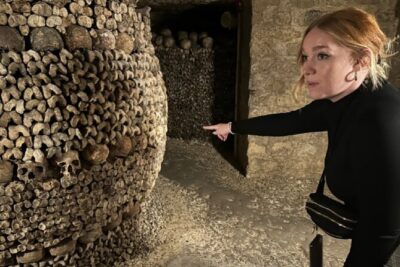
The Crypt of the Passion contains the display known as The Barrel. It is made from skeletal remains and has become one of the Catacombs’ most recognizable features. You’ll have a moment to study it, but the best guides keep the display tied to the larger story rather than treating it as a mere photo opportunity.
The subject requires a little respect. These are human remains, not stage props. A good guide can keep the tone engaging while acknowledging the solemn nature of the place. The strongest guide comments focus on history and observation, with just enough dark humor to keep the atmosphere from becoming unbearable.
Skip-the-line tickets around France:
- Skip the Line Chichen Itza Private Tour, Sacred Cenote & Lunch
★ 5.0 · 1,089 reviews - Cappadocia: Underground Cities Skip-the-Line Tour with Lunch
★ 4.6 · 142 reviews - Krakow: Rynek Underground Museum Skip-the-line Guided Tour
★ 4.7 · 138 reviews - Chichen Itza skip the line – Cenote – Izamal from Valladolid
★ 5.0 · 97 reviews
Restricted passages and the value of a small group
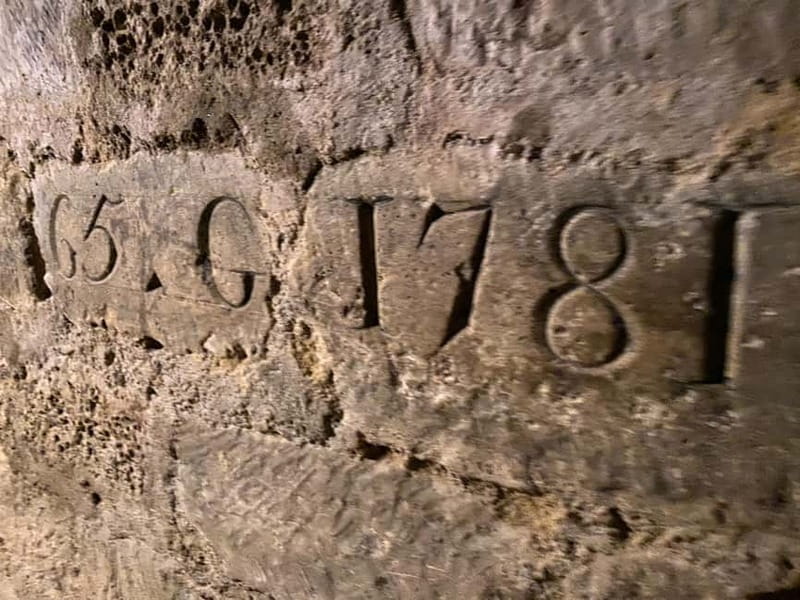
The public Catacombs route is already unusual, but this experience includes access to restricted areas. That is the feature that most clearly separates the tour from a standard admission.
The exact restricted sections can depend on the operating conditions and the guide, so you should not expect a fixed list of secret rooms. The supplied details confirm that the group enters areas not available to standard visitors, and the strongest accounts describe those side sections as a major reason to pay for the guided experience.
The group size matters here. With only six participants, you can hear explanations in a tight passage without standing far behind a large crowd. You can also ask about an odd inscription, a change in masonry, or a bone arrangement without holding up a busload of people.
Remi is praised for using side areas, historic detail, and a lively style to make the visit feel fuller. Lavinia is also singled out for making good use of the restricted sections. Alex is described as striking a useful balance between facts, stories, and quiet time to look around.
I would choose this small-group format over a large walking group for the Catacombs. The subject needs room for questions, and the setting does not suit a crowd.
From the French Revolution to World War II
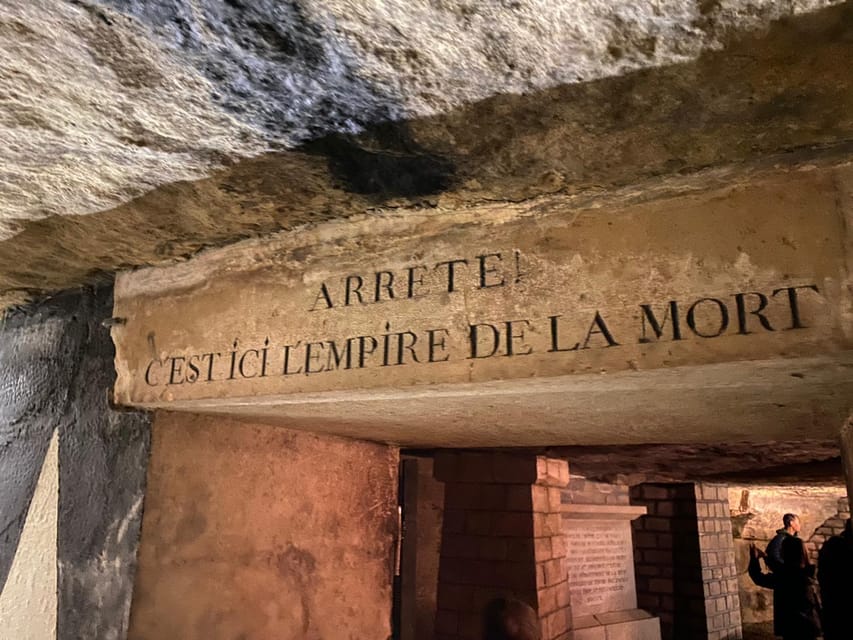
The Catacombs are tied to some of Paris’s most turbulent periods.
Your guide will explain their connection with the French Revolution, when the city’s political and social order was being violently reshaped. You’ll also hear how sections of the tunnels were used during World War II by both the German Wehrmacht and the French Resistance.
That wartime story changes the mood. The underground passages were not only storage space for the dead. They offered concealment, shelter, and strategic value. The idea of opposing forces using parts of the same hidden network is one of the tour’s most memorable historical threads.
The guide may also point out graffiti left by cataphiles. These underground explorers have used parts of the wider tunnel system for unauthorized gatherings, including raves and swimming parties. Their activity has caused repeated concern, but it also shows that the Catacombs are not frozen in the past.
You should not confuse this official tour with an illegal exploration. The open route and approved restricted sections are very different from entering closed tunnels on your own. Still, hearing about cataphiles helps explain why the underground world continues to attract people long after the quarrymen and burial workers were gone.
Philibert Aspairt and the human stories underground
One of the darker stories concerns Philibert Aspairt, an 18th-century doorman who died in the Catacombs. His grave has become part of the underground folklore.
Ask your guide about him if you enjoy a ghost story with a historical basis. Guides also tell stories about people who entered the tunnels for work, war, exploration, or mischief. These accounts keep the tour from becoming a dry lesson in geology and burial practices.
The best part of the storytelling is the variety. You might move from medieval quarrying to public health, then from bone decoration to wartime resistance, and finally to modern cataphile culture. The subjects are strange bedfellows, but together they show how the same underground spaces have served different purposes across the centuries.
Remi is described as energetic and full of information. Michelle combines history with humor and a friendly manner, which may help families and first-time visitors handle the more unsettling displays. Melvin is praised for making the history approachable and for turning the Catacombs into a highlight of a Paris visit.
Why a live guide beats an audio guide here
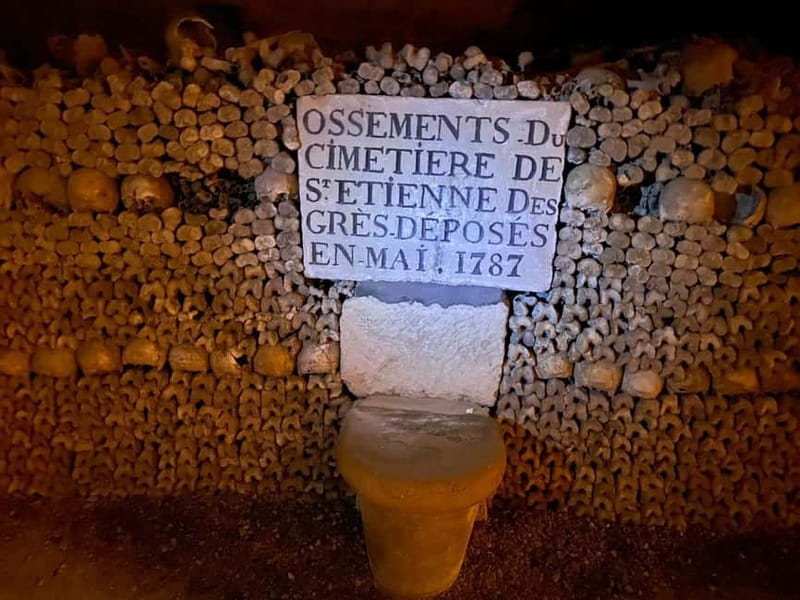
You can look at bones and tunnels without help. You cannot easily understand what you are seeing.
A live guide can point out details at the right moment, adjust the pace, answer a family’s question, and explain why one chamber matters more than another. Several guides, including Maria, Leo, Remi, Michelle, and Angelo, are praised for making the experience personal and easy to follow.
Angelo is described as funny, quirky, passionate, and happy to take photographs when permitted. Leo is praised for giving detailed explanations without making the tour feel like a lecture. Those qualities matter in a place where the visual experience can quickly become repetitive.
The small group also gives you a better chance to hear every word. Underground spaces can swallow sound, and a distant guide in a large group is frustrating. Here, the guide can stay close to the participants and respond to the group’s interests.
A self-guided visit may cost less, but it will not give you the same access to restricted sections or the same level of explanation. For this particular attraction, I think the guide adds real value.
Is $227 worth paying for 90 minutes?
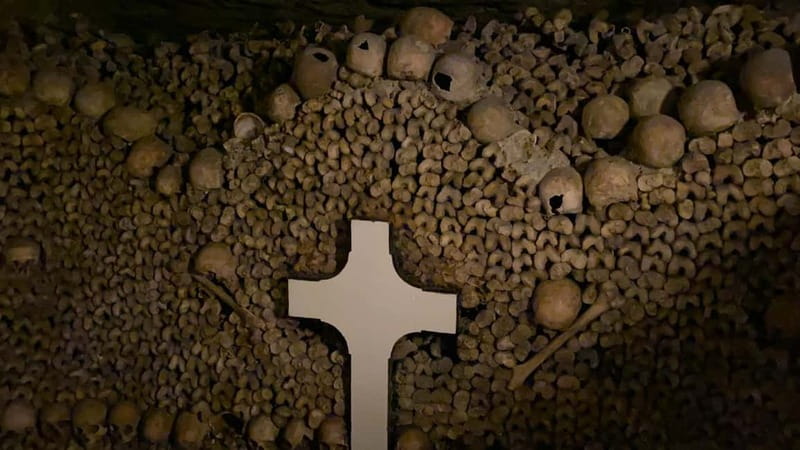
At $227 per person, this is not a bargain attraction. You are paying a premium for three things: skip-the-line entry, a group capped at six, and access to restricted areas with a professional English-speaking guide.
The price makes more sense if your Paris schedule is tight. Waiting in the normal line can eat into a day, and a small group gives you a more focused visit than a standard admission. If you are already certain that the Catacombs are a priority, the time saved and extra access may justify the cost.
The price makes less sense if you are mainly curious about seeing the bone displays and do not care about the mining, wartime, and cataphile stories. You may also prefer a less expensive visit if you are traveling with a large family or group, since the per-person total rises quickly.
I would call this a specialist experience rather than an automatic Paris essential. For someone fascinated by hidden infrastructure, death customs, wartime history, or unusual city stories, the tour offers much more than a walk through skull-lined rooms. For someone who dislikes darkness, stairs, or macabre subjects, no amount of skip-the-line convenience will fix the basic mismatch.
Who should book this Catacombs tour?
I would recommend it to adults and older children who can manage the stairs and are comfortable looking at human remains. A family with children aged 10 and 16 found the visit engaging, particularly because the guide kept the information entertaining as well as serious.
History fans will get the most from the connections to medieval quarrying, the French Revolution, and World War II. Architecture fans may also appreciate learning how limestone beneath Paris helped supply stone for buildings as grand as Notre Dame.
The tour also suits visitors who prefer a close, conversational group. If you want to ask questions or hear stories that do not appear in a standard audio program, six people is a useful limit.
I would think twice before booking for anyone with serious difficulty on stairs, a strong fear of enclosed spaces, or a low tolerance for displays of death. The tour is not padded into a comfortable attraction. Its power comes from the fact that the setting remains unsettling.
Practical details that affect your visit
The tour is in English and lasts 1.5 hours. Starting times vary, so check availability before building the rest of your day around it.
Meet in front of the Catacombs’ main entrance at 1 Avenue du Colonel Henri Rol-Tanguy. The guide will hold a LivTours sign, but because it may be small, arrive alert and stay close to the entrance.
The group is limited to six participants, with a rare exception if people traveling together need to remain in one group. Skip-the-line access uses a separate entrance.
You can cancel up to 24 hours in advance for a full refund, and you can reserve now and pay later. Those policies help if your Paris schedule is still shifting, though they do not change the need to plan for the stairs and the intense subject matter.
Should you book it?
Book this tour if you want the Catacombs as a historical experience, not just a spooky photo stop. The combination of a six-person group, restricted-area access, and strong guides such as Maria, Leo, Remi, Michelle, and Angelo gives you a fuller visit than a basic walk through the public galleries.
Skip it if $227 feels too high for 90 minutes, or if stairs, darkness, and human remains will make the outing unpleasant. For the right visitor, the cost buys focused attention and stories that turn a strange underground attraction into one of Paris’s most memorable history lessons.
FAQ
Where does the Paris Catacombs tour begin?
It begins in front of the Catacombs’ main entrance at 1 Avenue du Colonel Henri Rol-Tanguy in Paris.
How do I find the guide?
The guide will be holding a LivTours sign. The sign may be small, so look carefully near the main entrance.
How long does the tour last?
The guided experience lasts 1.5 hours.
What language is the tour conducted in?
The live tour guide speaks English.
How large is the group?
The group is limited to six participants. In rare cases, an exception may be made so people traveling together are not separated.
Is skip-the-line entry included?
Yes. The tour includes skip-the-line access through a separate entrance.
Does the tour include access to restricted areas?
Yes. Exclusive access to restricted areas is included as part of the experience.
How many steps are involved?
You will descend 133 steps into the Catacombs. The route also requires you to climb out at the end.
Are food and drinks included?
No. Food and drinks are not included.
Can I cancel for a refund?
Yes. You can cancel up to 24 hours in advance for a full refund. You can also reserve now and pay later.
Newly added caves around France
- Paris: Catacombs Tour with Restricted Areas★ 4.8 · 64 reviews
- Marseille: Cosquer Cave Ticket & Panier District Audio Tour★ 4.4 · 17 reviews
- From Sarlat-la-Canéda: Lascaux IV and Cave Art Full-Day Tour★ 4.9 · 122 reviews
- Lascaux IV: Full Replica Cave Experience Ticket★ 4.5 · 334 reviews
- Full-day Saint-Emilion: Village, Undergrounds and Châteaux★ 4.7 · 41 reviews
- From Geneva: Chamonix, Mont Blanc & Ice Cave Guided Day Tour★ 4.8 · 572 reviews
- Dijon: La Cave du Palais Burgundy Wine Tasting Experience★ 4.8 · 400 reviews
- From Sagone/Cargèse: Piana Sea Caves & Snorkeling Boat Tour★ 5.0 · 25 reviews
Paris Cave Tours worth comparing.
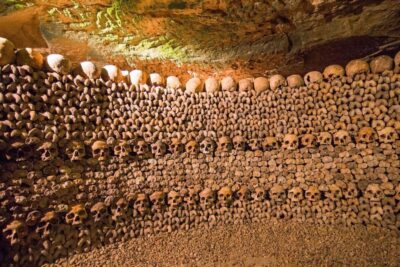
Paris: Catacombs Entry & Seine River Cruise with Audio Guide
Read our review →
Paris: Catacombs, Audio Guide, and River Cruise Option
Read our review →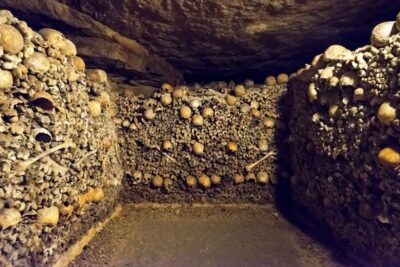
Paris: Catacombs Ticket and Seine River Cruise
Read our review →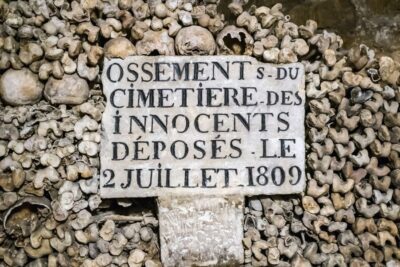
Lists this cave tour appears in