
Review · THE UK
London: Postal Museum Entry Ticket and Underground Rail Ride
London’s Postal Museum has one great trick up its sleeve: beneath the galleries, you can board a small train and ride through the old Mail Rail tunnels once used to carry letters beneath the city. The journey lasts about 15 minutes, but the clever videos, commentary, and dark tunnel setting make those minutes count.
I like the hands-on mail-sorting carriage, where a wobbly floor shows how railway postal workers sorted letters while trains moved. I also like the mix of serious artifacts and playful displays, from the first Penny Black stamp to stamp-design activities for children. The main drawback is that the ride is short, and the museum can feel child-focused and crowded on busy weekends.
Key points to know before you go

- The Mail Rail ride is the main event: Expect a short underground train journey with commentary, projected films, and views into the old railway tunnels.
- The wobbly sorting carriage is a clever highlight: You can try to sort letters while the floor shifts beneath you.
- The Penny Black adds historical weight: You will see the world’s first postage stamp among displays covering more than 500 years of postal service.
- Families get the most from the visit: Children have games, dressing-up areas, interactive stations, and stamp-design activities.
- Plan for more than 90 minutes: The ride is short, but the full museum can take two to three hours if you read the displays and stop for refreshments.
- Check the small-print comforts: The museum is wheelchair accessible, and cancellation is free up to 24 hours ahead.
Why London’s Postal Museum is more than a stamp collection
The Postal Museum tells the story of how people kept in touch before email, mobile phones, and instant messages. That sounds dry on paper. Here, it is made practical through machines, old films, personal stories, interactive games, and the underground railway that carried letters across London.
I like that the museum gives you something to do almost immediately. Instead of walking past glass cases for an hour, you can test mail-sorting equipment, inspect old communication technology, and see how the postal service changed over time. It works for adults who enjoy industrial history, but children have enough buttons, games, costumes, and challenges to stay involved.
The attraction is listed as a 1.5-hour experience, but that is a tight estimate. The Mail Rail ride takes roughly 15 minutes, and you can easily spend another hour or more in the galleries. Families who stop for the café, shop, and hands-on displays may need two to three hours. One useful feature is that admission tickets have been described as valid for a year, so a rushed first visit may not mean you have missed everything. Check the current ticket terms when booking.
At about $24 per person, this is not the cheapest small museum outing in London. Still, the price includes the museum and underground ride, not just a standard gallery admission. I consider it good value if you care about unusual transport, communications, or family activities. If you only want a quick train ride, the cost feels higher because the ride itself is brief.
Museum visits around the UK:
- Krakow: Rynek Underground Museum Guided Tour
★ 4.6 · 1,122 reviews - From Sofia: Rila Monastery and Optional Museum, Cave or Spa
★ 4.6 · 270 reviews - Beatenberg: Beatus Caves Entry Ticket with Museum
★ 4.6 · 253 reviews
Beginning with 500 years of postal history
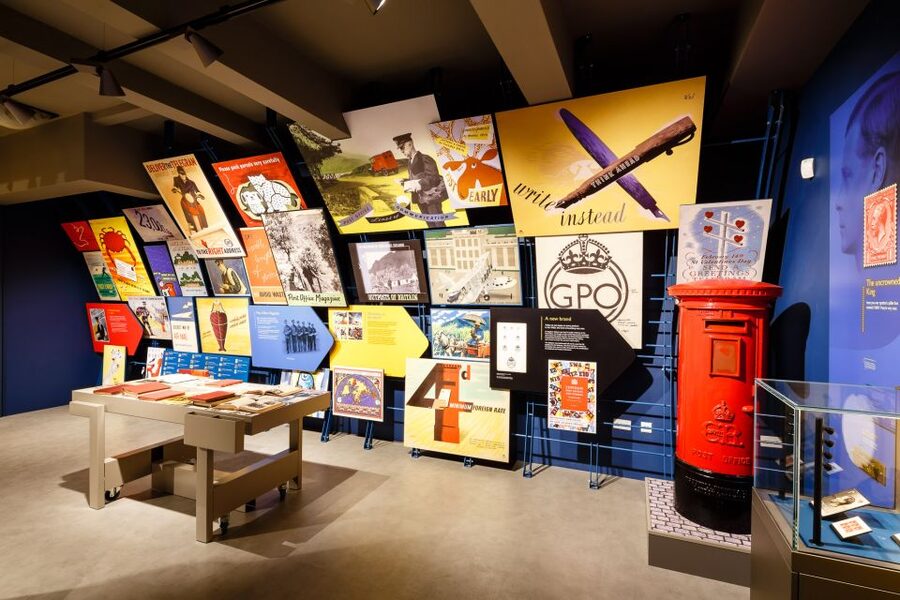
Start in the museum galleries, where the story reaches back more than five centuries. The displays explain how the postal system developed and how people, horses, coaches, sorting offices, post boxes, stamps, and telephones all played a part.
The Penny Black is one of the clearest reasons to visit. It was the world’s first postage stamp, and seeing the actual object gives the wider story a firm anchor. You also get a sense of how a simple stamp changed the way ordinary people sent letters. This is not only a display for stamp collectors. It helps explain the birth of a modern communications system.
Look for the flintlock pistols used to defend the mail from theft. They are a sharp reminder that carrying letters was once a risky job. A postal service depended on people and animals moving valuable correspondence across the country, often in conditions that were far less secure than today.
The museum also explores the development of post boxes and telephone boxes. These familiar red symbols are easy to take for granted, but the displays show how public communication changed in stages. I found this part useful for families because parents can explain old telephones and letterboxes from personal memory, while children see how different daily life once was.
The strange skill of sorting mail on a moving train

One of the most effective exhibits is a mock-up railway carriage with a floor that wobbles beneath you. Your task is to sort mail while the carriage shifts, giving you a small taste of the physical work done by railway postal staff.
It is a simple idea, but it turns a historical explanation into a practical lesson. You quickly see why balance, speed, and concentration mattered. A label explaining the job would not have the same effect as trying to keep your footing while handling letters.
This is one of the best stops for mixed-age groups. Children can treat it as a game, while adults understand the work behind the system. I would give it a try even if you normally skip interactive museum stations. It explains more in a minute than a long panel of text.
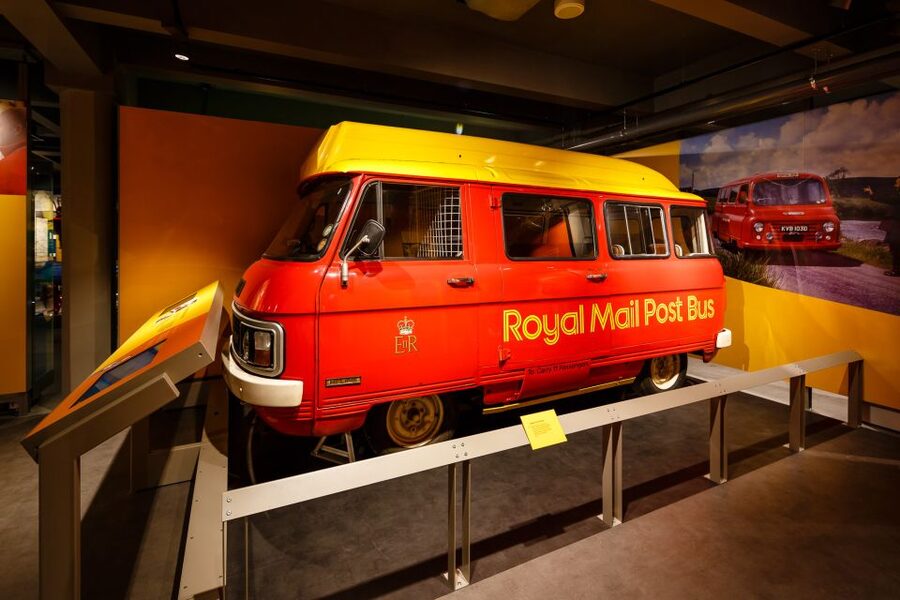
The galleries also include a miniature Victorian rail car that operated on London’s streets. It helps connect the public-facing postal network with the hidden railway below it. Taken together, these exhibits show that delivering a letter involved far more than putting it through a slot.
Boarding the 100-year-old Mail Rail
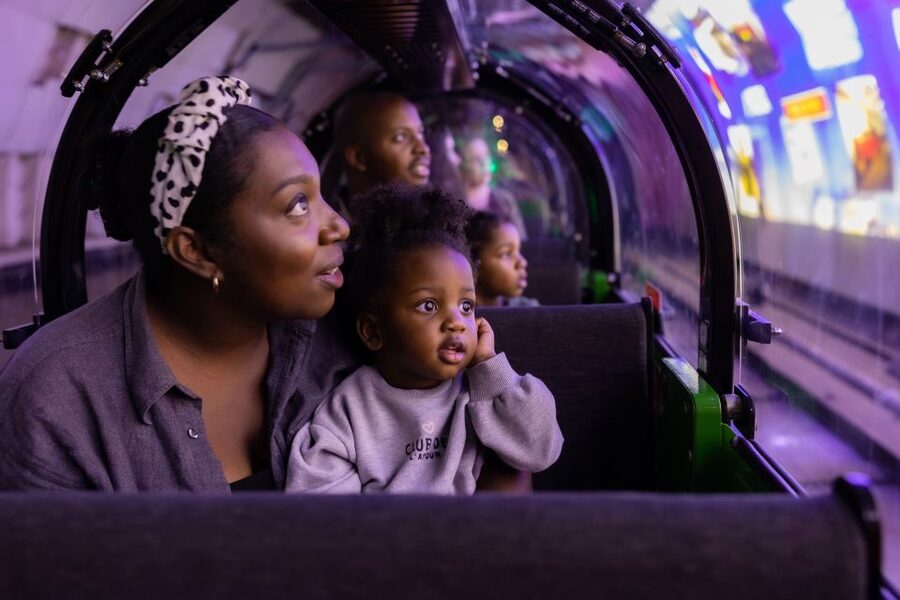
The Mail Rail ride takes you into the former underground railway built for the Post Office more than 100 years ago. You board a miniature train and travel through a section of the long-hidden tunnels.
The ride lasts around 15 minutes. That is enough time to make it memorable, but not enough for a full railway tour. The train pauses for projected video clips, and commentary explains the railway and the people who worked there. The walls become part of the presentation, with films and images helping you understand what the tunnels were used for.
The presentation uses the railway itself rather than treating it as a bare transport ride. That makes the experience feel more like a short historical show. You learn how letters moved below London while sitting in a train designed for the space.
The cars are small, so tall visitors may find the ride less comfortable. It is also not a good match for anyone who dislikes confined spaces. One part includes a blackout experience, which may feel unsettling for younger children. Parents should prepare children for a dark section rather than letting it come as a surprise.
Bags are left aside before boarding, but the storage arrangement is organized. Separate lockers on each train are locked by a staff member and opened when you return. That detail matters because it lets you enjoy the ride without holding a bag in a tight carriage.
The biggest limitation is duration. Some visitors will wish the train ride offered more tunnel time and more detail about the railway. I agree that 15 minutes is brief, especially when the attraction is built around such an unusual piece of London infrastructure. Still, the projected films and narration make good use of the time.
Entry tickets around the UK:
- Naples: Naples Underground Entry Ticket and Guided Tour
★ 4.4 · 21,781 reviews - Naples: Catacombs of San Gennaro Entry Ticket & Guided Tour
★ 4.6 · 7,941 reviews - Porto Cristo: Caves of Hams Entry Ticket
★ 4.2 · 6,548 reviews - Rome: Catacombs of St. Callixtus Entry Ticket & Guided Tour
★ 4.6 · 3,037 reviews
What makes the galleries work for children
The Postal Museum is particularly strong for families with children around primary-school age and older. Interactive displays let children sort mail, create or design stamps, dress up, and play educational games. The approach is active without losing the historical subject.
A child can learn how communication changed between generations by handling displays and looking at old equipment. Adults may remember rotary telephones, older postal systems, and traditional post boxes. That shared contrast gives families something to talk about instead of sending children off to press buttons alone.
Children around eight may also be interested in Sorted!, a separate Postal Play Space that must be booked through the museum’s own website. It is not included automatically with the standard entry ticket, so check the arrangement before you go.
The family focus has a downside. On busy weekends, young children can take over the interactive stations, making it hard for adults or older children to use them. If you prefer quiet reading and careful examination of displays, choose a less busy time if the schedule allows.
Adults without children are not out of place, especially if you enjoy transport, engineering, postal work, or social history. But you should know what kind of museum this is. It is designed to teach through activity, not to offer a large, silent collection of rare objects.
Films, stories, and details worth slowing down for
The museum works best when you give the displays time. Alongside objects such as the Penny Black and flintlock pistols, you may find stories about the people and animals connected with the postal service.
One particularly memorable story concerns a mail stagecoach horse attacked by a lioness. Details like this give the subject personality. They show that postal history is not simply a timeline of stamps and machines. It involves workers, animals, dangers, changing technology, and the daily effort needed to move messages.
The projected timeline is another useful feature. It places postal developments in sequence and helps you see how communication changed across generations. I recommend using the timeline to get your bearings, then returning to the individual displays that catch your attention.
The museum also presents older films and visual material. These help explain the working world behind the equipment. You are not just looking at a telephone box or sorting device, you are seeing how such objects fit into ordinary life.
Because the displays cover so much ground, you may not finish everything in one visit. That is not necessarily a problem if your admission terms allow a return visit. On a first visit, I would prioritize the Mail Rail ride, the sorting activity, the Penny Black, and the transport displays before reading every panel.
Food, the shop, and the practical side of the visit
The on-site café is family-friendly and offers snacks and refreshments. It is useful for a short break, especially if you are visiting with children and plan to stay for several hours.
Service and cleanliness may vary at busy times. A late-day visit can mean untidy tables or spills that have not yet been cleared, so take a quick look before settling down. The café is a convenience rather than a reason to visit, but it helps make the museum easier to manage as a longer outing.
The shop focuses on communication-related goods. You might find items connected with stamps, postal themes, and old forms of messaging. It is a pleasant final stop if you want a small souvenir that fits the visit rather than a generic London memento.
The museum is wheelchair accessible. Since the Mail Rail uses small carriages and underground spaces, it is sensible to check the attraction directly about the current boarding arrangements if you have specific mobility needs. The supplied information confirms general wheelchair access but does not provide detailed ride restrictions.
The meeting point is simply the Postal Museum itself. The ticket covers entry to the museum, including access to the Mail Rail experience as part of the attraction. Starting times vary, so you need to check availability before choosing a visit.
Who will enjoy it most
I would recommend the Postal Museum to families looking for an activity that adults can enjoy too. Children get the games and train ride, while adults get the social history, machinery, old films, and a chance to explain how communication worked before smartphones.
It also suits people who like unusual transport experiences. The Mail Rail is not a long railway excursion, but riding through a former underground postal system is far less ordinary than taking another sightseeing bus.
History fans should come with realistic expectations. The collection is informative, but the museum is not enormous. Some adults may find the main gallery too light on objects or too focused on children. The strongest historical material is spread through the interactive displays and the Mail Rail presentation rather than arranged as a large traditional archive.
The attraction is less suitable if you dislike enclosed spaces, cannot manage a small carriage, or want a quiet museum with no playful exhibits. It is also not ideal if you only have time for a very short stop, since the train ride alone does not justify the full visit for everyone.
Free cancellation up to 24 hours before the experience and a reserve-now, pay-later option make the booking flexible. Those terms are useful for a London itinerary, where weather, transport, and family energy can change quickly.
Should you book the Postal Museum?
Book it if you want a distinctive London attraction with a real underground railway, practical exhibits, and enough activity to keep a family occupied. The Mail Rail ride, wobbly sorting carriage, Penny Black, and old postal defenses give the visit several strong points rather than one gimmick.
Skip it if you want a long train journey or a large museum devoted mainly to rare postal objects. The ride is short, and the galleries lean toward children and hands-on learning.
For most people, I would allow two to three hours, not just the advertised 1.5 hours. Arrive ready to ride the Mail Rail, then slow down for the sorting activity and the stories in the galleries. At $24 per person, it offers fair value when you use the whole museum, especially for a family that wants a break from London’s bigger, more crowded attractions.
FAQ
How long does the Postal Museum experience last?
The listed duration is 1.5 hours. The Mail Rail ride itself lasts about 15 minutes, but you may need two to three hours to see the galleries, try the interactive exhibits, visit the café, and browse the shop.
What is included in the ticket?
The ticket includes entry to the Postal Museum. The experience includes access to the museum exhibits and the underground Mail Rail ride described as part of the visit.
How long is the Mail Rail ride?
The underground train ride lasts approximately 15 minutes. It includes commentary and projected video clips explaining the railway and its history.
Is the Postal Museum suitable for children?
Yes. The museum includes educational games, hands-on activities, dressing-up opportunities, stamp-design activities, and the Mail Rail ride. The separate Sorted! Postal Play Space for children aged eight must be booked separately.
Is the Postal Museum wheelchair accessible?
Yes, the activity is listed as wheelchair accessible. The available information does not give detailed boarding guidance for the small Mail Rail carriages, so check with the museum if you have specific access needs.
Can I cancel my booking?
You can cancel up to 24 hours in advance for a full refund. A reserve-now, pay-later option is also available, subject to the booking conditions.
Newly added caves around the UK
- London: Jack the Ripper Tour and Underground Prison in Spanish★ 5.0 · 15 reviews
- London: Secrets of the London Underground Walking Tour★ 4.6 · 211 reviews
- Liverpool: The Beatles and Cavern Quarter Walking Tour★ 4.7 · 133 reviews
- Liverpool: City and Cavern Quarter Walking Tour★ 4.9 · 36 reviews
- Edinburgh: Underground Vaults and Graveyard Evening Tour★ 4.4 · 393 reviews
- Edinburgh: Gin Tasting at Underground Venue★ 4.9 · 84 reviews
- Edinburgh: The Lost Close Underground Scotch Whisky Tasting★ 4.7 · 474 reviews
- Edinburgh: Kids Multi-Sensory Underground Small-Group Tour★ 4.7 · 52 reviews
UK Cave Tours worth comparing.

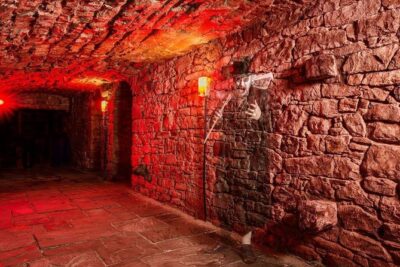

Underground Vaults Walking Tour in Edinburgh Old Town
Read our review →
Edinburgh: Haunted Underground Vaults and Graveyard Tour
Read our review →
Edinburgh: Late-Night Underground Vaults Terror Tour
Read our review →
Edinburgh: Multi-Sensory Haunted Underground Tour
Read our review →
Edinburgh: Underground Vaults Evening Ghost Tour with Whisky
Read our review →Lists this cave tour appears in