
Review · ITALY
Catania: Underground Catania Tickets and Guided Tour
Catania keeps much of its story below street level. On this 2.5-hour walking tour, you descend through lava caves, Roman remains, old church spaces, and passages linked to the Amenano springs. It is a good way to understand how Etna, earthquakes, eruptions, religion, and rebuilding have shaped the city.
I like the mix of places: you get both a Roman monument and natural volcanic spaces, rather than four versions of the same ruin. I also like the route between stops, which follows Via Etnea past grand palaces and late Baroque churches. The main catch is language. Italian is common on some departures, with English added by the guide, so explanations can take longer and sound less smooth in a mixed group.
Key points to know before you book
- Four underground sites in one tour: Your ticket covers four separate places, including Roman remains, a lava cave, and underground spaces beneath churches.
- Etna is part of the story: You see how eruptions and lava flows changed Catania, not just a cave with volcanic rock.
- The Amenano appears below the city: The tour follows the underground river and springs into a cave beneath the streets.
- Expect stairs and uneven ground: Some steps are irregular, and a few areas may be wet.
- The guide makes the difference: Oreste is frequently named as a warm, well-informed guide who explains the archaeology, art, and local stories with energy.
- English availability needs checking: Italian and English are offered, but some departures may involve translation during an Italian-led tour.
Why underground Catania is worth your time
Catania is often introduced through its sunny squares, black lava-stone buildings, fish market, and views toward Mount Etna. That surface story is only half the picture. The city has been repeatedly buried, damaged, rebuilt, and altered by volcanic eruptions and earthquakes.
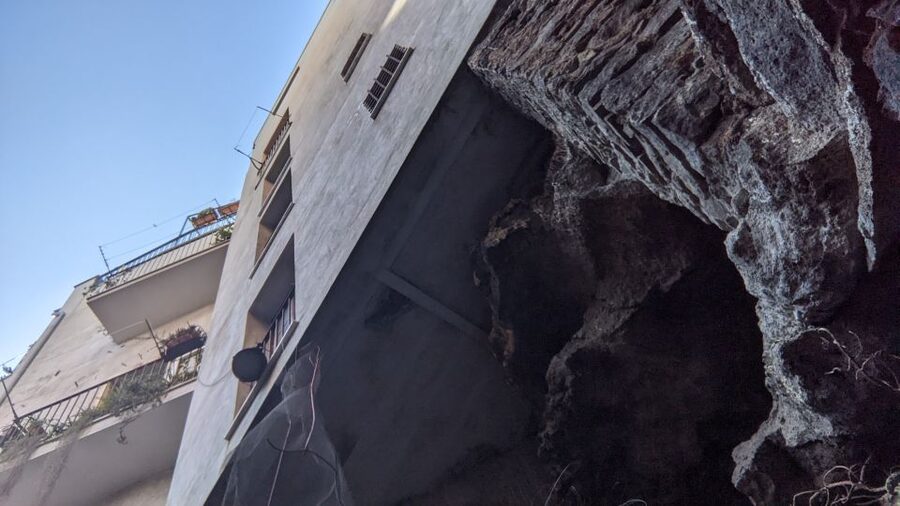
This tour gives you a physical sense of those layers. You do not simply look at a display case or hear a date. You walk below the current streets and see older structures caught beneath later buildings. In one place, the city feels Roman. In another, it feels volcanic. Beneath a church, the mood turns darker and more secretive.
I especially like this approach for a first visit. It helps explain why Catania can look so grand and so battered at the same time. The streets above are built over earlier lives, and the tour makes that fact impossible to miss.
The route also connects the sites through central Catania. You move along Via Etnea, one of the city’s main streets, while the guide points out aristocratic palaces and late Baroque churches. This walking section is not just filler between entrances. It gives you a better sense of how the underground remains fit into the city you are seeing above ground.
Entry tickets around Italy:
- Naples: Naples Underground Entry Ticket and Guided Tour
★ 4.4 · 21,781 reviews - Naples: Catacombs of San Gennaro Entry Ticket & Guided Tour
★ 4.6 · 7,941 reviews - Rome: Catacombs of St. Callixtus Entry Ticket & Guided Tour
★ 4.6 · 3,037 reviews
Starting beside the Black Amphitheater
The meeting point is near the remains of Catania’s Black Amphitheater, a Roman building that once held about 15,000 people. The name comes from the dark volcanic stone used in its construction, a reminder that Etna is part of Catania’s architecture as well as its geology.
This is a fitting place to begin. You start among Roman ruins before heading toward other buried spaces. The opening also gives the guide a chance to explain how the city’s ancient buildings became hidden beneath later development.
Meeting details can change by booking option, so check your confirmation carefully. Hotel pickup and drop-off are not included. You should plan to arrive at the stated meeting point rather than expect transport from your accommodation.
Once the group gathers, the tour becomes a walking route through central Catania. The distance between sites is manageable, but you should not think of this as a short entrance-and-exit attraction. Several hours on your feet, combined with stairs and uneven surfaces, are part of the experience.
The Roman remains beneath modern Catania
One of the four stops is an ancient Roman monument. Depending on the route and access on the day, this may include the Roman Amphitheater area and other Roman remains beneath the modern city.
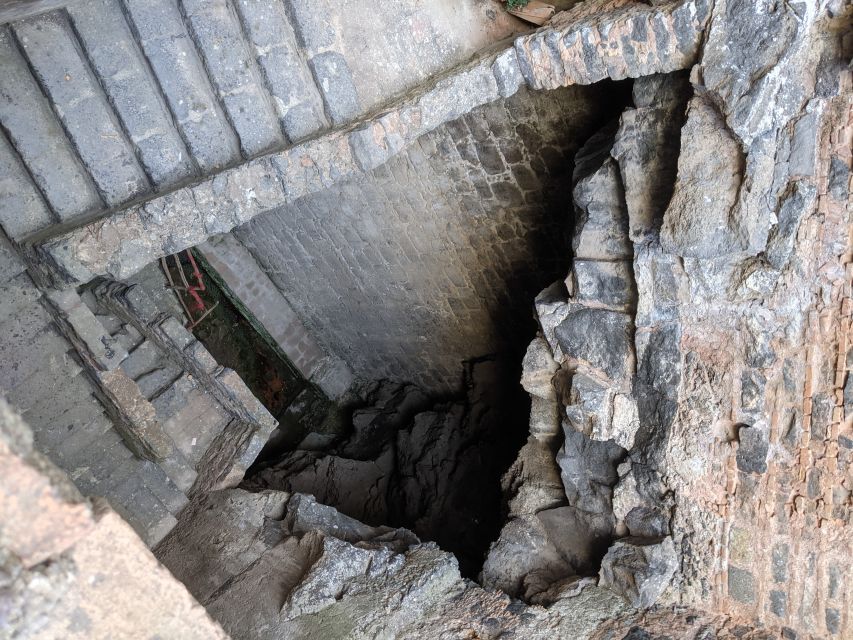
The value here is context. Roman ruins can feel disconnected when viewed alone. On this tour, they are placed beside lava caves, church foundations, and later rebuilding. You see how one period sits over another, rather than treating Roman Catania as an isolated chapter.
The Roman stop is also useful for visitors who might not make time for a separate archaeology visit. Entry to four underground locations is included in the tour price, so the guided explanation adds more than simple admission. The guide can point out what you are looking at and explain why parts of the monument disappeared from view.
Do not expect a vast, fully preserved Roman complex. Underground Catania is a sequence of remains and spaces, not one enormous archaeological park. Some sections are compact, and the acoustics may make it hard to hear every word if the group is large.
Entering a prehistoric lava cave shaped by Etna
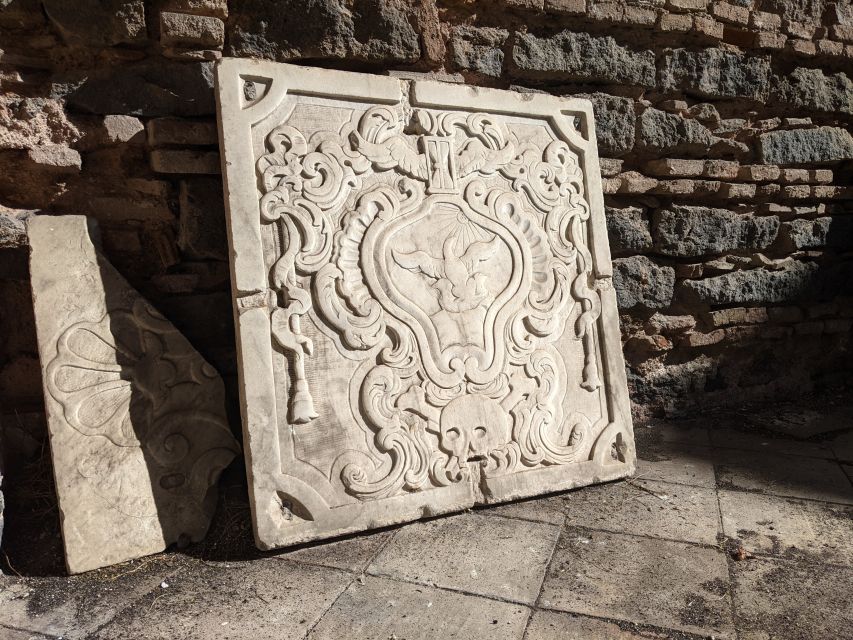
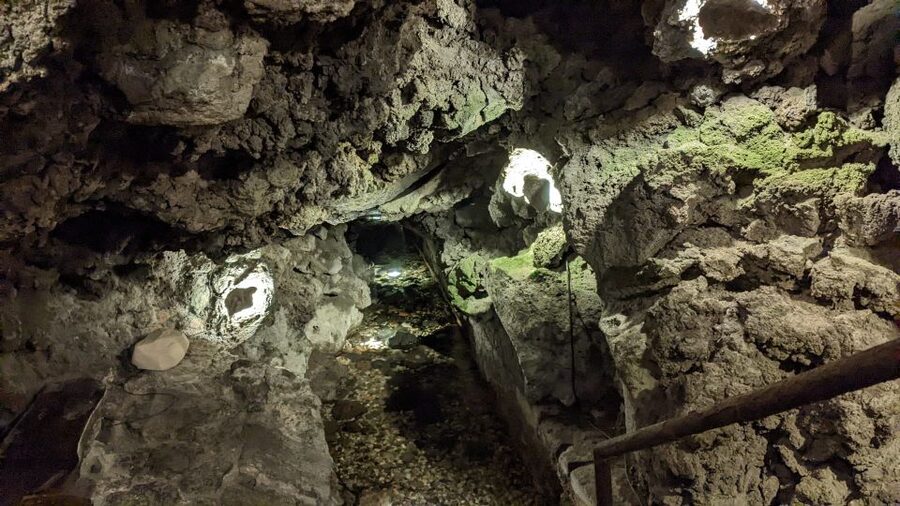
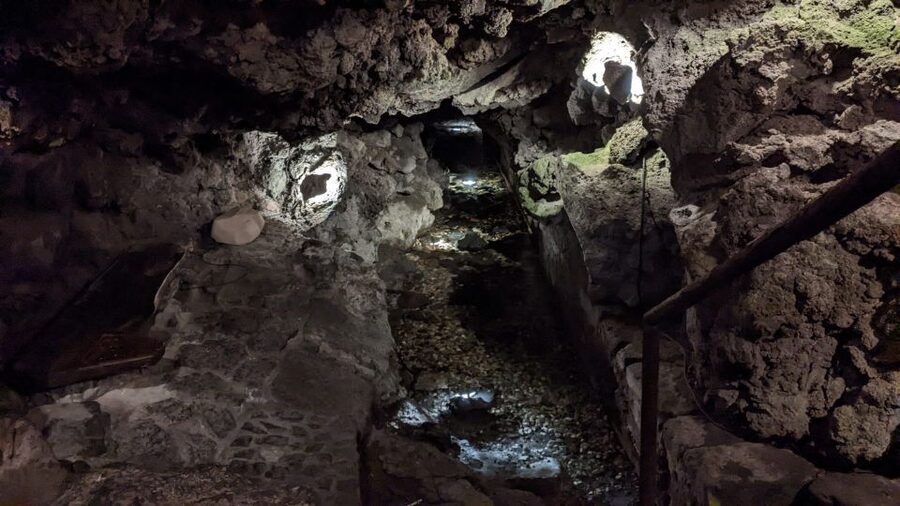
The volcanic cave is one of the tour’s most memorable stops. Here, Etna is not a distant mountain in the background. Its eruptions and lava flows become part of the space around you.
The cave helps explain how Catania has been altered by natural forces. Lava has not merely threatened the city from afar. It has flowed through and around parts of the urban area, leaving layers that later generations built over or adapted to.
You go down as far as about 15 meters below street level during the tour. That depth is enough to make the modern city feel far away, but the experience remains accessible for people who are comfortable with steps and enclosed spaces.
Wear sturdy shoes with a good grip. Some steps can be irregular, and wet patches are possible. Regular walking shoes may be fine for many people, but flimsy sandals are a poor choice. The cave is also a welcome break from Catania’s summer heat, although cooler temperatures and damp surfaces require a little care.
If you dislike confined spaces, this is an important consideration. The tour is not suitable for people with claustrophobia, and the underground sections may feel close or dark even when the passage itself is walkable.
Guided tours around Italy:
- Naples: Spanish Quarters Underground Guided Tour
★ 4.8 · 5,064 reviews - Expert Guided Tour of Colosseum Arena OR Underground, and Forum
★ 4.5 · 5,041 reviews - Rome: Colosseum Underground Small Group Guided Tour
★ 4.7 · 4,844 reviews - Colosseum Underground & Ancient Rome Guided Tour
★ 4.5 · 2,590 reviews
Following the Amenano below the squares
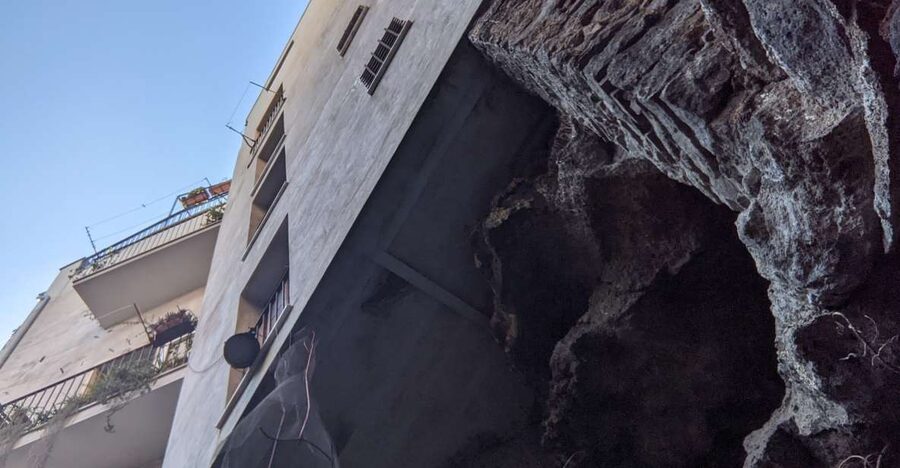
The Amenano is an underground river associated with springs beneath Catania. The tour follows this water system into a cave, giving you a different way to see the city’s relationship with water.
Above ground, the Amenano is visible in places such as the famous fountain in Piazza del Duomo. Below ground, the river becomes part of the city’s hidden structure. This stop connects a familiar landmark with something you might otherwise miss completely.
I like the way this section changes the pace. The Roman stop is about masonry and empire. The lava cave is about Etna. The Amenano site brings in water, which has its own role in the city’s history and daily life.
The floor and steps may be damp, so take your time. The underground acoustics can also be tricky. If your guide is speaking to a mixed-language group, stay close enough to hear and do not wander ahead when the route narrows.
The church spaces with a darker past
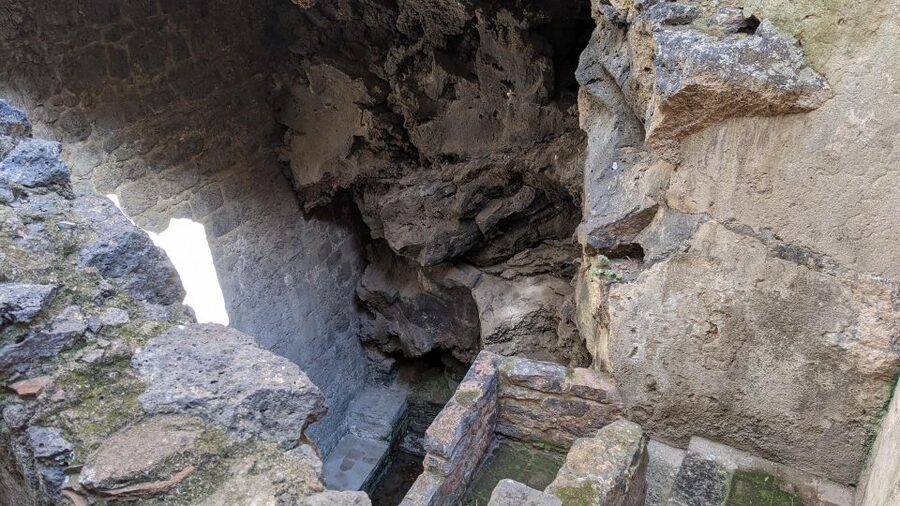
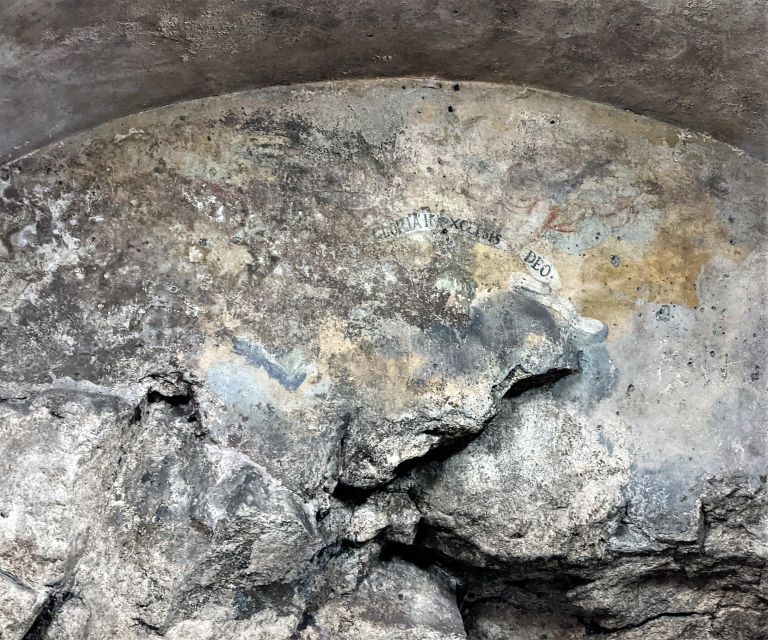
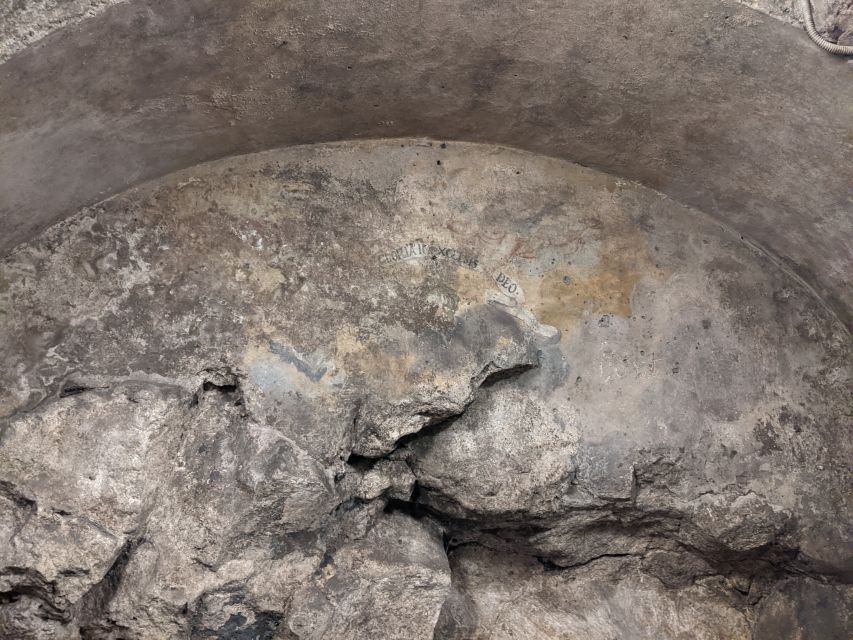
The most unusual stops are the underground areas beneath churches. One cave is linked to the place where Saint Agatha’s relics were first kept. Another lies beneath the bombed-out Church of Saint Euplius.
These sites give the tour its more emotional side. They are not simply old rooms beneath beautiful buildings. They carry stories of devotion, destruction, and changing religious life in Catania.
The late Baroque church setting above ground can be ornate and bright. Below it, the atmosphere is often plain, shadowy, and marked by age. That contrast helps you understand how much of Catania’s religious architecture has been rebuilt or altered over time.
The Church of Saint Euplius site is especially striking because its damaged state shows the effects of war and later change. You are not looking at a polished monument detached from real events. You are seeing a fragment of a building that survived in a very different form.
The tour guide’s storytelling matters most here. Several guides have been praised for explaining the sites with humor, art history, archaeology, and local anecdotes. Oreste is particularly noted for his clear explanations and friendly way of handling questions. Other departures may have different guides, but the strongest part of this experience is the human interpretation.
The walk along Via Etnea
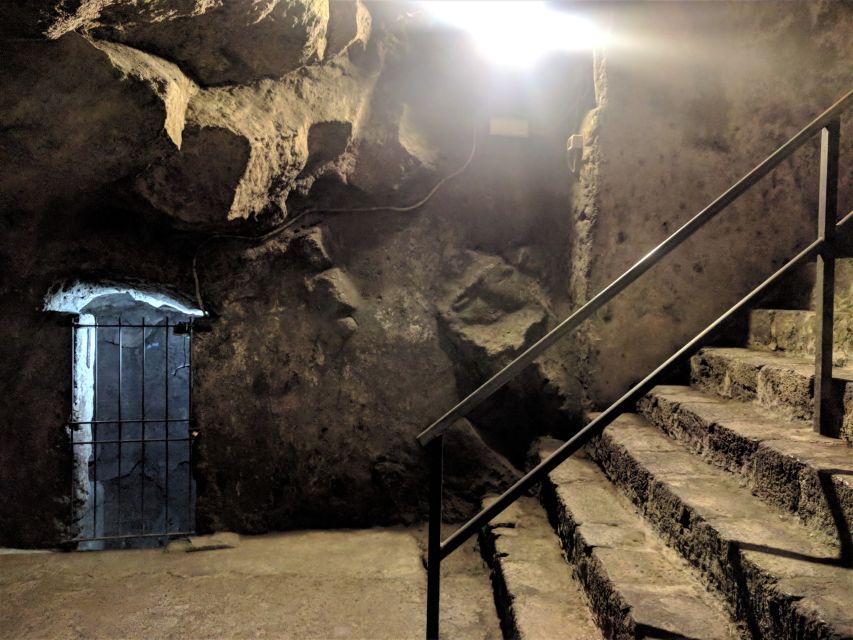
The underground entrances are spread across central Catania, so you walk between them. The route uses Via Etnea, where you can see the city’s late Baroque architecture and grand former residences.
This part of the tour gives your eyes a rest from dark interiors. It also helps you read the city above ground. Black lava stone, pale stucco, elaborate façades, and broad streets all make more sense after you have seen the volcanic and archaeological layers below.
The walking distance is not described as strenuous, but reviews of the experience make clear that you should expect a substantial amount of walking. You may also spend time standing while the guide explains a building or waits for the full group to enter a site.
A small group is ideal. In a large group, the guide may need to repeat information in Italian and English, and not everyone can enter a site at the same time. This can lead to waiting outside or standing around before the next explanation. If you have a choice of departure, an English-led option with a smaller group should make the experience easier to follow.
Language, group size, and the guide
The advertised languages are Italian and English. Still, language arrangements can vary by date. Some English-speaking participants have joined Italian tours and received full explanations in English from a considerate guide. That can work well, but it may double the speaking time.
You should check the selected departure rather than assume every tour is primarily English. If an Italian tour is the only available option, ask at the start how the guide will handle translation. Guides such as Oreste have managed this well, but the pace can become slower when every point is explained twice.
Group size also affects the experience. A small group makes it easier to hear in underground rooms and easier to move through narrow entrances. A group of nearly 30 people can feel less personal, especially when some sites have limited space.
The good news is that the guides are repeatedly described as engaging, friendly, and well prepared. Some have backgrounds in archaeology or art history, and the strongest guides do more than recite dates. They explain why a site matters and connect it to Catania’s larger story.
Price, timing, and practical value
The listed price is $29 per person for 2.5 hours. That is a fair price if you want access to several underground locations and prefer a guide to make sense of them. Four entry tickets are included, and at least some of the sites are not normally open for casual, independent sightseeing.
A previous booking reference lists a price of €25, so fares can change by date, currency, or sales channel. Check the price shown for your chosen departure before paying.
The value is strongest for people interested in archaeology, geology, architecture, or local history. You are getting four different types of underground experience, not just a single crypt. The route also includes the walk through central Catania, which adds useful city orientation.
It is less ideal if you want a quick attraction with no walking. You may spend much of the 2.5 hours moving between sites, climbing stairs, and listening while standing. The tour takes place rain or shine, although the organizer may cancel or adjust it if conditions make a site unusable.
Free cancellation is available up to 24 hours before the tour for a full refund, and reserve-now-pay-later booking may be offered. If one site is inaccessible, the organization may substitute another underground location.
Who should book this Catania experience
I would choose this tour if you have already seen Catania’s main squares and want to understand what lies below them. It is also a smart choice early in your visit because the route introduces Roman Catania, Etna’s effects, the Amenano, and the city’s churches in one outing.
It suits adults and older children who can handle stairs and uneven surfaces. It is not suitable for wheelchair users, people with mobility impairments, people with claustrophobia, or people prone to motion sickness. Electric wheelchairs are specifically not permitted, and large bags or luggage are not allowed.
The weight limit is 280 pounds, or 127 kilograms. Weapons, sharp objects, alcohol, drugs, and fireworks are prohibited.
Pack light. Wear shoes with traction, bring water for the walk, and keep your group close to the guide in crowded streets. If you are sensitive to damp or enclosed spaces, think carefully before booking.
Should you book the underground tour?
Yes, if you want a side of Catania that independent sightseeing can easily miss. The combination of lava cave, Amenano river, Roman remains, and church crypts gives you a useful view of the city’s many layers. At $29, the access to four places and the guided context make good value.
Book with care if English is essential. Confirm the language of your departure and expect some translation on mixed-language tours. Also allow for stairs, wet surfaces, walking, and possible waiting at crowded sites.
For history-minded visitors, curious first-time arrivals, and anyone seeking relief from a hot afternoon, this is one of Catania’s more rewarding short tours. If you prefer open-air sights, dislike enclosed spaces, or need step-free access, spend your money above ground instead.
FAQ
How long does the Underground Catania tour last?
The tour lasts about 2.5 hours, including the walk between the different underground sites.
How many underground places are included?
Your ticket includes entry to four different underground places.
What sites can I expect to see?
The tour includes an ancient Roman monument, a prehistoric lava cave, a cave connected with the Amenano springs, and underground spaces beneath churches. The exact site may be replaced if one location is unavailable.
Is the tour available in English?
Italian and English are listed as tour languages. Some departures may be primarily in Italian, with the guide translating explanations into English, so check the language option when booking.
Where does the tour start?
The meeting point may vary by booking option. One described starting point is in front of the ruins of Catania’s Black Amphitheater.
How far underground do you go?
The tour reaches about 15 meters below street level.
Are there many stairs?
Yes. You will climb some steps, and a few may be irregular or wet. Good shoes are recommended.
Is the tour suitable for wheelchair users?
No. The experience is not suitable for wheelchair users, people with mobility impairments, or electric wheelchair users. It is also not recommended for people with claustrophobia or motion sickness.
Newly added caves around Italy
- Perugia: Entry Ticket and Guided Tour of Perugia Underground★ 4.6 · 579 reviews
- Palermo Experience: Monreale, Catacombe e Mondello con Cibo★ 5.0 · 31 reviews
- Palermo: Boat Tour With Aperitif Snorkeling And Cave Tour★ 4.8 · 381 reviews
- Palinuro: Boat Trip along the Coast & Blue Grotto Visit★ 4.4 · 63 reviews
- Orvieto: 2-Hour Cathedral and Underground Tour★ 4.8 · 24 reviews
- Naxos: Isola Bella, Blue Grotto, & Mazzarò Bay Boat Tour★ 4.6 · 568 reviews
- Narni: Guided underground Experience★ 4.6 · 66 reviews
- Naples Top Sights & Underground small group tour★ 4.7 · 59 reviews
Italy Cave Tours worth comparing.
Naples: Naples Underground Entry Ticket and Guided Tour
Read our review →
Colosseum: Underground and Ancient Rome Tour
Read our review →
Naples: Catacombs of San Gennaro Entry Ticket & Guided Tour
Read our review →
Matera: Sassi Tour with Cave House and Rupestrian Church
Read our review →
Rome: Capuchin Crypts and Catacombs Tour with Transfers
Read our review →
Naples: Spanish Quarters Underground Guided Tour
Read our review →
Expert Guided Tour of Colosseum Arena OR Underground, and Forum
Read our review →
Lists this cave tour appears in