
Review · ITALY
Cagliari: Underground Cagliari Walking Tour
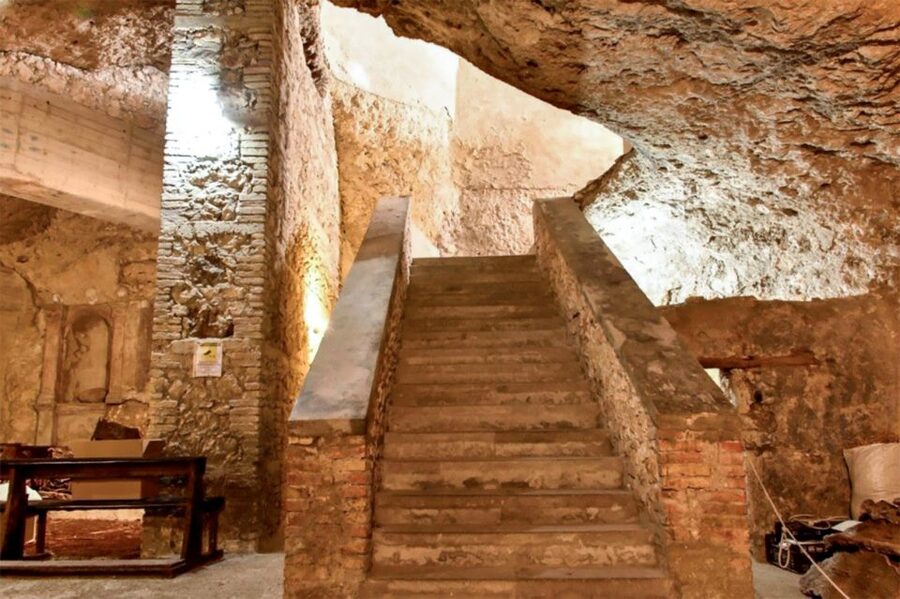
Cagliari’s best stories are not all in the bright streets above. This tour takes you into a 120-meter WWII bomb shelter, a dripping crypt once used for pagan worship, and Roman ruins beneath Saint Eulalia church. It is an unusual way to connect the city’s recent wartime past with its ancient beginnings.
I like the mix of three very different underground sites and the short walks through Stampace and Marina between them. I also like the capable bilingual guiding, with guides such as Francesca, Valentina, Federico, and Silvia praised for clear explanations and good humor. The main drawback is that English and Italian are handled together, so a larger group may move slowly or spend less time hearing each language.
Key points
- 120-meter candle-lit shelter: Walk through a private tunnel beneath the Salesian school, used as a bomb shelter during World War II.
- Santa Restituta crypt: Hear dripping water and see surviving frescoes in a site linked to fifth-century pagan worship.
- Roman road beneath Saint Eulalia: View paved Roman ruins in the underground archaeological area.
- Short outdoor connections: The tour links the underground sites with walks through Stampace and Marina.
- Optional four-hour version: Add a guided Old Town walk or a wine-and-Sardinian-snack stop.
- Practical limits: Comfortable shoes are needed, and the tour is not suitable for wheelchair users, people with mobility impairments, claustrophobia, or visual impairments.
What Cagliari reveals below street level
Cagliari can feel like a sunlit port city of viewpoints, lanes, churches, and cafés. This tour changes the scale completely. You pass from open streets into narrow, dim places where the city’s past feels close enough to touch.
The history comes in layers. The WWII shelter shows how ordinary people faced modern warfare. Santa Restituta reaches farther back, with traces of Christian and pre-Christian use. Saint Eulalia then takes you into Roman Cagliari, including a paved road preserved below the church.
That range is the tour’s main strength. You are not visiting three versions of the same underground attraction. Each stop has a different mood and purpose, and the walks through Stampace and Marina help you see how the sites fit into the present-day city.
The standard visit takes about two hours, though timing can range from two to four hours depending on the option you choose. The three underground visits are guided and entry fees are included in the $35 price. That makes the core tour a fair buy, especially if you value interpretation rather than simply entering a site and reading a few signs.
More ways underground around Italy:
- Naples: Naples Underground Entry Ticket and Guided Tour
★ 4.4 · 21,781 reviews - Colosseum: Underground and Ancient Rome Tour
★ 4.7 · 12,691 reviews - Naples: Catacombs of San Gennaro Entry Ticket & Guided Tour
★ 4.6 · 7,941 reviews
Starting beneath the Salesian school
The tour begins at the Istituto Salesiano Don Bosco on Via Sant’Ignazio da Laconi. Confirm your exact meeting point when booking, since the starting location can vary by option, and arrive 10 minutes early.
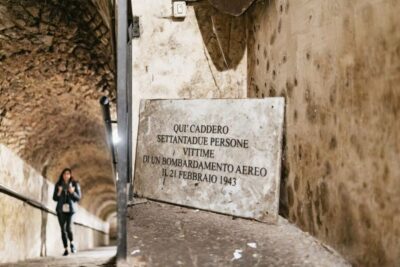
The first stop is a private tunnel shelter beneath the school. At 120 meters, it is long enough to feel like a proper passage rather than a small cellar. The candle-lit setting gives the visit a strong atmosphere, but the point is not theatrical suspense. This was a real air-raid shelter used during World War II.
I like beginning here because it gives you a human-scale introduction to Cagliari. Ancient ruins can feel distant. A wartime shelter, with its confined passage and practical purpose, brings the city’s recent past into focus.
The tunnel also sets the physical tone for the rest of the tour. You will be underground, moving through enclosed spaces, then returning to the open streets. If you dislike narrow passages or enclosed rooms, this is the point to consider carefully whether the tour suits you.
The guided visit lasts about 40 minutes. A live guide speaks in English and Italian, so explanations are delivered in two languages. That arrangement works well when the group is modest, but it can lengthen the visit when the group is large. One group included around 25 people, and the size made separate language groups seem more practical.
Walking through Stampace to Santa Restituta
After the shelter, you walk for about 10 minutes through Stampace. This is not a bus transfer or a long city march. It is a short outdoor connection, but it matters because the tour is not entirely underground.
Stampace is one of the old districts at the heart of Cagliari, and the walk gives you a chance to reset after the tunnel. You may want an umbrella if rain is expected. Comfortable shoes are more important than fancy footwear, since the tour includes streets, stairs, and underground surfaces.
The next stop is the crypt of Santa Restituta. Its atmosphere is very different from the wartime shelter. Here, water drips in the darkness, surviving frescoes add color, and the site carries evidence of use connected with pagan worship in the fifth century.
This is the stop where the guide’s explanation adds the most value. Without context, a crypt can look like a dark series of walls and chambers. With a clear account of how the space was used and changed over time, you begin to read the traces around you.
The visit lasts about 40 minutes. The damp conditions are part of the character of the place, though they may not suit everyone. You should expect uneven or confined surroundings rather than a polished museum interior.
The guides are one reason the tour scores well overall. Francesca has been praised for making the information easy to follow, while Valentina was noted for her energy and command of the subject. Federico was also singled out for mixing humor into the explanations. Guide assignments can change, but the experience depends heavily on this personal storytelling.
Crossing Marina to the Roman road
From Santa Restituta, the group walks for about 10 minutes through Marina. This second outdoor stretch breaks up the underground visits and connects the old districts to the church of Saint Eulalia.
The Marina walk is useful for orientation. You are not simply being moved between unrelated attractions. You can see how Cagliari’s historic center is arranged above and around the remains below it.
The tour ends at MUTSEU, the Museum of the Treasury and Archaeological Area of Saint Eulalia. Beneath the church, you see Roman remains including a paved Roman road. After the shelter and crypt, this final site feels more archaeological and structured.
The Roman road is a particularly good detail for anyone who enjoys seeing practical remains rather than only decorative fragments. A road shows how people moved through the ancient city. It also helps you picture the layers beneath modern Cagliari.
The guided visit here lasts about 40 minutes. Depending on opening times, an alternative underground site may be substituted, so the exact three stops are not absolutely fixed. If Saint Eulalia is a priority, check the conditions for your chosen date.
The tour can finish at several points around the center, including Piazza Yenne and the Saint Eulalia area. That is convenient if you want to continue sightseeing or find lunch nearby.
Same rock, a different way in:
- Matera: Sassi Tour with Cave House and Rupestrian Church
★ 4.7 · 6,618 reviews - Rome: Capuchin Crypts and Catacombs Tour with Transfers
★ 4.6 · 6,456 reviews - Naples: Spanish Quarters Underground Guided Tour
★ 4.8 · 5,064 reviews - Expert Guided Tour of Colosseum Arena OR Underground, and Forum
★ 4.5 · 5,041 reviews
Choosing the Old Town walk or the wine stop
You can extend the core underground visit with a guided walk through the Old Town or a food and wine option. This is where the advertised duration can stretch toward four hours.
The Old Town addition is the better choice if you want help making sense of Cagliari above ground. After visiting Stampace and Marina as connections between sites, you continue through the historic center with a guide and see its principal highlights. This option creates a more complete city introduction, rather than ending as soon as you leave the last archaeological area.
The wine option is more modest than the wording may suggest. It includes a glass of wine with Sardinian snacks, and one account found it closer to a single serving than a broad tasting. I would choose it for a relaxed finish, not for a serious lesson in Sardinian wine or a full meal.
That distinction matters when comparing prices and time. The $35 starting price is attractive for the three underground entries and guiding. An add-on can still be worthwhile, but you should select it for the mood you want: more city history with the Old Town walk, or a small local refreshment after the sites.
How much time and energy the tour needs
The three guided visits total about two hours, before counting the two short walks and any waiting or transitions. The full version may last four hours, especially with the Old Town addition.
This is not a strenuous hike, but it is not a sit-down museum visit either. You walk outside between stops and move through underground areas that may have uneven surfaces or restricted space. Wear comfortable shoes and avoid booking it immediately before another activity that requires you to arrive across town.
The tour is not suitable for wheelchair users, people with mobility impairments, people with claustrophobia, or people with visual impairments. The supplied information does not describe a fully step-free route, so you should take those restrictions seriously rather than assume the sites can be adapted.
The dual-language format deserves equal attention. English and Italian are both used, and the guide leads the same group through the stops. This makes the tour accessible to both language groups, but it can mean repeated explanations. A private group may give you a calmer pace and more opportunity to ask questions, though the exact group arrangements depend on the option booked.
What the $35 price really buys
At $35 per person, the core tour offers three site admissions plus a live guide. That is good value if you are interested in history and would otherwise need to arrange entry to each place separately.
The value is less about the amount of time underground than the connection between the sites. You get the shelter, crypt, and Roman area in one route, with explanations that link them to Cagliari’s districts and changing past.
The price also protects you from a common problem with small historic sites: arriving without knowing what you are looking at. Santa Restituta’s frescoes, the pagan worship reference, and the Roman road carry more weight when someone explains the setting and the layers of use.
If you want a private experience, private group options are available. A shared group may be perfectly adequate for most people, especially if the guide keeps the pace moving. A private option makes more sense for families, couples who want to ask many questions, or anyone who finds bilingual group tours tiring.
Cancellation is flexible, with a full refund available when you cancel at least 24 hours in advance. You can also reserve and pay later, which helps if your Cagliari schedule may change.
The strongest parts of the guiding
The most consistent praise goes to the guides’ delivery. English is spoken clearly, explanations are not rushed, and several guides have been described as warm, funny, and highly prepared. Angela specifically appreciated the way the guide switched between English and Italian without hurrying the group.
That does not mean every group will have the same guide or exact style. The experience provider is Sardinia Magic Experience, and named guides have included Francesca, Valentina, Federico, and Silvia. The guide is central here, since the sites themselves do not offer the full picture on their own.
I would book this tour if you want a human explanation of Cagliari’s past. I would skip it if you prefer to explore at your own speed, dislike bilingual guiding, or have little patience for enclosed spaces.
Who will get the most from this tour
This is a strong choice for a first visit to Cagliari, particularly if you have already seen the main streets and want something less obvious. It also suits history-minded visitors who like connecting ancient remains with more recent events.
Families with older children may enjoy the contrast between the candle-lit shelter and the Roman road. Couples can add the wine and snack stop for a quiet finish. Solo visitors may appreciate the guide because the underground sites can be harder to understand without context.
The tour is less suitable for anyone with claustrophobia or limited mobility. It is also not ideal if you want a purely underground experience, since the route includes outdoor walking through Stampace and Marina.
Should you book the Cagliari Underground Walking Tour?
Book it if you want three distinct sites, a local guide, and a side of Cagliari that ordinary sightseeing does not show you. The WWII shelter is the most unusual stop, Santa Restituta supplies the strongest atmosphere, and Saint Eulalia gives the tour its Roman finish.
Choose the Old Town walk if you want a fuller introduction to central Cagliari. Choose the wine option only if a glass of wine and Sardinian snacks sound like a pleasant extra, not a full tasting session.
For $35, the core tour is a sensible buy for most visitors who can manage the walking and enclosed spaces. Arrive early, wear good shoes, check the meeting point, and allow extra time if you choose an add-on. With those expectations in place, this is a thoughtful way to see Cagliari from below.
FAQ
How long does the Cagliari Underground Walking Tour last?
The tour lasts about two to four hours. The core visits to the three underground sites take about two hours, while the Old Town walk or wine and snack option can extend the experience.
What underground sites are included?
The tour visits the tunnel shelter beneath the Salesian school, the crypt of Santa Restituta, and the archaeological area beneath Saint Eulalia church. The route may change if site opening times require an alternative.
Is the tour entirely underground?
No. You walk outside between the sites, including short sections through the historic districts of Stampace and Marina.
Is the tour offered in English?
Yes. A live guide leads the tour in English and Italian. It is run as a dual-language experience.
Are entry fees included?
Yes. Admission to the three underground sites is included in the tour price.
Is the wine tasting included with every booking?
No. The wine tasting and Sardinian snack are included only when you select that option. The extra consists of a glass of wine with snacks rather than a large meal.
Is the tour suitable for wheelchair users or people with claustrophobia?
No. The tour is not suitable for wheelchair users, people with mobility impairments, people with claustrophobia, or people with visual impairments.
Newly added caves around Italy
- Perugia: Entry Ticket and Guided Tour of Perugia Underground★ 4.6 · 579 reviews
- Palermo Experience: Monreale, Catacombe e Mondello con Cibo★ 5.0 · 31 reviews
- Palermo: Boat Tour With Aperitif Snorkeling And Cave Tour★ 4.8 · 381 reviews
- Palinuro: Boat Trip along the Coast & Blue Grotto Visit★ 4.4 · 63 reviews
- Orvieto: 2-Hour Cathedral and Underground Tour★ 4.8 · 24 reviews
- Naxos: Isola Bella, Blue Grotto, & Mazzarò Bay Boat Tour★ 4.6 · 568 reviews
- Narni: Guided underground Experience★ 4.6 · 66 reviews
- Naples Top Sights & Underground small group tour★ 4.7 · 59 reviews
Italy Cave Tours worth comparing.
Naples: Naples Underground Entry Ticket and Guided Tour
Read our review →
Colosseum: Underground and Ancient Rome Tour
Read our review →
Naples: Catacombs of San Gennaro Entry Ticket & Guided Tour
Read our review →
Matera: Sassi Tour with Cave House and Rupestrian Church
Read our review →
Rome: Capuchin Crypts and Catacombs Tour with Transfers
Read our review →
Naples: Spanish Quarters Underground Guided Tour
Read our review →
Expert Guided Tour of Colosseum Arena OR Underground, and Forum
Read our review →
Lists this cave tour appears in