
Review · SPAIN
Almería: Caves of Sorbas Tour
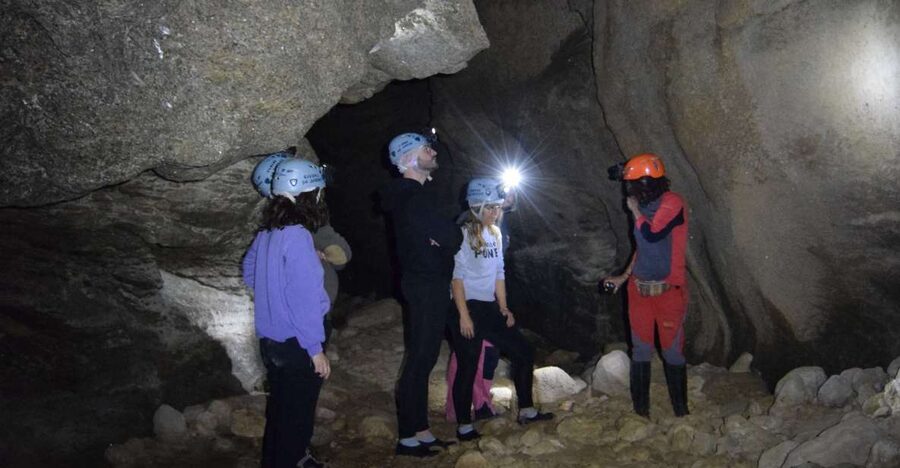
Sorbas is not a cave where you simply stroll along a paved path. You walk, climb, and crawl through gypsum galleries shaped by water over thousands of years, with your helmet light catching crystal reflections along the walls. I like the close-up look at erosion and the fact that this is a real underground adventure, not just a viewing platform. The main drawback is clear: you need to be comfortable in tight spaces and able to manage the route without physical assistance.
I also like the small, practical feel of the two-hour outing. Helmets, lighting, safety equipment, insurance, and a professional instructor are included, so you can focus on the rock rather than your kit. Guides named Heike, Marlon, and Hika have led recent visits, and the activity has earned a 4.8 rating from 82 bookings. The official language is Spanish, though one recent visit included careful English explanations.
Key points to know before you book
- You enter the Yeso Cave, also called Barranco del Infierno, the first cave complex discovered in the Sorbas system.
- This is an active caving route, with walking, climbing, and crawling rather than a simple underground tour.
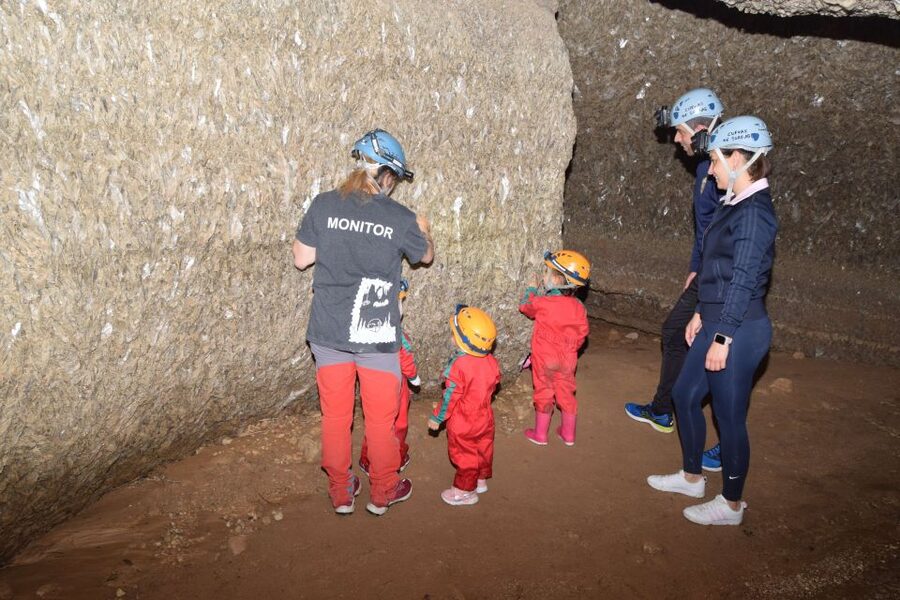
- Gypsum crystals are the main visual treat, reflecting your helmet light in the dark galleries.
- Water shaped the entire cave system, carrying rain and floodwater through the underground passages.
- The two-hour visit costs $25 per person, a fair price when equipment, insurance, and an instructor are included.
- Comfortable sports shoes are essential, and clothing may get dirty. Overalls and boots can be rented.
Entering Sorbas’s gypsum cave system
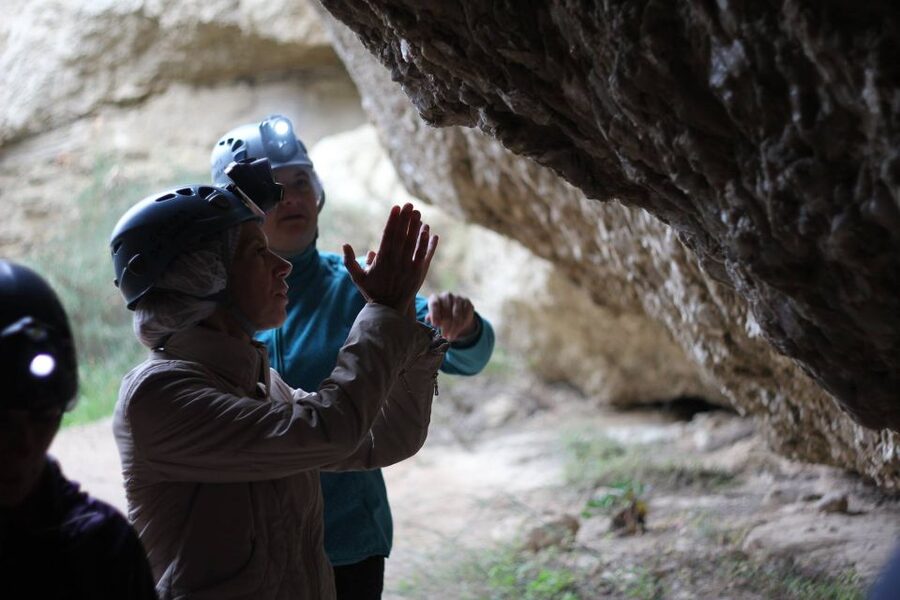
The Sorbas caves are made from gypsum, also called plaster rock. That material gives the cave a different character from the limestone caverns you may have seen elsewhere in Spain. The walls can show pale mineral surfaces and crystal formations that catch the beam from your helmet.
The route begins with the basic equipment needed for an underground visit. You receive a helmet, lighting, and other safety elements, along with assistance and civil liability insurance. A professional instructor leads the way and helps you understand how to move through the passages.
This matters because the cave is not set up as a conventional walking attraction. You are there to move through the natural galleries, not only to look at them from a fixed path. The lighting is also part of the experience. In ordinary daylight, many of the small crystals would be easy to miss. In the dark, your helmet beam picks them out one by one.
The cave is known as the Yeso Cave and also as Barranco del Infierno. It was the first cave complex in the Sorbas area to be discovered. The name sounds dramatic, but the real interest is more scientific: the cave shows what water can do to gypsum over a very long period.
More cave tours around Spain:
- Porto Cristo: Caves of Hams Entry Ticket
★ 4.2 · 6,548 reviews - Mallorca: Caves of Drach Day Trip & Optional Caves of Hams
★ 4.3 · 2,720 reviews - From Málaga: Caves of Nerja, Nerja and Frigiliana Day Tour
★ 4.7 · 2,187 reviews
Walking, climbing, and crawling underground
Expect a route with several types of movement. You walk where the galleries allow it, climb over sections that require more effort, and crawl through tighter parts. The wording matters here. This is not simply a cave walk with a few uneven steps.
You should be able to fend for yourself during the visit. The activity is intended for people who can manage the route independently, and it is not suitable for anyone with a mobility impairment. Young children must be able to walk for the visit, and children under three are not accepted.
I would choose clothing that can take a little dust or mud. The advice to wear sportswear is practical, not decorative. Wear sports shoes that stay firmly on your feet, have a useful grip, and do not have heels. One family with teenagers specifically advised using sports shoes that do not slide and clothing you do not mind getting dirty.
Overalls and boots are available to rent, which can help if you are short on suitable clothing. Still, do not treat rented gear as a substitute for basic preparation. You need shoes that fit well and clothing that lets you move your legs and arms easily.
The route can be fun for older children and teenagers who like physical activities. Families have completed it with children aged 10 and 11, as well as teenagers aged 14 and 16. The key issue is not age alone. A child who dislikes crawling, darkness, or getting dirty may not enjoy the outing.
How water created the galleries
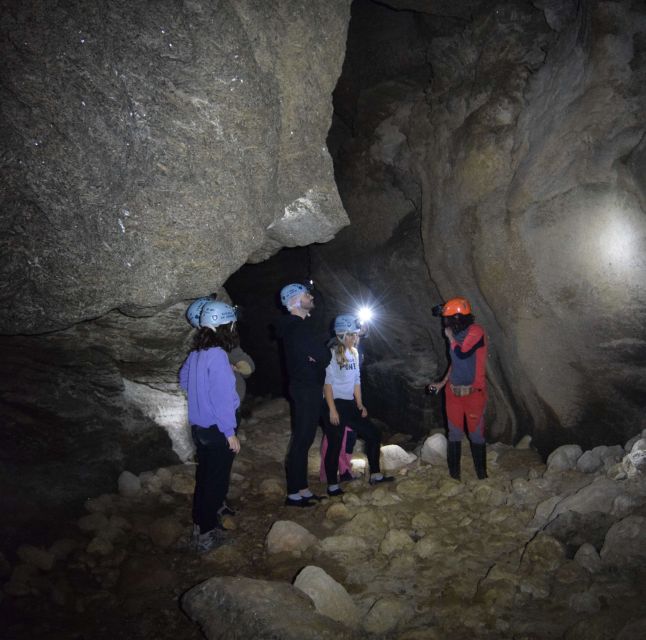
The most useful part of the tour is the explanation of how the cave formed. Sorbas has an underground karst system that collects rain and floodwater. That water then drains through the galleries, slowly cutting and shaping the gypsum.
You see the result at close range. Instead of reading about erosion in a museum, you stand beside rock that has been altered by water and time. The cave’s passages are evidence of a long process, with flowing water making routes through the mineral and leaving behind chambers, formations, and channels.
The gypsum also creates the cave’s decorative side. Stalactites and stalagmites appear along the galleries, while crystals reflect the narrow light from your helmet. The effect is not a brightly lit show cave. It is darker, less polished, and more direct. You see only what the guide’s light and your own beam reveal.
That limited light is part of the appeal, but it also means the experience depends on the guide. A good instructor keeps the group moving safely, points out formations, and explains what you are seeing. Heike has led visits described as both educational and friendly. Marlon has also guided family outings, and Hika has received praise for guiding.
The activity is listed with a Spanish-speaking instructor. If you need English, do not assume it is guaranteed, but one recent booking included clear explanations in English and reassurance at more difficult passages. If language is important to your decision, confirm it before booking.
The first cave complex and the Yeso route
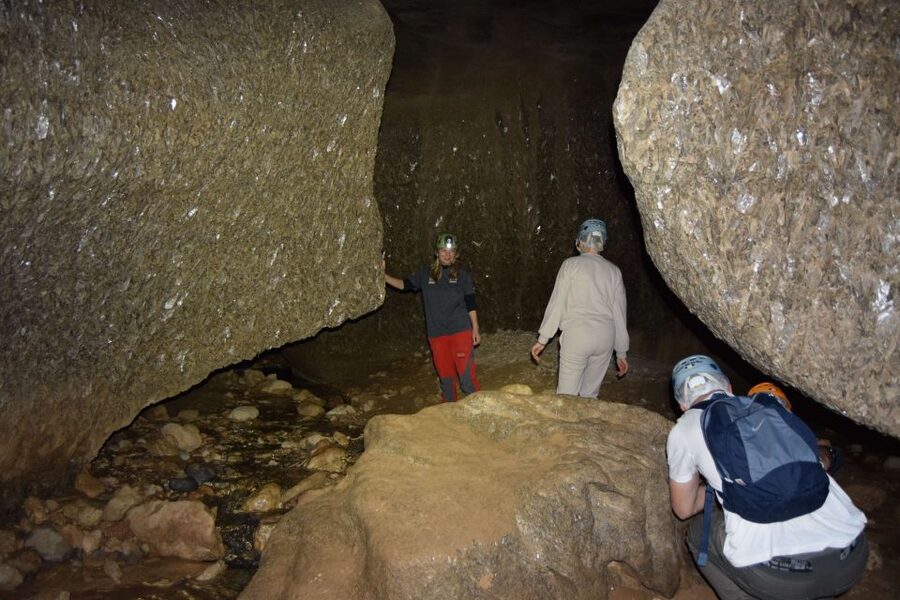
The Yeso Cave is the main focus of this two-hour experience. It is also known as Barranco del Infierno and was the first cave complex in Sorbas to be discovered. The route lets you see why this area became known for its underground geology.
The first stages are likely to help you adjust to the equipment and the dark. Your helmet light becomes your main source of illumination, and the guide sets the pace. From there, the visit moves through galleries where the emphasis changes between rock formations, narrow passages, and the signs of water erosion.
The attraction of this route is variety. You are not only looking at one large chamber. You are moving through a system of passages where the ceiling, floor, and walls require different kinds of attention. At one moment, you may be looking for mineral reflections. At another, you may be concentrating on where to place your feet or how to pass a tighter section.
The physical demands are moderate for an active person, but they are real. The activity is not suitable for pregnant women, people with heart problems, people with claustrophobia, or anyone over 264 pounds, or 120 kilograms. These limits are worth taking seriously. Underground routes leave less room for easy changes of plan.
Same rock, a different way in:
- From Valencia: Caves of San José Guided Excursion and Ticket
★ 4.6 · 1,717 reviews - Nerja: Caves of Nerja Entry Ticket with Audio Guide
★ 4.6 · 1,616 reviews - Mallorca: Kayaking, Sea Cave, Cliff Jumping & Snorkel Tour
★ 4.8 · 1,447 reviews - Ibiza: Snorkeling and SUP Paddle, Beach and Cave Tour
★ 4.7 · 1,264 reviews
How the alternative routes compare
Cuevas de Sorbas offers other ways to see the cave system. The Combined Route adds more fun and a little more difficulty. That makes it a possible choice for someone who finds the standard visit too short or wants a stronger physical challenge.
The Technical Route is aimed at adventurers. The name tells you what to expect: this is not the natural next choice for every first-time cave visitor. It should appeal to people actively seeking a harder route, rather than to anyone who simply wants to see the formations.
In summer, the Cueva del Agua Route is also available. It is described as an amazing route, but the supplied details do not specify its exact length or water conditions. If that option interests you, ask the provider what equipment and physical demands apply before choosing it.
For most visitors, the standard Yeso Cave route is the sensible starting point. It gives you the core experience of Sorbas gypsum caves, includes equipment and an instructor, and fits into a two-hour schedule. The Combined and Technical options make more sense after you have judged your comfort with crawling and uneven underground terrain.
Is $25 a fair price for two hours?
At $25 per person, this is a reasonable price for an activity that includes more than admission. You receive the helmet, lighting, safety equipment, professional instruction, assistance, and civil liability insurance. The price also pays for access to a natural cave route that requires supervision rather than a simple self-guided walk.
The value is strongest if you want an active experience. You are paying for access and guidance, but also for a safe way to move through a place you could not sensibly explore alone. The guide helps make sense of the formations and the water system, which adds an educational layer to the physical challenge.
It is less good value if you want a passive sightseeing stop. The tour requires preparation, suitable shoes, and a willingness to crawl. Someone hoping for an easy underground stroll may feel that two hours is too much effort for the result.
The price also works well for families with older children, provided everyone can manage the route. Since equipment is included, you do not need to buy a helmet or lamp for this visit. You may still want to budget for rented overalls and boots if your clothing is not suited to dirt or damp rock.
What you cannot bring into the cave
Cameras and video recording are prohibited. That may disappoint anyone who normally documents every stop, but it also keeps the visit focused on movement, safety, and the cave itself.
Do not plan on using a phone as a substitute for the supplied light. The tour provides the lighting you need, and your hands may be busy during climbs and crawls. A phone is also awkward to manage when you are trying to keep your balance or protect your clothing.
The no-camera rule means you should pay attention while you are inside. Notice where the crystals reflect the beam, how the water has rounded or cut the rock, and how quickly the cave changes from an open passage to a tighter gallery. You will leave with fewer photographs but a clearer memory of the route.
Who will enjoy this Sorbas cave tour?
I would recommend it to active visitors who want a hands-on look at Andalusia’s geology. It suits adults, teenagers, and children old enough to walk independently and follow instructions. Families should talk honestly about darkness, crawling, and dirty clothes before booking.
It also works for anyone who prefers a compact activity. Two hours is long enough to feel that you have entered a genuine underground system without taking over a full day. That makes it easier to fit into a wider Almería schedule.
You should think twice if you have claustrophobia or dislike confined spaces. The tour includes crawling and climbing, so people with mobility problems, heart conditions, pregnancy, or the stated weight limit should choose another activity.
The guide can make a major difference. Heike, Marlon, and Hika are among the instructors associated with recent visits, but guide assignments can change. The activity is officially offered in Spanish. If you need another language, check first rather than counting on it.
Practical preparation for the two-hour route
Wear sports shoes with good grip and no heels. Shoes should be attached securely to your feet because the route includes uneven movement and climbing.
Choose comfortable sportswear that you do not mind getting dirty. Rented overalls and boots are available, but loose or restrictive clothing will still make crawling harder. Avoid bringing anything unnecessary into the cave.
Arrive ready to listen to the instructor. The safety briefing and instructions matter more here than on a normal sightseeing walk. You will need to place your feet carefully, use the available support, and keep moving at the guide’s pace.
Remember that rainwater and floodwater pass through the cave system. The rock has been shaped by water, so conditions can vary by route and season. The supplied information does not give a detailed weather policy, so ask the provider if recent rain affects your chosen visit.
Free cancellation is available up to 24 hours before the activity for a full refund. You can also reserve now and pay later, which is useful if your Andalusia plans are still shifting.
Should you book the Caves of Sorbas tour?
Book this tour if you want to enter the rock rather than just look at it. The Yeso Cave offers a close, physical encounter with gypsum formations, crystal reflections, and water-shaped galleries. At $25, the included equipment, instructor, and insurance make the outing a sound value.
Skip it if you need a smooth, accessible path, dislike tight spaces, or want to take photos. For everyone else, this is a short but properly active Almería experience, with enough geology to make the crawling feel worthwhile and enough adventure to keep the two hours moving.
FAQ
How long does the Caves of Sorbas tour last?
The tour lasts two hours.
How much does the activity cost?
The listed price is $25 per person.
What cave do you visit?
The experience visits the Yeso Cave, also known as Barranco del Infierno.
Is this a walking tour?
It includes walking, climbing, and crawling through the cave galleries. It is not limited to an easy walking path.
Is equipment included?
Yes. A helmet, lighting, other safety equipment, assistance, civil liability insurance, and a professional instructor are included.
What should I wear?
Wear comfortable clothes, sportswear, and sports shoes that stay attached to your feet and do not have heels. Overalls and boots are available to rent.
Can I take photographs or record video?
No. Cameras and video recording are prohibited inside the caves.
Is the tour available in English?
The activity is listed with a Spanish-speaking instructor. One recent booking included explanations in English, but English is not stated as the standard tour language.
Are young children allowed?
Children under three are not suitable for the activity. Young children who attend must be able to walk for the visit.
Who should not take this tour?
The activity is not suitable for children under three, pregnant women, people with mobility impairments, people with claustrophobia, people with heart problems, or people over 264 pounds, or 120 kilograms.
Newly added caves around Spain
- Palma: Caves of Genova Ticket & Digital Audio Guide★ 3.9 · 820 reviews
- Calasparra: Almadenes Canyon Rafting with Caves and Rock Art★ 4.7 · 558 reviews
- Mogán: Guided Kayak to Caves and Snorkeling Tour★ 4.6 · 329 reviews
- MENORCA: Kayak cave route + photo session.★ 4.8 · 300 reviews
- Maspalomas: Barranco de las Vacas & Caves with Sky Rebels★ 4.9 · 144 reviews
- Mallorca Marine reserve: Visit caves, cliffs and snorkeling★ 4.5 · 15 reviews
- Mallorca: Aquatic Cave Exploration Guided Tour★ 4.9 · 119 reviews
- Mallorca: Half-day of Natural Wonders at the Drach Caves★ 3.8 · 90 reviews
Spain Cave Tours worth comparing.
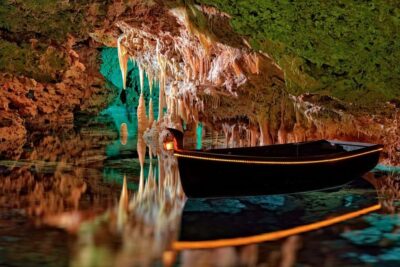
Mallorca: Caves of Drach Day Trip & Optional Caves of Hams
Read our review →
From Málaga: Caves of Nerja, Nerja and Frigiliana Day Tour
Read our review →
From Valencia: Caves of San José Guided Excursion and Ticket
Read our review →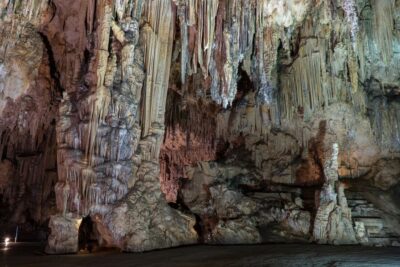
Nerja: Caves of Nerja Entry Ticket with Audio Guide
Read our review →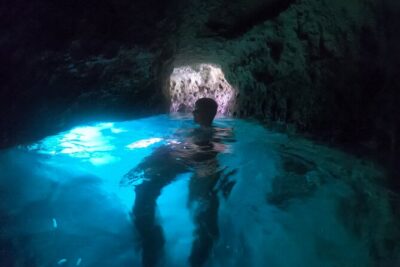
Mallorca: Kayaking, Sea Cave, Cliff Jumping & Snorkel Tour
Read our review →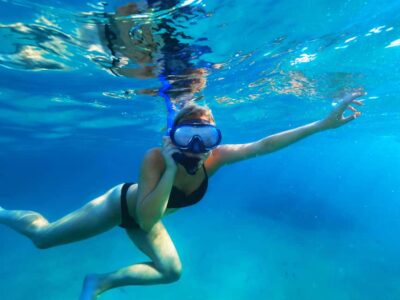
Ibiza: Snorkeling and SUP Paddle, Beach and Cave Tour
Read our review →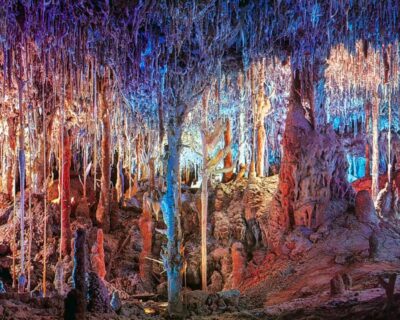
Mallorca: Dinosaurland and Caves of Hams Combined Ticket
Read our review →Lists this cave tour appears in