
Review · SPAIN
Nerja: Caves of Nerja Entry Ticket with Audio Guide
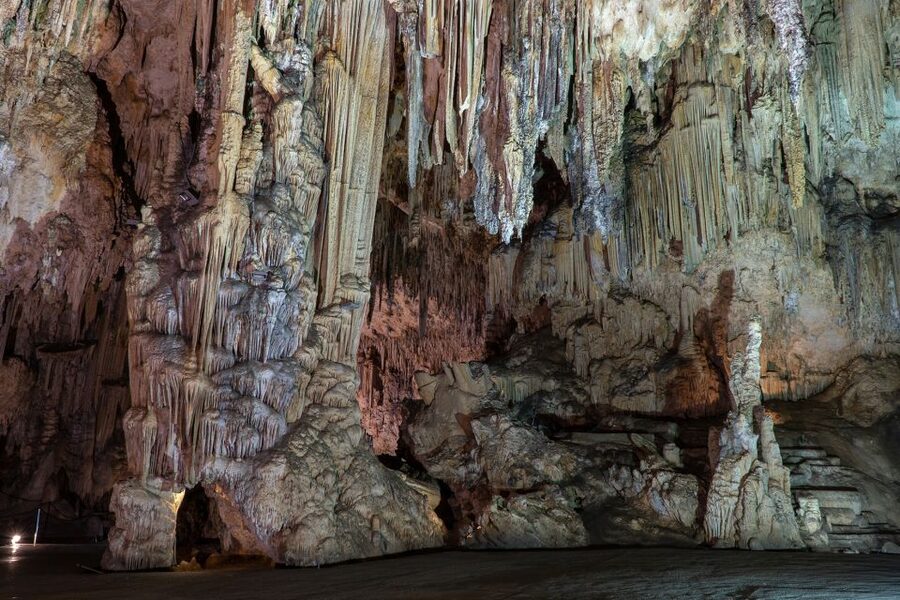
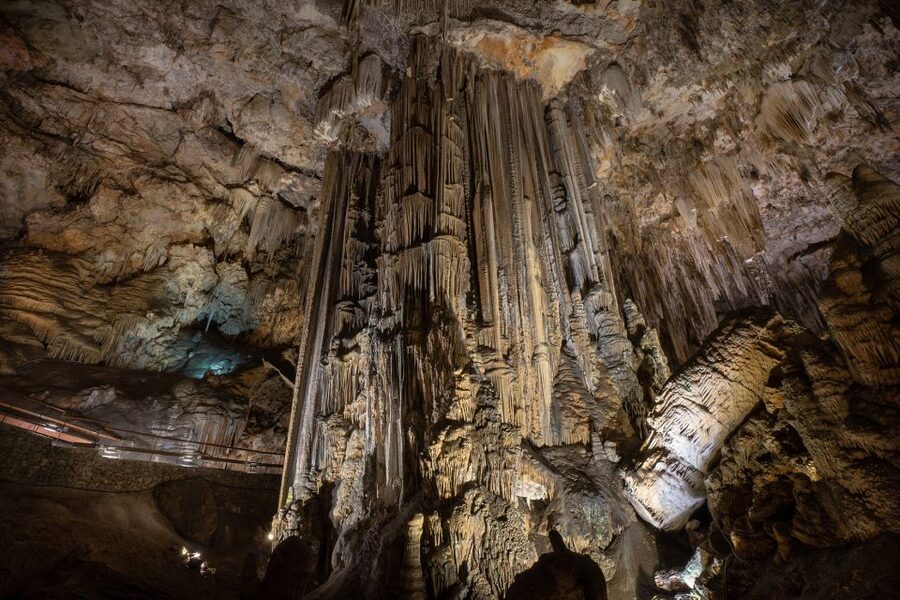
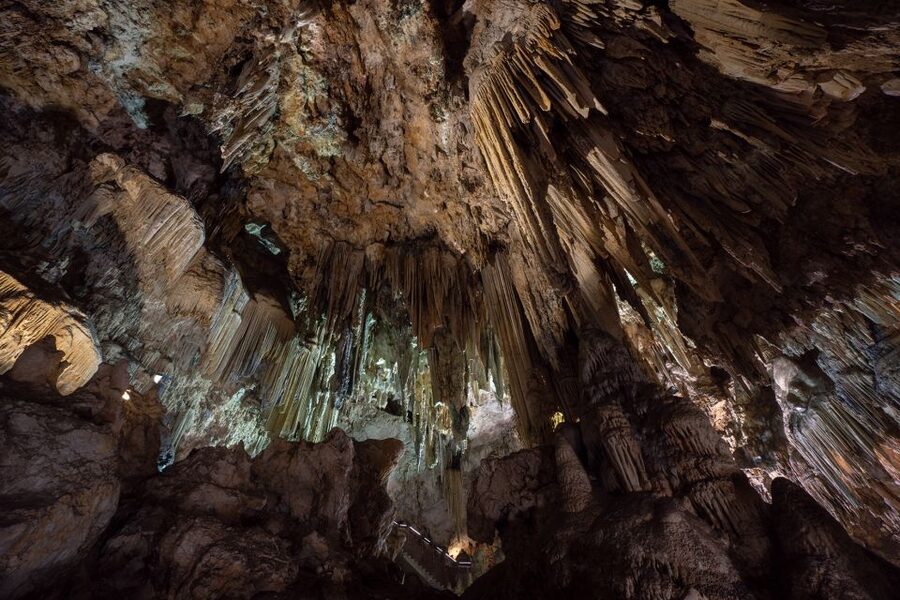
Nerja Caves are not a quick peek into a small cavern. You walk through enormous rooms filled with hanging stalactites, rising stalagmites, and the famous Cataclysm chamber, where the world’s largest cave column reaches from floor to ceiling. The scale is the main event, and it is hard to grasp until you are standing below those vast formations.
I like the freedom to move at your own speed, and I like that the ticket includes both the Museum of Nerja and the 360° virtual reality room. The main thing to plan for is the smartphone audio guide: download the required app before you arrive, bring earbuds, and do not count on a reliable signal underground.
Key points at a glance
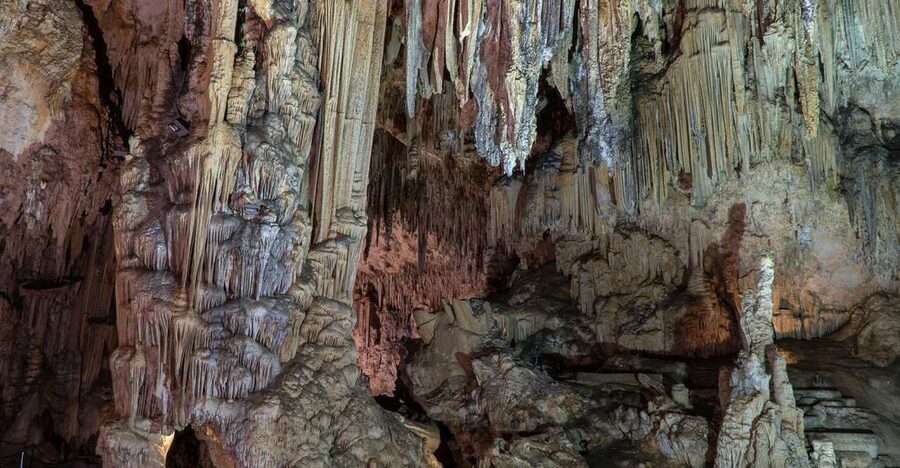
- The Cataclysm chamber: The largest and highest cave room open to the public contains the world’s largest column, formed where a stalactite and stalagmite joined.
- A self-guided route: You can stop for photos, listen at your own pace, or switch off the audio and enjoy the quiet.
- More than a cave visit: Entry also covers the Museum of Nerja and a 360° virtual reality presentation about life 35,000 years ago.
- Ancient traces: The caves contain archaeological finds and paintings associated with Neanderthal-era occupation, though the original cave art is difficult or impossible to see in the darkness.
- Plan for stairs: The route includes steps and an uphill exit, making this a poor choice for wheelchair users and people with limited mobility.
- Good value at $18: The ticket combines three related experiences, not just access to the underground chambers.
Why Nerja Caves are worth your time
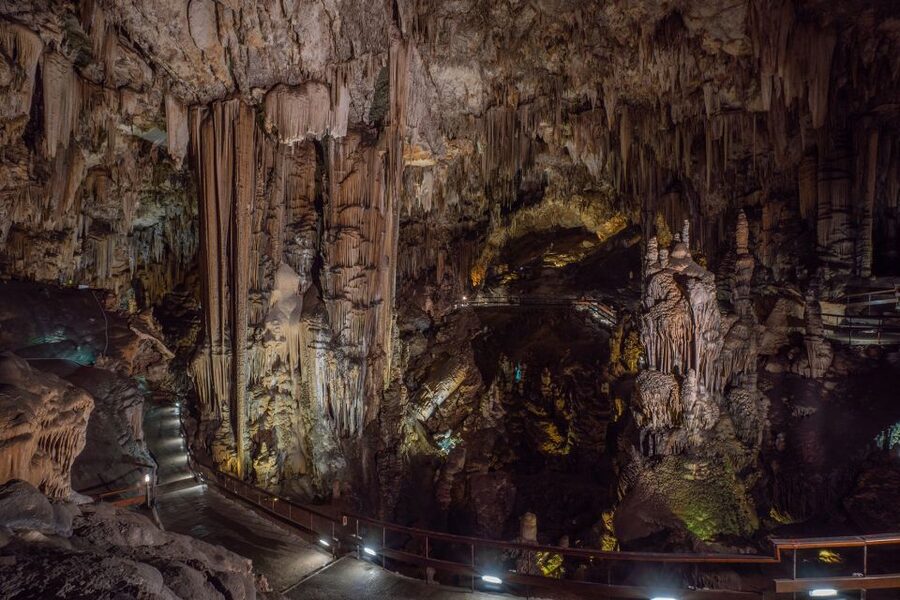
The Caves of Nerja are one of those sights that make photographs feel inadequate. A picture may show a pointed stalactite or a ribbed wall, but it cannot easily show the height of the chambers or the way the path passes from one grand space to another.
The caves were discovered in 1959 and have since been studied for their geological, archaeological, and biological value. Parts of the cave system remain closed to protect them, so the public route gives you a carefully managed look at only a portion of what lies underground.
That is important context. This is not an adventure-caving trip, and you do not wander wherever you like. You follow a marked walkway through the sections prepared for public access. In return, the route is orderly, well maintained, and easy to follow for anyone comfortable with stairs.
At $18 per person, the ticket is reasonably priced for the amount included. You get the cave entrance, mobile audio guide, museum admission, and virtual reality presentation. The value is strongest if you allow time for all three parts instead of treating the cave as a 20-minute photo stop.
Self-guided tours around Spain:
- Palma: Caves of Genova Ticket & Digital Audio Guide
★ 3.9 · 820 reviews - Paris: Catacombs Entry & Seine River Cruise with Audio Guide
★ 4.4 · 1,150 reviews - Paris: Catacombs, Audio Guide, and River Cruise Option
★ 4.6 · 966 reviews
Entering the cave and finding your rhythm
Your visit begins with a timed entry, so the site can control how many people enter at once. That helps keep the chambers from feeling packed, although your experience will still depend on the time of day.
An early visit is a smart move. The caves are quieter in the morning, and you are less likely to feel hurried by people moving behind you. It also gives you more time to pause at the larger formations without blocking the route.
The audio guide runs through a mobile app rather than relying only on a traditional handheld device. You select from a long list of languages, including English, Spanish, German, French, Italian, Portuguese, Dutch, Polish, Russian, Arabic, Chinese, Japanese, Korean, Norwegian, Swedish, and others.
Download the app and any tour content while you still have Wi-Fi. Several practical problems can spoil an otherwise simple setup: the underground signal may be weak, the correct app may not be obvious, and the volume may be hard to hear without headphones. Bring your own earbuds if possible. The audio is intended for personal listening, so using a phone speaker is not the best option.
Once it works, the format is useful. You can stop the commentary when you want to look closely, move ahead if a group gathers, or walk in silence for a while. The numbered stations help connect what you see with the explanation, but watch for the numbers because they are not always immediately obvious.
The Cataclysm chamber and the giant column
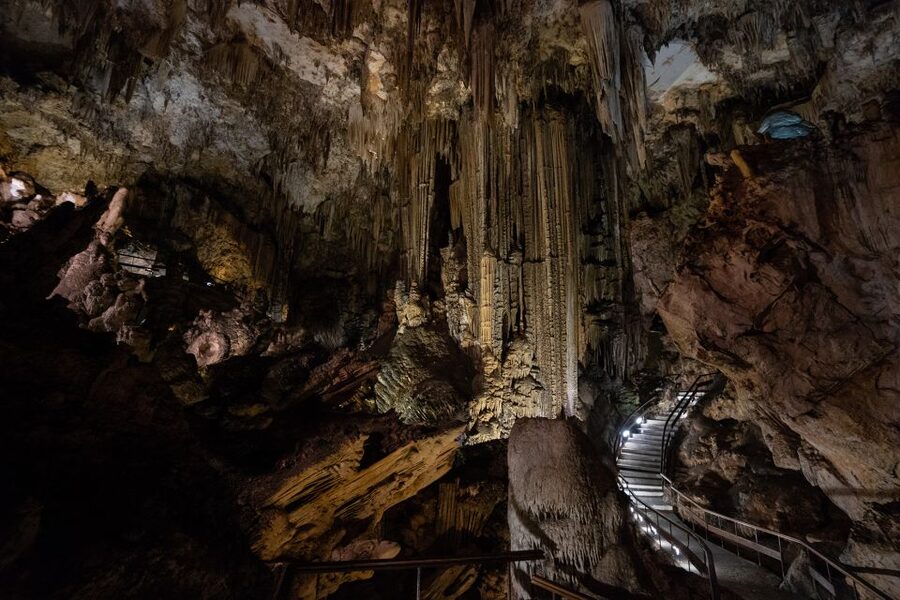
The route builds toward the Cataclysm chamber, the largest and highest room open to the public. This is where the cave feels less like a tunnel and more like a buried cathedral, though the natural formations are far more irregular than any building.
The famous column is the visual centerpiece. It formed when a stalactite growing down from the ceiling met a stalagmite rising from the floor. The result is a single enormous column, a record of slow mineral growth that took place over vast stretches of time.
The audio guide adds useful background about how caves form, but do not let the commentary replace looking. Take time to study the walls, ceilings, and floor. The formations are not all the same. Some are thin and delicate, while others are thick, folded, and almost architectural.
The route is generally well marked, with handrails and lighting along the walkways. One point of balance: some people find the lighting too limited, especially on darker sections. That low light protects the cave and preserves its atmosphere, but it can make details harder to see and photographs more difficult.
You may finish the main route in less than 30 minutes if you walk steadily. I would allow closer to an hour if you want photographs and time to listen properly. Some people may stay for two hours, particularly if they pause often and spend time in the museum and virtual reality room afterward.
Ancient art, archaeology, and what you may not see
The caves are important not just because of their size. They are also an archaeological site, with evidence connected to early human activity. The audio commentary refers to paintings that may date from the time of Neanderthal people, potentially making them among the oldest known examples of their kind.
Do not arrive expecting to stand beside brightly visible prehistoric drawings. The cave art is extremely difficult to see in the public chambers. Lighting it more strongly would help visibility but could contribute to its deterioration, so preservation comes first.
This can be a slight disappointment if the paintings are your main reason for coming. The larger lesson remains worthwhile: the cave was not simply formed by water and minerals, then forgotten. It has been a place of scientific study and human activity, and the evidence is handled carefully because it is fragile.
The Museum of Nerja is the better place to understand this part of the story. It provides context for the cave’s discoveries, archaeology, and human past without asking you to peer into near darkness. If you enjoy museums, give it more than a quick glance. One visitor found that two hours could easily be justified there, especially when taking time with the displays.
Audio tours around Spain:
- Margaret River: Self-Guided Audio Tour of Mammoth Cave
★ 4.7 · 48 reviews - Marseille: Cosquer Cave Ticket & Panier District Audio Tour
★ 4.4 · 17 reviews
The museum adds meaning to the underground route
The museum works best after the cave visit, when you already have the giant chambers in mind. You can then connect the physical setting with the objects, explanations, and archaeological information presented indoors.
If you only walk through the cave, you may remember the size of the rooms but miss why the site matters. The museum fills in that missing layer. It helps explain the relationship between geology, early human presence, and the work carried out since the caves were found in 1959.
This is also where you are more likely to understand the cave paintings. The original artwork inside the cave is not displayed like a gallery exhibit, and the darkness makes it easy to miss. The museum gives you a clearer way to learn about the material without putting the fragile originals at risk.
The ticket includes museum entry, so there is no need to decide at the door if you have already paid for it. Plan your time before the final admission period. A late arrival can leave you rushing through the museum or missing the virtual reality presentation.
The 360° virtual reality experience
The virtual reality room provides a different kind of visit. Instead of looking at the cave from a walkway, you see a 360° recreation connected to human life on Earth 35,000 years ago.
This part is especially useful for families and for anyone who wants the human story brought to life. The cave itself gives you scale and atmosphere. The virtual presentation gives you a first-person-style sense of the distant past, using technology rather than original remains.
The experience is included in the ticket, which improves the overall value. It is not a substitute for the real chambers, but it makes a good companion to them. Some people may prefer the cave and museum, while others will find the virtual reality portion the most memorable part of the visit.
Check the timing when you arrive so you do not leave without seeing it. The virtual room operates as part of the site’s schedule, and arriving near closing can limit what you manage to do.
Stairs, temperature, and practical comfort
You need comfortable shoes. The route uses stairs and walkways, and exiting the cave involves a substantial uphill section, described by one visitor as about 100 steps straight up. This is not suitable for wheelchair users, and it is a poor choice if you have serious difficulty with stairs or uneven walking.
Wear comfortable clothes and bring water. The caves may feel warm and humid rather than cold. Some people were glad to have a light jacket, while others found a sweater unnecessary. A thin layer is the safest compromise, especially if you are sensitive to changes in temperature.
The public route is not a rugged scramble. It has handrails, marked paths, and managed lighting. Still, do not confuse good infrastructure with full accessibility. You need to be able to climb stairs and keep moving through the route without mobility assistance.
Afterward, the site has gardens, a restaurant, and broad views toward Nerja and the Mediterranean. The café and terrace make a pleasant place to sit after the underground rooms. Families should also look for the large play structure in the grounds, which gives children something active to do once the cave visit is over.
Parking is available, but it is not necessarily free. If you drive, pay attention to the instructions for leaving the car park. Signs about paying at the reception booth may not be obvious.
Getting there from Nerja
The caves are outside the main town, near Maro. The site is well signposted by road, which is useful because navigation apps may send you the wrong way during the last part of the approach.
Walking from Nerja is possible, but the route can take roughly 45 minutes and includes a steep hill near the roundabout for Maro. If you are carrying water, visiting in warm weather, or traveling with children, you may prefer transport instead.
A red tourist train connects Nerja with the caves for a small extra charge. That can be a practical option if you do not have a car, though the ticket price for the train is separate from the cave admission.
The best arrival time depends on your priorities. Early morning is usually the safest choice for a calmer visit. It also gives you a better chance of fitting in the museum, virtual reality room, gardens, and café without watching the clock.
Who should book this experience
I would recommend it to anyone interested in natural formations, archaeology, geology, or unusual family outings. You do not need special caving skills. You simply need comfortable shoes, patience with stairs, and enough time to look properly.
It works well for independent visitors who dislike being herded through a tour. The audio guide lets you control the pace, and you can enjoy the quiet when you want. It also suits families because the museum, virtual reality room, gardens, and play structure add variety.
I would hesitate if you have limited mobility, use a wheelchair, or strongly dislike enclosed spaces and stairs. I would also think twice if your only goal is to see visible prehistoric paintings. The formations are the main attraction, while the cave art is hard to spot in the public route.
Should you book Nerja Caves with the audio guide?
Yes, if you want a major natural sight with useful context and a solid price. The caves alone are impressive, but the museum and 360° virtual reality presentation make the $18 ticket feel more complete.
Book it if you can manage the stairs, and prepare the audio before you arrive. Download the app on Wi-Fi, carry earbuds, come early, and allow at least an hour for the cave itself plus extra time for the museum and virtual reality room.
If you rush through in 30 minutes, you will still see the huge chambers. If you slow down, listen, and look carefully, you will get a much better sense of why Nerja Caves are worth the trip.
FAQ
What does the Nerja Caves ticket include?
The ticket includes entry to the Nerja Cave, a mobile audio guide, a children’s audio guide in Spanish and English, entry to the Museum of Nerja, and access to the virtual reality room.
How much does the experience cost?
The listed price is $18 per person.
How long is the ticket valid?
The ticket is valid for one day. You need to check availability for the available starting times.
What languages are available for the audio guide?
The audio guide is available in English, Spanish, German, Arabic, Chinese, French, Dutch, Italian, Japanese, Korean, Norwegian, Polish, Portuguese, Russian, and Swedish.
Should I bring headphones?
Yes. The audio guide uses a mobile app, and earbuds make it easier to hear without disturbing other people. Download the app and tour material before entering because the underground signal may not be reliable.
Is the cave accessible for wheelchair users?
No. The experience is not suitable for wheelchair users or people with mobility impairments. The route includes stairs, including a steep uphill section when exiting.
Newly added caves around Spain
- Palma: Caves of Genova Ticket & Digital Audio Guide★ 3.9 · 820 reviews
- Calasparra: Almadenes Canyon Rafting with Caves and Rock Art★ 4.7 · 558 reviews
- Mogán: Guided Kayak to Caves and Snorkeling Tour★ 4.6 · 329 reviews
- MENORCA: Kayak cave route + photo session.★ 4.8 · 300 reviews
- Maspalomas: Barranco de las Vacas & Caves with Sky Rebels★ 4.9 · 144 reviews
- Mallorca Marine reserve: Visit caves, cliffs and snorkeling★ 4.5 · 15 reviews
- Mallorca: Aquatic Cave Exploration Guided Tour★ 4.9 · 119 reviews
- Mallorca: Half-day of Natural Wonders at the Drach Caves★ 3.8 · 90 reviews
Spain Cave Tours worth comparing.
Mallorca: Caves of Drach Day Trip & Optional Caves of Hams
Read our review →
From Málaga: Caves of Nerja, Nerja and Frigiliana Day Tour
Read our review →
From Valencia: Caves of San José Guided Excursion and Ticket
Read our review →
Mallorca: Kayaking, Sea Cave, Cliff Jumping & Snorkel Tour
Read our review →
Ibiza: Snorkeling and SUP Paddle, Beach and Cave Tour
Read our review →
Mallorca: Dinosaurland and Caves of Hams Combined Ticket
Read our review →
Costa Brava: Sea Caves Kayaking and Snorkeling Tour
Read our review →Lists this cave tour appears in