
Review · GRANADA
Granada: “Street Art & The Caves” Unique Guided Walking Tour
Granada’s best stories are not all inside the Alhambra. This walk links three old neighborhoods with a very different side of the city: Realejo’s political street art, Sacromonte’s cave homes and flamenco roots, and Albaicín’s narrow lanes and Alhambra views. The visit to an old cave house is the unusual centerpiece, while Michael, also called Mickey, adds the local detail that helps the city make sense.
I like the mix of serious history and modern art, and I like that the route includes practical stops for water, toilets, food, and shopping advice. The small group, limited to eight people, gives Michael room to answer questions and adjust the pace. The trade-off is real: this is an approximately 8-kilometer walk with uphill and downhill sections, so it is not a good fit for anyone with limited mobility, a recent surgery, or a wheelchair.
Key points at a glance
- See El Niño de las Pinturas’ murals: Follow the work of one of Spain’s best-known street artists through Realejo and beyond.
- Enter an old Sacromonte cave house: Learn how homes were cut into the mountain and how the neighborhood became linked with Gitano and flamenco culture.
- Visit three historic districts: Realejo, Sacromonte, and Albaicín each bring a different mood, story, and view.
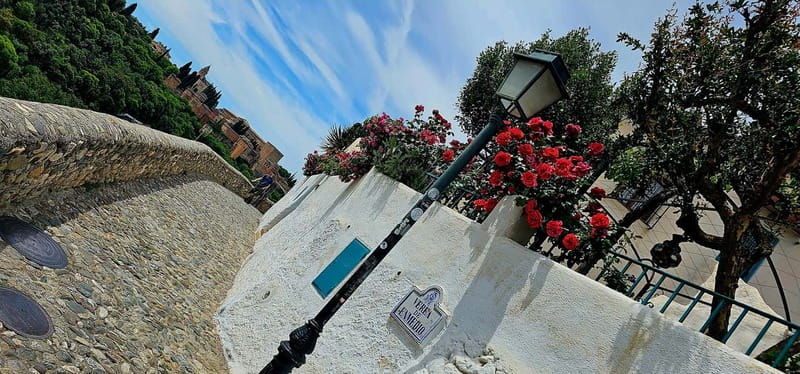
- Pause at Carmen de los Mártires: See a flower-filled garden and a traditional Spanish house near the Alhambra.
- Walk with a small group: With no more than eight people, Michael can offer personal recommendations and respond to your interests.
- Bring proper shoes: The route covers hills, narrow streets, and roughly 8 kilometers in about three hours.
Why this Granada walk feels different
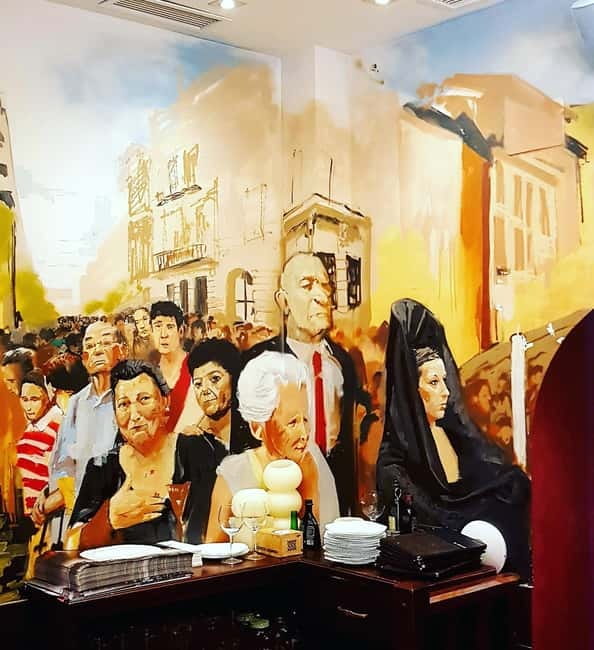
Many city tours concentrate on Granada’s grand monuments. This one spends more time on the streets between them. You move through neighborhoods where walls, gardens, cave homes, small shops, and viewpoints tell as much of the story as formal buildings do.
The route also avoids putting Granada into one tidy historical box. Realejo reflects the old Jewish quarter and the city’s current street-art scene. Sacromonte brings you into the mountain, where cave houses and flamenco culture are central. Albaicín offers the oldest district, a UNESCO World Heritage site filled with narrow streets, tapas bars, craft shops, and views toward the Alhambra.
I especially like the contrast between the painted walls of Realejo and the quiet garden at Carmen de los Mártires. Then the walk changes again in Sacromonte, where the stone and earth of the hills replace the urban feel of the first part.
Michael’s role matters here. The tour is built around stories, not just a sequence of photo stops. He explains the artists behind the murals, connects neighborhoods to one another, and gives advice about places to eat, drink, and shop. The small group makes that style work better than it would on a large coach tour.
More ways underground around Spain:
- Porto Cristo: Caves of Hams Entry Ticket
★ 4.2 · 6,548 reviews - Mallorca: Caves of Drach Day Trip & Optional Caves of Hams
★ 4.3 · 2,720 reviews - From Málaga: Caves of Nerja, Nerja and Frigiliana Day Tour
★ 4.7 · 2,187 reviews
Start at Plaza de las Pasiegas
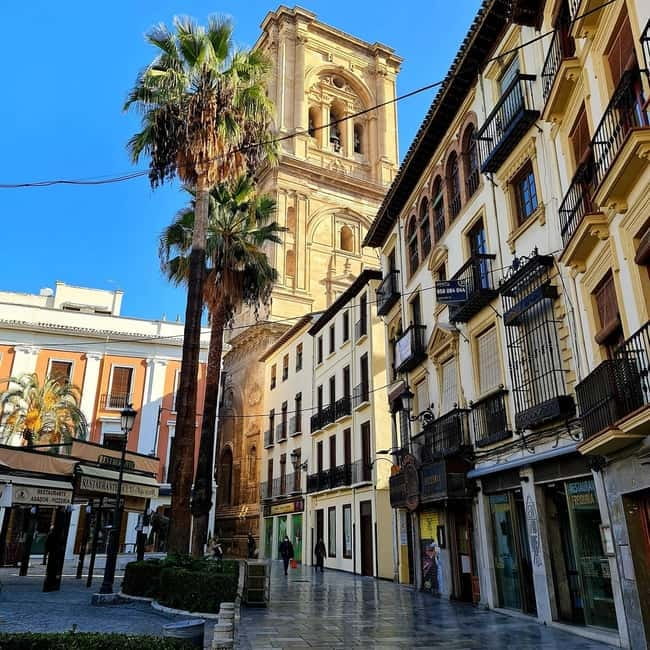
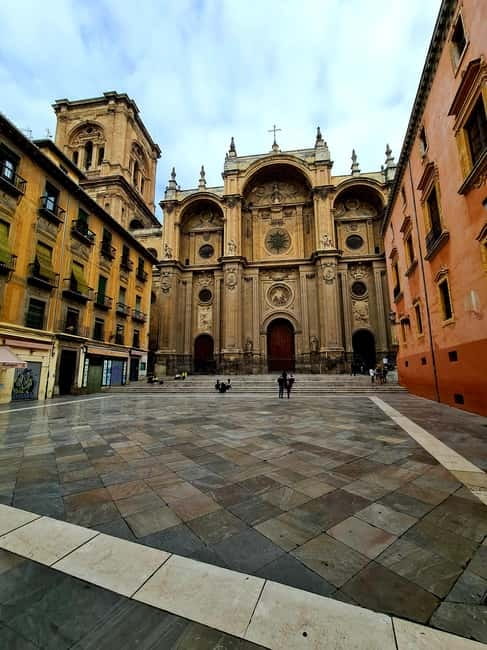
The tour begins on the steps of Granada Cathedral at Plaza de las Pasiegas, right by the main entrance. This is a useful central meeting point, but give yourself enough time to find the correct side of the cathedral and arrive ready to walk.
The final stop is also the cathedral area, so you do not need to arrange transport back from a distant neighborhood. That makes the route easy to fit into a day of sightseeing, although I would avoid scheduling a hard-to-miss reservation immediately afterward. The walk is advertised at three hours, and at least one outing lasted closer to four hours because of the extra time spent enjoying the city.
Realejo: Jewish quarter, painted walls, and local art
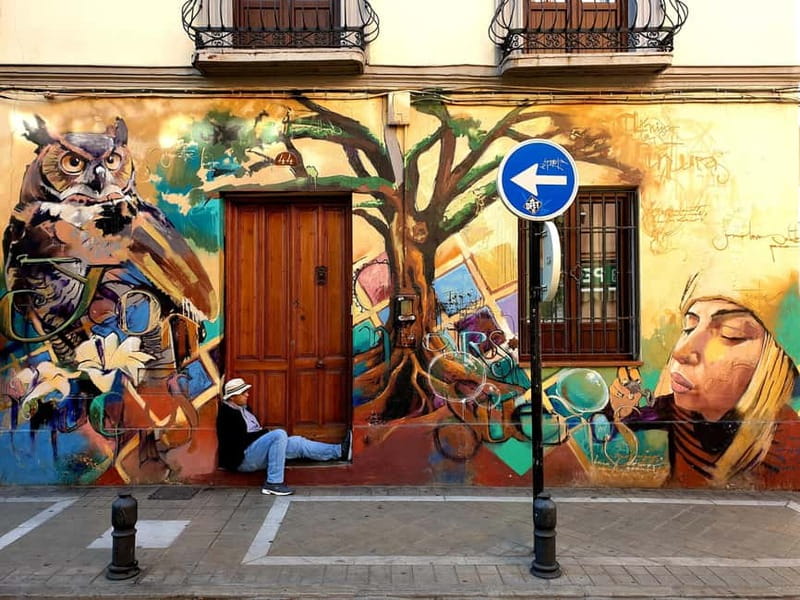
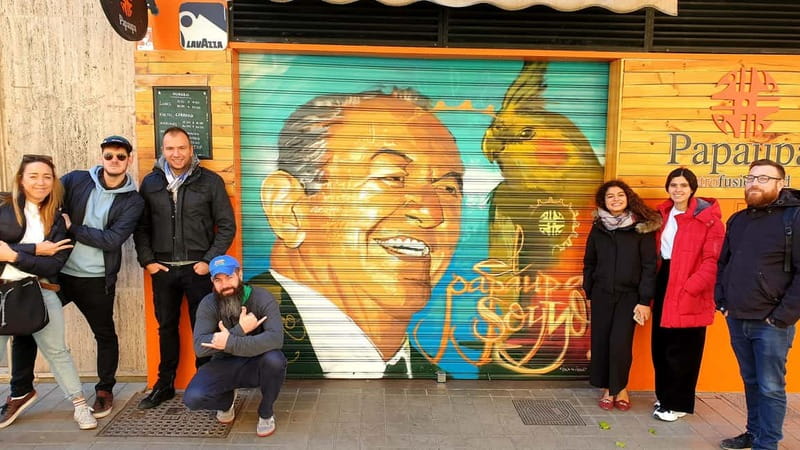
The first major neighborhood is Realejo, the old Jewish district. Here the tour turns toward Granada’s street-art culture, especially the work of El Niño de las Pinturas, one of Spain’s influential graffiti artists.
This is not simply a hunt for colorful walls. Michael explains the stories and artists behind the work, including murals around the famous painted house associated with El Niño de las Pinturas. You get context for why particular pieces matter instead of treating them as random decoration.
The art gives Realejo a contemporary voice. It also makes the neighborhood a good early stop because you begin seeing Granada as a living city rather than a collection of preserved monuments. The tour may include further murals by artists from Spain and other parts of Europe, so the route is useful for anyone who wants something outside the standard Alhambra and cathedral circuit.
One particularly useful touch is the chance to hear about local artists and places connected with them. If you are interested in buying an unusual souvenir, Michael can point you toward shops or artist-related stops. This is a better approach than grabbing the first mass-produced item you see near a major attraction.
The 45-minute Realejo section is long enough for the art to receive proper attention. It also means you should not expect a quick photo walk. If you prefer only major buildings and formal museums, this part may feel less essential. If you enjoy public art and neighborhood stories, it is one of the strongest reasons to book.
Carmen de los Mártires: a quiet garden break
Carmen de los Mártires provides a welcome change of pace. The stop lasts about 25 minutes and combines a traditional Spanish house with gardens filled with flowers and birds.
The word carmen refers to a type of Granada house with garden space, and this stop helps explain that local style through the setting itself. After the painted walls and city streets of Realejo, the garden offers a calmer place to pause, take photographs, and look across the surrounding area.
I would not treat Carmen de los Mártires as a substitute for a full garden visit. You have limited time, and the purpose here is to see a model of the house-and-garden tradition while continuing the larger walk. Still, it adds variety and gives your feet a short break before the route heads toward Sacromonte.
The nearby views also help place Granada geographically. The Alhambra, hills, gardens, and older districts begin to connect into one picture. Bring your camera, but keep it packed away long enough to listen. The setting is one of the stops where the atmosphere carries part of the lesson.
Guided tours around Spain:
- From Valencia: Caves of San José Guided Excursion and Ticket
★ 4.6 · 1,717 reviews - Nerja: Caves of Nerja Entry Ticket with Audio Guide
★ 4.6 · 1,616 reviews - Palma: Caves of Genova Ticket & Digital Audio Guide
★ 3.9 · 820 reviews - Cala Varques: Guided Sea Caves Kayak & Snorkeling Expedition
★ 4.8 · 534 reviews
Sacromonte: into Granada’s cave homes
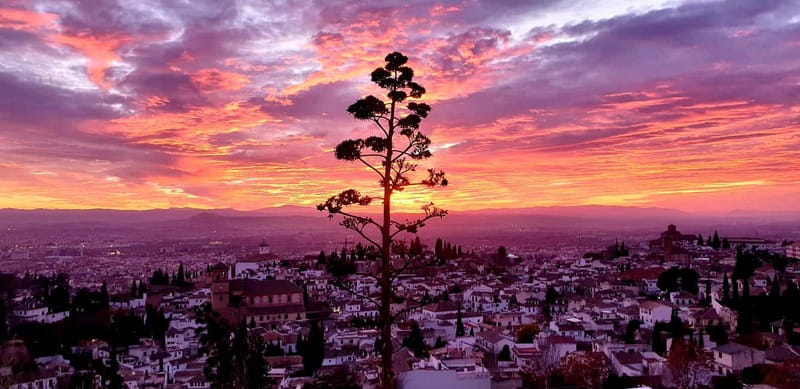
Sacromonte is the most distinctive section of the route. The neighborhood climbs into the hills and is closely tied to Gitano life and the birth of Granada’s flamenco culture. Here you enter one of the oldest cave houses in the area.
That entrance ticket is included, which matters because the cave is not just something you view from the street. You step inside and learn how homes were dug into the mountain, how they were used, and why Sacromonte developed such a strong identity.
The cave house visit is also where the tour moves from visual interest to direct experience. Street art can be photographed from a pavement, but the cave helps you understand how people adapted to the mountain itself. The scale, materials, and unusual layout make the history easier to picture.
Expect about 45 minutes in Sacromonte, with uphill walking on the way there. The route is not a flat promenade, and the hills can be tiring, especially in hot weather. Michael provides water, and the tour includes opportunities to refill bottles at public fountains, but you should still arrive hydrated.
The neighborhood is often associated with flamenco, but this is not advertised as a flamenco performance. You are learning about the place where the culture developed, not attending a show. That distinction is important if you are comparing this walk with an evening flamenco program.
The reward is a side of Granada that is difficult to understand from the center alone. The cave visit, mountain setting, and stories of the people who lived there give Sacromonte a strong sense of place without turning the stop into a staged attraction.
Albaicín: old lanes and Alhambra viewpoints
From Sacromonte, the route continues into Albaicín, Granada’s oldest district and a UNESCO World Heritage site. This is the part of the walk most likely to match your mental picture of old Granada: narrow streets, small squares, whitewashed buildings, little shops, tapas bars, and sudden views.
The route through Albaicín lasts about 45 minutes and includes sightseeing, photographs, and time for shopping. It is also where the hills can be felt most clearly. Streets may rise and fall sharply, and the paving can be uneven, so sturdy walking shoes are not optional decoration.
The famous miradores provide the visual payoff. From these viewpoints, the Alhambra appears close across the valley, with the surrounding hills behind it. You get the classic Granada photograph, but the setting feels more meaningful because you have already moved through the city’s districts and heard how they developed.
Michael can also suggest food and drink stops that suit your tastes. That advice is especially useful in Albaicín, where it is easy to choose a place based only on the view or the nearest sign. I would write down his suggestions during the walk. One person used his seafood restaurant advice and enjoyed the paella, while other recommendations cover tapas, drinks, and local shopping.
The drawback is that you will not stop for lunch during the tour. Bring a small snack if you need one, and plan a meal before or after. This is a sightseeing walk with breaks, not a food tour.
Returning through the cathedral area

The walk returns to Plaza de las Pasiegas for a final look at Granada Cathedral. The cathedral section takes about 15 minutes and keeps the route tied to its starting point.
This final stop is brief, so do not expect a full interior tour or an extended architectural lecture. Its value is in bringing the route back to central Granada and giving you one more chance to ask about places you want to visit later.
I think this ending works well for first-time visitors. You finish with a clearer sense of how the central city connects with Realejo, Sacromonte, and Albaicín. You can then continue independently to a recommended restaurant, shop, museum, or viewpoint.
What the $35 price gets you
At $35 per person, this is reasonably priced for a three-hour, small-group walking tour that includes a cave-house entrance and a professional English-speaking guide. The group limit of eight is important. You are paying not just for movement between sights, but for Michael’s explanations, local suggestions, and ability to respond to individual interests.
The value is strongest if you want more than a basic orientation walk. You see three districts, a garden, street art, a cave home, viewpoints, and the cathedral area in one outing. Buying separate access or arranging your own route would not necessarily cost more, but you would likely lose the connections between the stops.
The tour is less useful if you already know these neighborhoods well or want extended time inside each one. Three hours requires steady progress. You will see many places, but you will not linger at every mural, shop, garden, or viewpoint.
Flexible booking also helps. You can cancel up to 24 hours in advance for a full refund, and you can reserve now and pay later. Check the available start time when booking, since the precise departure schedule is not fixed in the tour details.
Walking conditions and practical preparation

Treat this as a proper city hike, not a gentle stroll. The stated distance is around 8 kilometers, with uphill and downhill walking and breaks for drinks and toilets.
Wear comfortable shoes with good grip. The route includes narrow streets and slopes, and sandals or smooth-soled shoes could make the walk less pleasant. Carry a reusable water bottle. Unlimited water is provided, and the route includes refill points, but starting with water is still sensible.
There is no lunch stop, so eat beforehand or bring a snack. The walk includes toilet breaks, which makes the long route easier to manage, but you should not expect frequent indoor stops whenever you choose.
This activity is not suitable for wheelchair users, people with mobility impairments, or anyone recovering from recent surgery. One person using a mobility scooter completed the route with help from Michael, but the information for the tour clearly warns that the terrain is challenging. Do not assume that a successful individual outing means the route is accessible for everyone.
I would also schedule the walk early in your Granada stay. It covers several districts and gives useful advice about restaurants, shops, viewpoints, and places you may want to revisit. Taking it on your final day means you may hear good suggestions without having time to use them.
Who should book this walk
I recommend it most for an active visitor who wants Granada beyond its headline monument. It suits you if you like street art, local culture, unusual homes, photography, gardens, and neighborhood walks more than a slow museum visit.
It is also a strong choice if you missed Alhambra tickets. Michael can explain parts of the Alhambra area and point out places or museums that can be visited without the main admission ticket. This does not replace seeing the palace complex, but it can help you build a worthwhile Granada day instead of feeling that your trip has lost its main attraction.
Families with older children may enjoy the variety, provided everyone can manage the distance and hills. Art fans will appreciate the focus on El Niño de las Pinturas. History-minded visitors will get the most from the links between the old Jewish quarter, Gitano life, flamenco, Islamic-era Albaicín, and modern Granada.
I would choose another activity if you need step-free access, want a short orientation walk, or prefer a tour centered only on the Alhambra. I would also avoid booking it directly before an important dinner reservation unless you allow extra time.
My verdict on Street Art & The Caves
Book this tour if you want Granada to feel like a lived-in city rather than a checklist of monuments. The strongest elements are the cave-house visit, the street-art stories, the three-district route, and Michael’s practical local advice.
At $35, the combination of a small group, included cave entrance, water, and an English-speaking guide offers good value. Just come prepared for a serious walk, bring sensible shoes, and leave room in your schedule. For an active visitor looking for art, local culture, and excellent views, this is one of the more distinctive ways to get your bearings in Granada.
FAQ
Where does the tour start and finish?
The tour starts and finishes at Plaza de las Pasiegas, on the steps of Granada Cathedral by the main entrance.
How long does the tour last?
The scheduled duration is three hours. The route covers about 8 kilometers and includes breaks for drinks and toilets. Some outings may take longer, so allow extra time if your schedule is tight.
Which Granada neighborhoods does the tour visit?
The route visits Realejo, Sacromonte, and Albaicín, described as three of Granada’s oldest districts. It also includes Carmen de los Mártires and the cathedral area.
Is the cave-house entrance included?
Yes. The entrance ticket for the cave house in Sacromonte is included in the price.
Is the tour suitable for someone with limited mobility?
No. The tour includes uphill and downhill walking over roughly 8 kilometers and is not suitable for people with mobility impairments, wheelchair users, or people with recent surgeries.
What should I bring?
Bring comfortable walking shoes and a reusable water bottle. A snack is also sensible because the tour does not stop for lunch.
How many people are in the group?
The tour is limited to eight participants and is conducted in English by a live professional guide.
Newly added caves around Spain
- Palma: Caves of Genova Ticket & Digital Audio Guide★ 3.9 · 820 reviews
- Calasparra: Almadenes Canyon Rafting with Caves and Rock Art★ 4.7 · 558 reviews
- Mogán: Guided Kayak to Caves and Snorkeling Tour★ 4.6 · 329 reviews
- MENORCA: Kayak cave route + photo session.★ 4.8 · 300 reviews
- Maspalomas: Barranco de las Vacas & Caves with Sky Rebels★ 4.9 · 144 reviews
- Mallorca Marine reserve: Visit caves, cliffs and snorkeling★ 4.5 · 15 reviews
- Mallorca: Aquatic Cave Exploration Guided Tour★ 4.9 · 119 reviews
- Mallorca: Half-day of Natural Wonders at the Drach Caves★ 3.8 · 90 reviews
Granada Cave Tours worth comparing.
Granada: Albaicín, Sacromonte & Museum of Caves Walking Tour
Read our review →
Granada: Traditional Flamenco Show in a Cave Entry Ticket
Read our review →
From Granada: Skip-the-Line Nerja Cave and Frigiliana
Read our review →Lists this cave tour appears in