
Review · VIENNA (STATE), AUSTRIA
Vienna: 1.5-Hour Underground Walking Tour
Vienna’s grandest streets hide a darker, older world below ground. This 100-minute tour takes you from the Roman remains at Michaelerplatz into old cellars and the Baroque crypt beneath St. Michael’s Church, where well-preserved mummies still rest. I like the rare access to places you cannot visit on your own and the way the tour links Roman Vienna with its later medieval and Baroque layers.
I also like the strong storytelling from guides such as Christopher and Bridgett, who have been praised for humor and historical detail. The main drawback is important: the tour is conducted in German, and while some guides have offered brief English explanations, this is not a dependable English-language tour.
Key points to know before booking
- Michaelerplatz begins the story: See Roman remains, a 17th-century cellar, and part of Vienna’s old city wall in the city center.
- St. Michael’s crypt is the main event: More than 4,000 people are buried below the church, including prominent Viennese citizens.
- The mummies are remarkably preserved: Their condition gives the crypt an unusual, sometimes unsettling atmosphere.
- German is the tour language: Some guides may help in English, but translation is limited and not guaranteed.
- Expect underground conditions: The rooms can be chilly, so a sweater is a sensible choice.
- The tour is not wheelchair accessible: Pets, cameras, smoking, luggage, and large bags are not allowed.
Why Vienna’s underground history is worth your time
Vienna is easy to read at street level. You see imperial façades, grand churches, and busy squares. But the city’s story becomes more complicated below the pavement, where Roman settlements, old defensive structures, cellars, burial chambers, and church crypts occupy the same central ground.
That is the appeal of this tour. It does not focus on one polished monument. Instead, it shows you several fragments from different periods and explains how they fit beneath modern Vienna.
The setting at Michaelerplatz is especially useful because you begin in one of the city’s most important central areas. Building work exposed part of the old Roman city, along with a 17th-century cellar and a section of the former city wall. You get a quick lesson in how Vienna grew over earlier layers rather than replacing them entirely.
I like this approach because the archaeology is not isolated in a distant museum. You are standing in the middle of the city, close to major sights, while looking at remains from a much older Vienna. That contrast helps you understand the city in a more physical way.
More ways underground around the world:
- Portimão: Benagil Caves Speed Boat Tour with Sunset Option
★ 4.8 · 11,663 reviews - Albufeira: 2.5-Hour Benagil Caves & Dolphin Watching
★ 4.6 · 10,710 reviews - Blue Cave Small-Group Boat Tour from Dubrovnik
★ 5.0 · 9,360 reviews
Starting at Michaelerplatz and the Roman remains
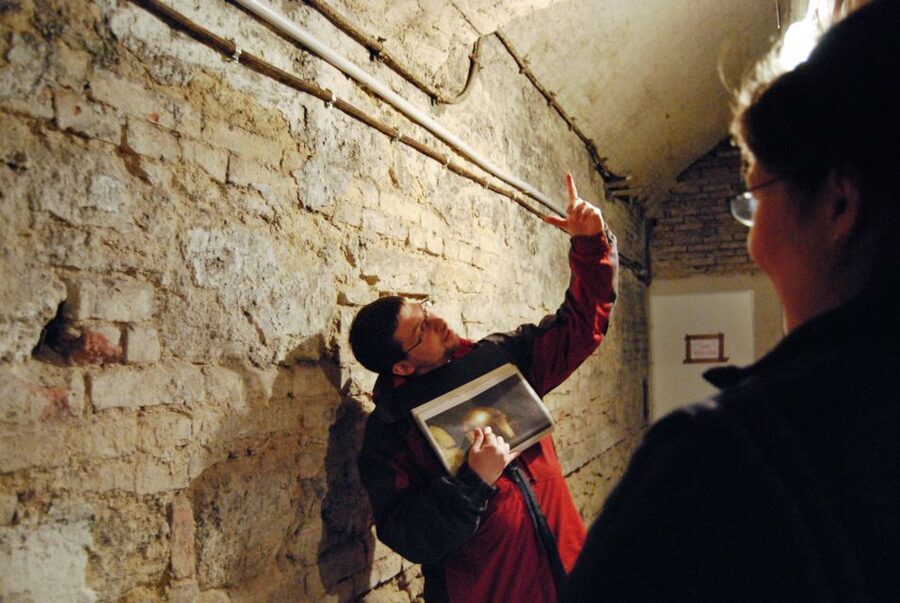
The meeting point is in front of the main entrance to St. Michael’s Catholic Church. This is convenient if you are already exploring central Vienna, but it also means you should arrive with enough time to find the correct church entrance. The tour begins at Michaelerplatz, where the guide introduces the archaeological remains found beneath the square.
The Roman material gives the tour its earliest layer. You will see part of the old settlement that once occupied this area, then consider how later construction changed the site. The remains are not presented as a giant underground complex. They are archaeological fragments, so the guide’s explanation matters as much as what you see.
This is where a strong guide makes a real difference. The best part of the experience is not simply looking at old stone. It is learning what the stone reveals about the changing city, from Roman occupation to later urban building.
The square is also a good place to begin because it gives you a sense of scale. Above you, Vienna is elegant and formal. Below, the evidence is older, rougher, and less tidy. That contrast gives the tour its character.
Entering the 17th-century cellar and old city wall
From the archaeological site, the tour moves into other underground areas, including a cellar from the 17th century and part of Vienna’s old city wall. These stops help bridge the gap between ancient Vienna and the city shaped by later centuries.
The cellar is valuable because it shows the practical side of city life. Not every historical site is a palace or church. Ordinary storage areas, foundations, and service spaces often reveal how buildings worked and how tightly the old city was built.
The section of city wall adds another piece to the story. You can connect the Roman settlement, the medieval city, and later defenses without needing a separate museum visit. The guide’s commentary ties these elements together, giving you a clearer sense of how the center changed over time.
You should keep your expectations realistic. This is not a long expedition through a maze of tunnels. One older account described the tour as visiting only a few rooms and wished for access farther into the tunnels. The experience is best understood as a guided selection of underground sites, not an unrestricted exploration of Vienna beneath the streets.
That limited access is also part of the value. These are places you would not know how to find by yourself, and the tour gives you a structured way to see them.
St. Michael’s crypt and its preserved mummies
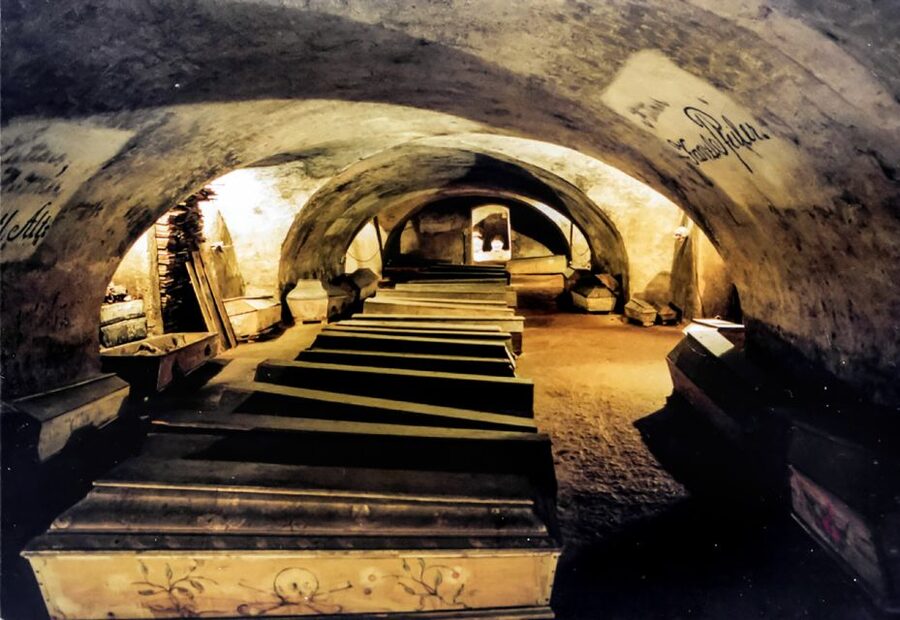
The crypt beneath St. Michael’s Church is the emotional center of the tour. More than 4,000 people are buried there, including wealthy and prominent Viennese citizens. The atmosphere is solemn, and the preserved mummies make this far more than a standard church visit.
The mummies are fascinating because they offer a direct, physical connection with past lives. You are not only hearing about burial customs or social rank. You are seeing the remains of people who occupied Vienna’s upper levels of society, preserved in the conditions of the crypt.
The crypt also gives you a different view of the city’s past. Above ground, St. Michael’s Church is part of Vienna’s grand central architecture. Below ground, the mood is quieter and more personal. The contrast between the church’s public role and the burial chambers beneath it is one of the tour’s strongest features.
I would not recommend this part to anyone who dislikes burial sites or preserved human remains. For most history-minded visitors, though, it is likely to be the most memorable stop. Several guides have been praised for explaining the catacombs with energy and care, which matters in a place that could otherwise feel simply grim.
One practical point: the underground rooms can be chilly. Bring a sweater, even if Vienna feels mild above ground.
Same rock, a different way in:
- Best Niagara Falls US Tour W/Boat Ride, Cave & More Wonders!
★ 5.0 · 8,372 reviews - Aruba UTV, ATV Adventure to Secret Beach and Cave Pool
★ 5.0 · 7,730 reviews - Aruba Natural Pool and Indian Cave Rugged Jeep Safari
★ 5.0 · 7,713 reviews - Blue cave, Mamma Mia and Hvar, 5 islands speedboat tour
★ 5.0 · 7,150 reviews
The value of the guide matters here
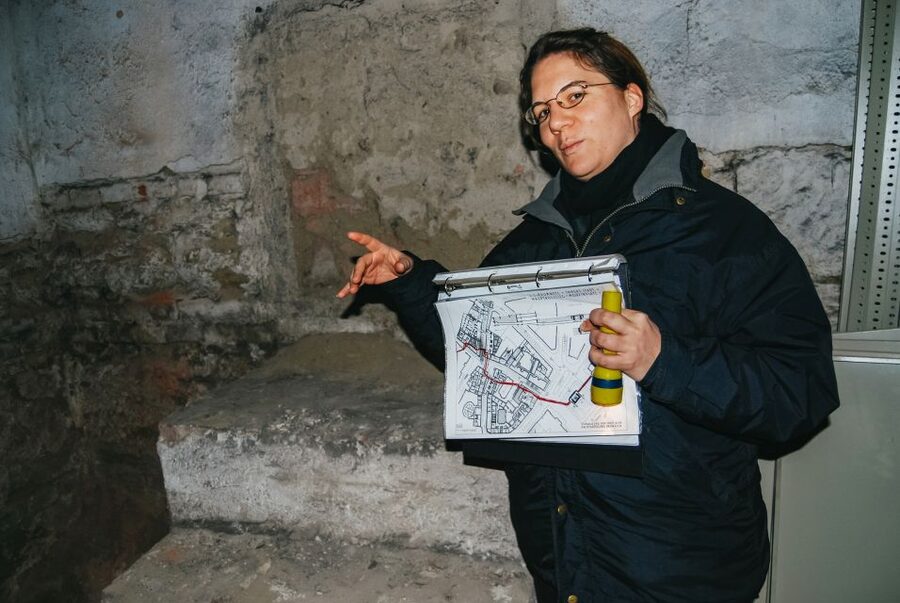
This tour depends heavily on the person leading it. The sites are unusual, but they are not self-explanatory. A good guide gives you the dates, context, and stories that turn a cellar or wall fragment into a meaningful stop.
Christopher has been singled out for his lively approach, and Bridgett was described as an historian with a strong command of less familiar Viennese subjects. Other guides have also been praised for humor, enthusiasm, and clear explanations. You should not assume you will receive a particular guide on your chosen date, but these names give you an idea of the standard the tour aims for.
The German-language format is the biggest practical issue. German is the official tour language, and there is no regular English option listed. Some guides have helped non-German speakers with short English summaries. Others have paused so participants could use translation tools.
That help can make the tour partly accessible to you if you understand some German or are comfortable missing sections. But you should not book it expecting a full English commentary. One person understood about 60 percent with phone translation, while another found that translation became harder underground because mobile data did not always work.
If you speak German, this limitation disappears and the tour becomes much easier to enjoy. If you do not, decide how much you are willing to rely on visual details, short explanations, and translation technology. The mummies and archaeological rooms can still be interesting, but the historical connections will be less clear.
What 100 minutes really means
The advertised duration is 100 minutes, which makes this a manageable addition to a day of sightseeing. You can schedule it between central Vienna attractions without giving up half a day.
Allow some flexibility, though. One participant reported a tour lasting nearly three hours, while the stated duration is 100 minutes. The actual length may depend on the guide, group, and pace. I would plan around the official time and avoid booking a timed museum entry immediately afterward.
The walking is underground and takes place across several spaces. No transfer is included, but you meet at the church, so the experience begins in central Vienna rather than at a remote departure point.
You should arrive ready to leave large bags behind. Cameras are not allowed, and neither are pets, smoking, luggage, or large bags. The camera rule may disappoint anyone hoping to photograph the crypt, but it also keeps the visit focused and respectful.
The tour is not wheelchair accessible. If you use a wheelchair, this is not a suitable choice. The information also advises contacting the provider separately for groups of 15 or more, since larger parties may require different arrangements.
Is the $32 price fair?
At $32 per person, the price is reasonable if you care about access and interpretation. You are paying for entry to several underground sites and a live guide, not simply for a walk through a public square.
The crypt alone gives the tour much of its value. You could visit St. Michael’s Church above ground without taking this tour, but you would not normally find your way into the burial chambers, old cellars, and archaeological areas by yourself. The admission fee also covers the entrance costs, so there is no separate charge for the sites included in the experience.
The value is less clear if you speak no German and need a fully detailed English explanation. In that case, you may understand only parts of the commentary, and the price becomes harder to justify unless seeing the crypt is a major priority.
Compared with a standard sightseeing walk, this tour offers something more specific and unusual. It is not the best choice if you want broad coverage of Vienna’s palaces, music, or famous streets. It is a strong choice if you want access to places that do not appear on the usual city route.
The option to reserve now and pay later also helps if your schedule is still changing. Free cancellation is available up to 24 hours before the tour for a full refund, according to the stated conditions.
Who should take this underground tour?
I would recommend it most strongly to you if you fit one or more of these categories:
- You enjoy archaeology, church history, or burial customs.
- You have already seen Vienna’s major sights and want a different subject.
- You speak German well enough to follow a live explanation.
- You are comfortable with a chilly, atmospheric underground setting.
- You want a guided experience rather than a self-guided museum visit.
- You are curious about the city’s Roman, medieval, and Baroque layers.
Families with older children may find the mummies and hidden rooms memorable, but the subject matter is not light. Young children may have limited patience for spoken historical explanation, especially if they do not understand German.
If your main goal is an English-language tour, I would not book this without accepting a compromise. A guide may offer short English explanations, but that depends on the person leading the group and the needs of the participants.
Should you book it?
Book this tour if you want a close look at Vienna’s less visible past and can follow German, or if you are comfortable receiving only partial English help. The Roman site at Michaelerplatz, old cellar, city wall, and St. Michael’s crypt form a distinctive route, and the preserved mummies give the experience a strong sense of place.
Skip it if you need full wheelchair access, want to take photographs, dislike burial sites, or require a complete English commentary. For everyone else, $32 is a fair price for access to unusual underground rooms and a guide who can connect them to Vienna’s long urban story. Bring a sweater, leave your large bag behind, and do not schedule your next activity too tightly.
FAQ
Is the Vienna Underground Walking Tour offered in English?
No. The listed tour language is German. Some guides may provide brief explanations in English, but a full English tour is not guaranteed.
Where does the tour meet?
Meet in front of the main entrance to St. Michael’s Catholic Church in Vienna.
How long does the tour last?
The stated duration is 100 minutes. One participant reported a substantially longer experience, so it is sensible to allow extra time in your schedule.
What will I see at Michaelerplatz?
You will see an archaeological site that includes part of the old Roman city. The area also contains a 17th-century cellar and part of Vienna’s old city wall.
What is inside St. Michael’s crypt?
More than 4,000 people are buried in the crypt, including prominent Viennese citizens. The visit includes well-preserved mummies.
Is the tour wheelchair accessible?
No. The tour is not suitable for wheelchair users.
Can I bring a camera or large bag?
No. Cameras, luggage, large bags, pets, and smoking are not allowed on the tour.
Newly added caves around the world
- Phuket: Starlight Hong Sea Cave & Glowing Plankton by Kayak★ 4.9 · 145 reviews
- Phuket: Monkey Cave, Water Rafting, Zipline with ATV Option★ 3.7 · 161 reviews
- Phuket: Bamboo Rafting, Monkey Cave, and ATV Option★ 3.5 · 129 reviews
- Phong Nha: Zipline Dark Cave & Paradise Cave Exploration★ 4.9 · 84 reviews
- Phranang Cave Sunset with BBQ dinner & Plankton Tour★ 3.2 · 53 reviews
- Phong Nha/Dong Hoi: Phong Nha Cave and Paradise Cave Tour★ 4.9 · 82 reviews
- Phong Nha: Cave Exploration and Zipline Dark Cave Tour★ 4.7 · 87 reviews
- Phong Nha National Park: Paradise Cave Half-Day Tour★ 5.0 · 23 reviews