
Review · MAHARASHTRA, INDIA
Mumbai: Exclusive Full-Day City Tour with Optional Caves
Mumbai’s best story is told through contrasts: ancient rock-cut temples, grand British-era buildings, crowded markets, sea views, and the working neighborhoods that keep the city moving. This private eight-hour tour brings those pieces together without making you wrestle with Mumbai’s traffic or figure out each stop alone.
I like the choice between Elephanta Caves and Kanheri Caves, and I like having a private car, driver, and guide for a long day across a huge city. The main consideration is pace. With caves, CST, Crawford Market, Gandhi’s former home, Hanging Gardens, and Dharavi all on the schedule, some stops are brief rather than leisurely.
Key points to know before booking
- Choose your cave visit carefully: Elephanta requires a ferry and can be affected by weather, while Kanheri offers a land-based alternative.
- Private transport matters in Mumbai: Hotel pickup, parking, bottled water, and an air-conditioned car make the long day easier.
- Dharavi is treated as a living community: The visit can include small workshops, homes, pottery, leatherwork, recycling, and clothing production.
- The architecture route is strong: CST, the High Court, Rajabai Clock Tower, Oval Maidan, and the Gateway of India show several sides of Mumbai’s past.
- The guides can shape the day: Saif, Abdul, Fahad, Danish, and Ali are among the guides associated with this experience.
- Plan around Monday and monsoon weather: Both cave sites close on Mondays, and Elephanta ferries may stop from July to mid-September.
A long Mumbai day that covers the city’s big contrasts
This is not a slow museum tour. It is a wide sweep of Mumbai, designed for someone who wants to see the city’s main sights in one organized day.
You start with hotel pickup in Mumbai and travel in a private air-conditioned vehicle. That sounds simple, but it is a major part of the value. Mumbai traffic can turn a short distance into a long wait, so having a driver who knows the route saves both energy and guesswork.
Your English-speaking guide joins you for the sightseeing. The quality of the day depends partly on the guide’s range. Ali, for example, was especially strong when explaining Dharavi, while Saif led visitors through Elephanta’s mythology and introduced them to local life in Dharavi. Abdul, Fahad, and Danish have also guided this tour. You should make your interests clear early, since a private group gives you more room to ask questions and request short pauses.
The tour costs $69 per person. For eight hours of private guiding, a car, hotel transfers, parking, water, and the cave visit, that is a reasonable price if you want broad coverage in a single day. It is less compelling if you prefer spending half a day in one museum or wandering without a timetable.
Full-day trips around Mumbai:
- Ninh Binh Full-Day Tour from Hanoi to Hoa Lu, Tam Coc & Mua Cave Via Boat & Bike
★ 5.0 · 4,384 reviews - Full Day Cappadocia Tour( Red Tour + Underground City )
★ 5.0 · 1,862 reviews - Full-Day Boat Tour of Paxos Antipaxos Blue Caves from Corfu
★ 4.5 · 1,567 reviews
Gateway of India and the Taj Mahal Palace
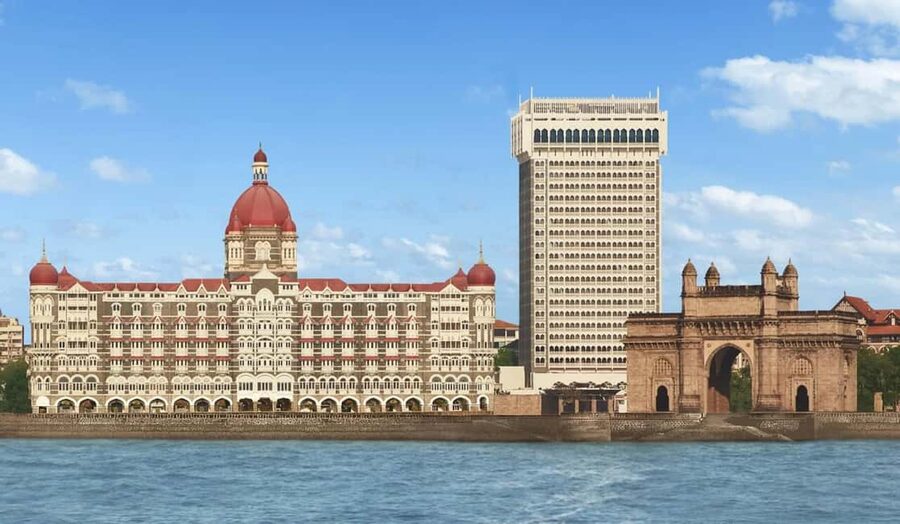
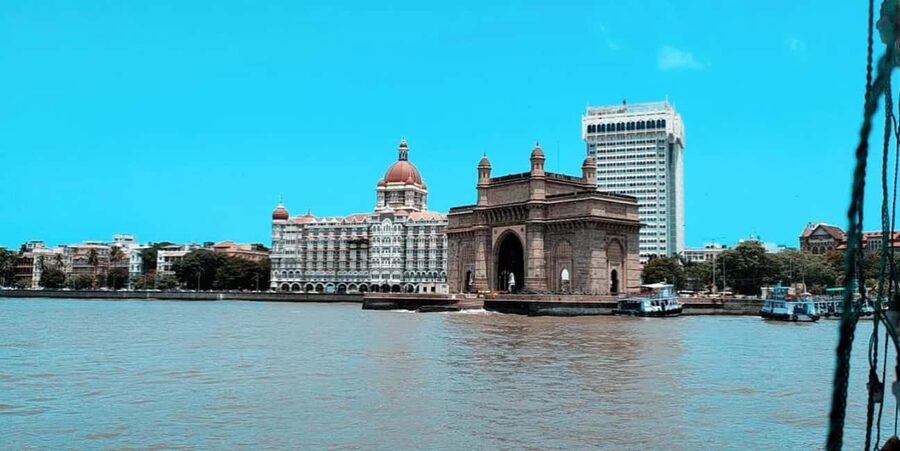
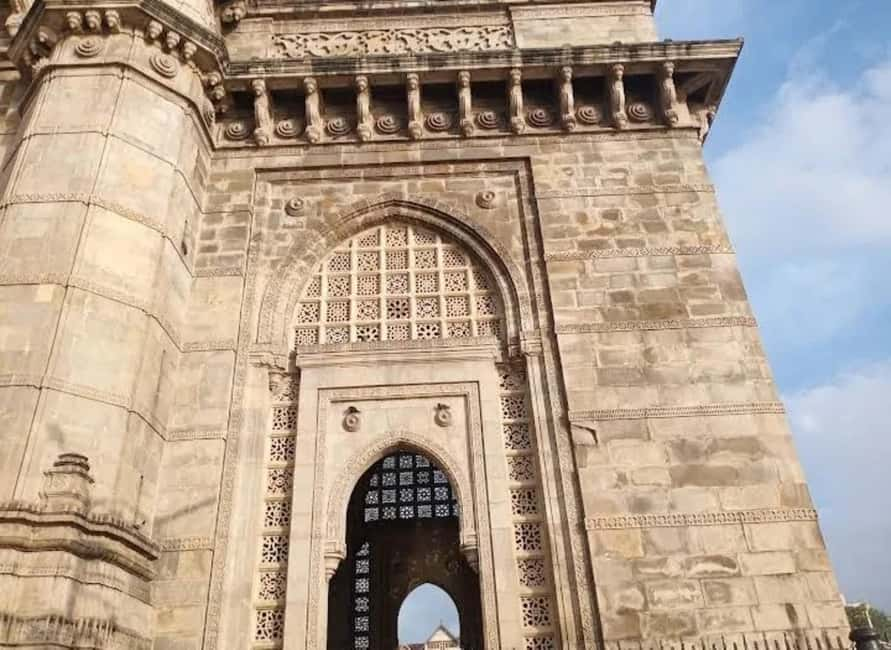
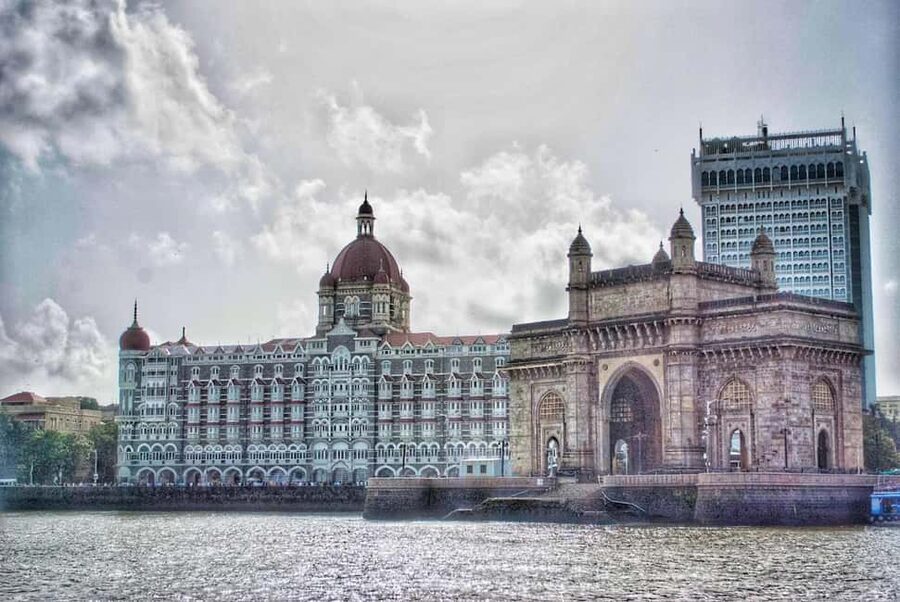
The day begins at the Gateway of India, Mumbai’s most famous waterfront monument. It faces the Arabian Sea and gives you an immediate sense of the city’s port identity. This is mainly a photo and orientation stop, so do not expect a long museum visit.
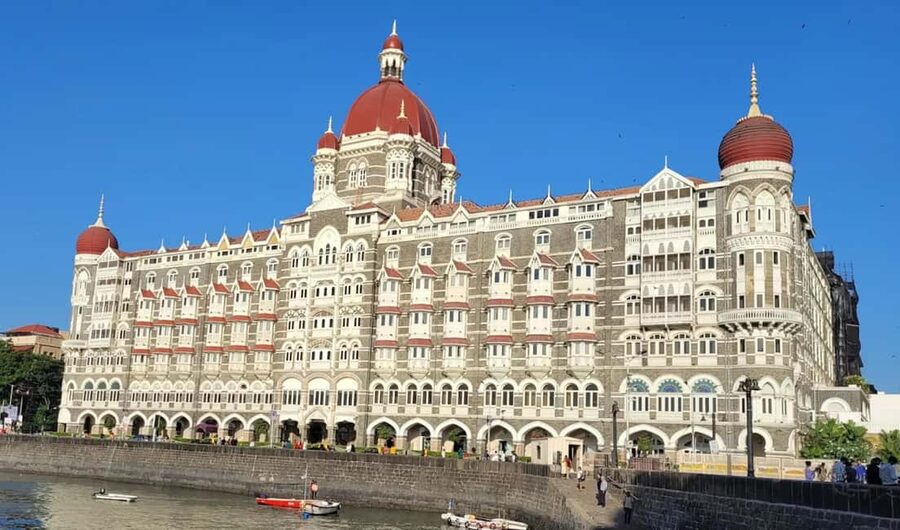
The nearby Taj Mahal Palace provides a second strong opening image. Its grand facade represents the old luxury side of Mumbai, while the Gateway gives you the public, seafront side of the city. Your guide can connect the two sites to Mumbai’s colonial-era setting and its later role as a major commercial center.
The itinerary then includes the ferry to Elephanta, with about 45 minutes each way. The boat ride is part of the outing, not just transport. You get open water views and a break from the traffic, though the ferry adds a fixed block of time to an already full day.
Elephanta or Kanheri: two very different cave choices
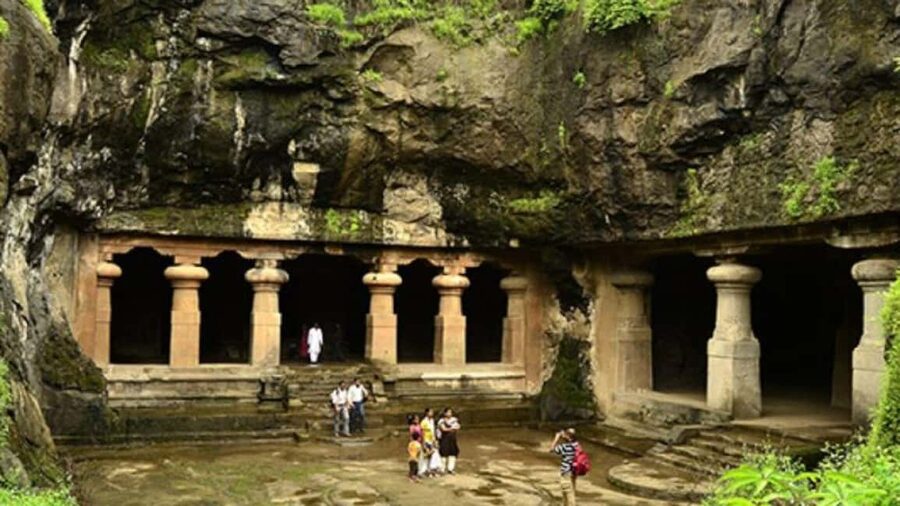
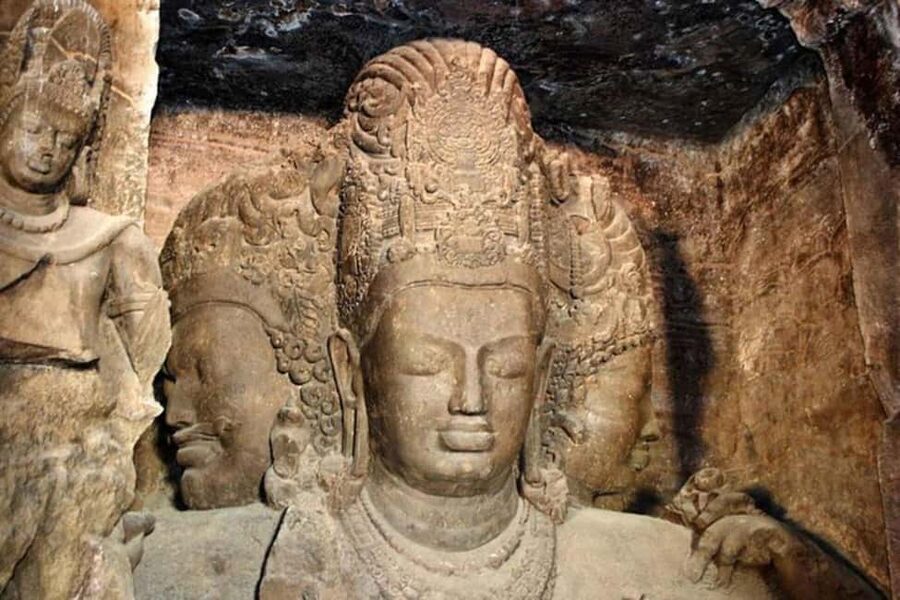
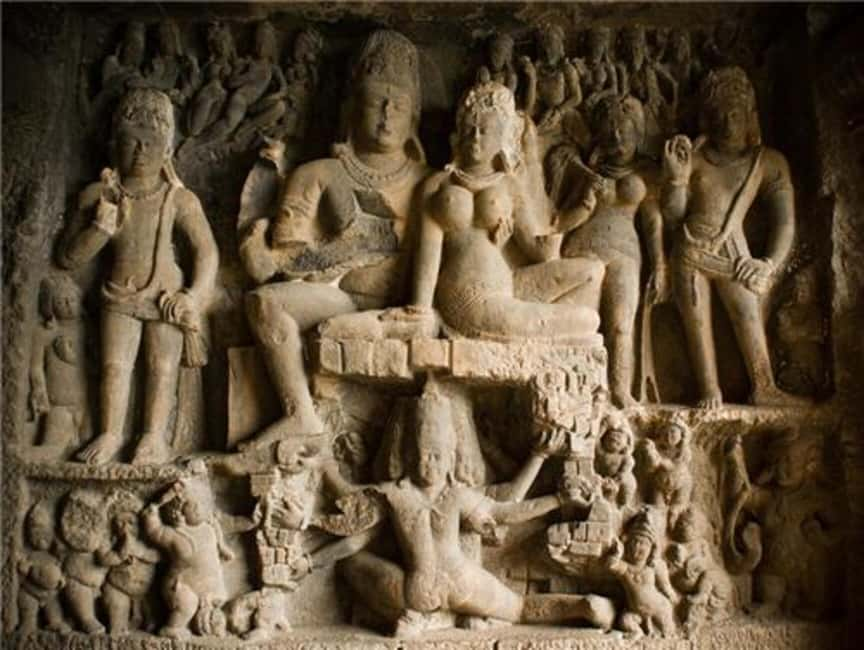
The Elephanta option takes you offshore to an ancient rock-cut temple complex. The caves contain large stone sculptures and religious imagery, and the guide explains the stories and symbols behind them. This is the stronger choice if you want a landmark visit tied to a boat ride and a dramatic setting away from central Mumbai.
You should expect walking and uneven surfaces at the cave site. Comfortable shoes are important, and sunglasses help in the bright outdoor sections. The supplied information does not give a precise walking time or accessibility detail, so you should ask the operator if stairs or extended walking are a concern.
Kanheri Caves offer a different day. The site is an ancient Buddhist complex with monasteries, prayer halls, carvings, sculptures, and inscriptions. You reach it by road rather than by ferry, making it the practical backup when the sea is rough or ferry service is canceled.
The two options are not interchangeable. Elephanta gives you a ferry ride and a compact island excursion. Kanheri gives you a broader set of Buddhist rock-cut remains without depending on the water. Both are closed every Monday.
From July to mid-September, strong winds can cause government ferry cancellations or delays. If that happens, the alternative is a visit to Kanheri Caves in Mumbai. That policy is useful because it keeps the day from losing its main historical stop to bad weather.
Colonial Mumbai around Oval Maidan
After the cave visit, the route passes several major buildings in South Mumbai. You go by the Chhatrapati Shivaji Maharaj Vastu Sangrahalaya, the High Court of Bombay, and Rajabai Clock Tower at Mumbai University.
These are mainly drive-by views, so keep your expectations in check. You can see the architecture and hear the background from your guide, but you are not promised interior visits at each building. That is still useful for a first look, especially if you want to return later to explore one site at a slower pace.
Oval Maidan provides a short walk and a chance to see the relationship between open public space and the surrounding colonial buildings. After time in the car and at the caves, this small stretch on foot is welcome.
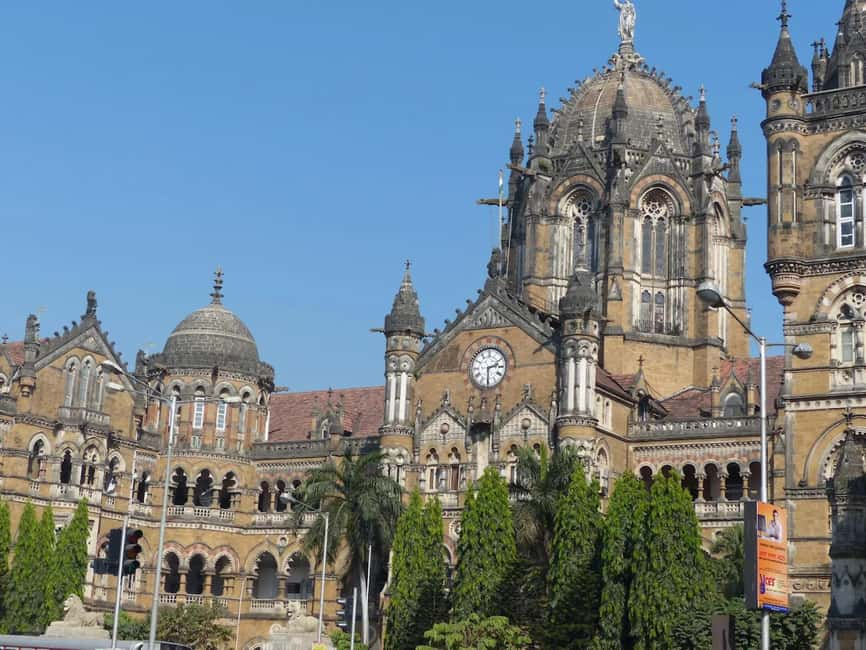
The route then reaches Chhatrapati Shivaji Maharaj Terminus, usually called CST. Its Victorian Gothic design makes it one of Mumbai’s most memorable buildings. The station is still part of daily city life, so this is not a quiet monument isolated for sightseeing. You see an active transport hub with elaborate stonework and a steady flow of commuters.
CST is a photo and guided visit, but the exact time inside can vary. If architecture matters most to you, tell your guide. This is one place where a few extra minutes can make a real difference.
More cave tours around Mumbai:
- Elephanta Caves & Island Guided Private Tour
★ 5.0 · 1,327 reviews - Mumbai: Elephanta Caves Half-Day Guided Tour with Expert
★ 4.8 · 1,032 reviews - All inclusive Elephanta Caves Guided Tour
★ 5.0 · 386 reviews - From Mumbai: Half-Day Elephanta Caves Tour with Ferry Ride
★ 4.9 · 284 reviews
Lunch, Crawford Market, and the working city
Lunch is at a local restaurant, with Indian food included as part of the day’s flow rather than as a separate premium meal. The exact menu and restaurant are not specified, so you should expect a chance to eat local food, not a fixed culinary tasting.
Crawford Market brings you into a different sort of city scene. The bazaar is known for spices, fruit, handicrafts, and souvenirs. It is a good place to see the practical side of Mumbai commerce, and your guide can help explain what you are seeing.
You may have time for photos and a little browsing, but do not assume a long shopping session. The tour has many stops, and market traffic can slow the schedule. If you want to buy something, decide early what interests you and keep purchases easy to carry.
Marine Drive and the quieter Mani Bhavan
The car continues along Marine Drive, the famous curve often called the Queen’s Necklace. From the road, you get broad sea views and a sense of how Mumbai turns its shoreline into public space.
This is listed as a drive-by stop, so it is not a beach walk or a long sunset pause. It works best as a scenic transition between the market and the next historical site. If sea views are a priority, ask how much time the schedule allows for stopping.
Mani Bhavan offers a more focused change of mood. The building is connected with Mahatma Gandhi and now serves as a museum about his life and role in India’s independence movement. It is a quieter stop, with a clear political and personal story rather than just an impressive facade.
I like this part of the route because it adds meaning to the city tour. You are not only looking at grand buildings. You are also seeing a place tied to one of India’s most important public figures. The visit is guided, so ask questions if you want more context about Gandhi’s work in Mumbai.
Hanging Gardens and views from Malabar Hill
Hanging Gardens sits on Malabar Hill and gives you a higher viewpoint over Mumbai and the Arabian Sea. The stop is mainly scenic, offering a pause from the dense streets below.
It is not a full garden tour in the information provided, so think of it as a viewpoint and photo stop. The value comes from seeing the city from above after spending much of the day at street level.
This is another place where timing matters. Traffic, the cave visit, and the size of your group can affect how long you stay. A private tour gives you a better chance of making a brief request for photos, but the guide still needs to bring you back on schedule for Dharavi.
Dharavi with context and care
Dharavi is the most sensitive and potentially most rewarding part of the day. It is a working community, not a backdrop. The tour presents small-scale industries such as pottery, leatherwork, recycling, and clothing production, along with the daily life of people who live and work there.
A good guide matters greatly here. Saif has taken visitors to meet a local family and see a workplace where clothing is made. Ali has also focused strongly on explaining the area and its daily rhythm. These details can turn a quick look from a car into a more thoughtful visit, though the exact access can vary.
You should follow your guide’s instructions about photography and personal boundaries. Treat homes and workplaces as private places, not exhibits. The point is to understand the skill and effort behind local businesses, not to collect dramatic images.
Some people feel unsure about visiting Dharavi. That is a fair concern. A guided walk can help you move through the area respectfully and safely, but you should still decide if this type of visit fits your travel style. If you approach it with curiosity and restraint, it can add a human dimension that grand monuments cannot provide.
What the private car changes
The vehicle is air-conditioned, and the driver handles the city’s difficult road sections. Parking and standard charges are included, along with hotel pickup and drop-off and a water bottle.
You are not joining a large shared coach, so the day can feel more personal. The guide can answer your questions, take photos, and check if you need a pause for food or refreshments. One guide was specifically praised for asking about breaks during the day, a small courtesy that matters when the schedule runs for eight hours.
A private car does not defeat Mumbai traffic. It simply makes the traffic easier to handle. You should still expect delays, especially when crossing between South Mumbai, the cave site, and Dharavi.
Who will get the most from this tour
This tour suits a first-time visitor who wants a broad introduction to Mumbai and has only one full day available. It is also a good fit if you value door-to-door transport, want an English-speaking guide, or would rather not organize ferries, caves, markets, and distant neighborhoods alone.
It works well for couples and small private groups who want to ask questions or adjust the pace slightly. The included cave choice, car, guide, parking, and hotel transfers make the $69 price easier to justify.
It is less suitable if you dislike busy schedules, long drives, uneven cave paths, or emotionally complicated city tours. Pregnant women are listed as unsuitable for this activity, and anyone with limited mobility should ask about the walking requirements before booking.
You should bring comfortable shoes and sunglasses. Pets are not allowed. Cancellation is free up to 24 hours before the start, and you can reserve now and pay later, which helps if your Mumbai plans are still shifting.
Should you book this Mumbai day tour?
Book it if you want the city’s major sights tied together by a private guide, and if you like seeing both famous monuments and working neighborhoods. The strongest parts are the flexible cave choice, the private transport, the architecture route, and the chance to hear Dharavi explained by a guide who knows the area.
Skip it if you want a relaxed day with long visits at each stop. The schedule covers a lot, and some attractions are viewed from the car or handled as short photo stops.
For most first visits, I would choose Elephanta when the ferry is running and the weather is good. Choose Kanheri if you prefer a road-based cave visit or if monsoon conditions disrupt the boats. Either way, this tour gives you a useful first map of Mumbai, from sea-facing landmarks to the workshops and streets that power the city.
FAQ
How long does the Mumbai tour last?
The tour lasts eight hours, including hotel pickup, sightseeing, and drop-off.
Is hotel pickup and drop-off included?
Yes. Pickup and drop-off in Mumbai are included.
Is this a private tour?
Yes. The tour is for a private group with a private guide and air-conditioned vehicle.
Which cave site can I visit?
You can visit either Elephanta Caves or Kanheri Caves. The selected option may depend on your plans and ferry conditions.
Are the caves open every day?
No. Elephanta Caves and Kanheri Caves are closed every Monday.
What happens if the Elephanta ferry is canceled during monsoon season?
From July to mid-September, strong winds can cause ferry delays or cancellations. In that case, the alternative offered is a visit to Kanheri Caves in Mumbai.
What should I bring?
Bring comfortable shoes and sunglasses. Water is provided. Pets are not allowed.
Newly added caves around Mumbai
- Mumbai: Kanheri Caves and The Golden Pagoda Temple★ 4.7 · 108 reviews
- Mumbai City Tour with multiple options★ 4.5 · 27 reviews
- Mumbai: City Tour, Elephanta Caves, Dharavi Slum W/Options★ 4.9 · 198 reviews
- Mumbai: Buddhist Kanheri Caves with Golden Pagoda Temple★ 4.8 · 47 reviews
- Elephanta caves tour in Mumbai – Group & Private Options★ 4.2 · 14 reviews
- Elephanta Cave Tour with Bollywood Tour★ 4.0 · 18 reviews
- Elephanta Caves & Island Guided Tour★ 4.8 · 59 reviews
- Mumbai Kanheri Caves & Golden Pagoda – A Buddhist Settlement★ 5.0 · 28 reviews