
Review · ATHENS
Meteora Monasteries & Caves DayTrip from Athens with Greek Lunch
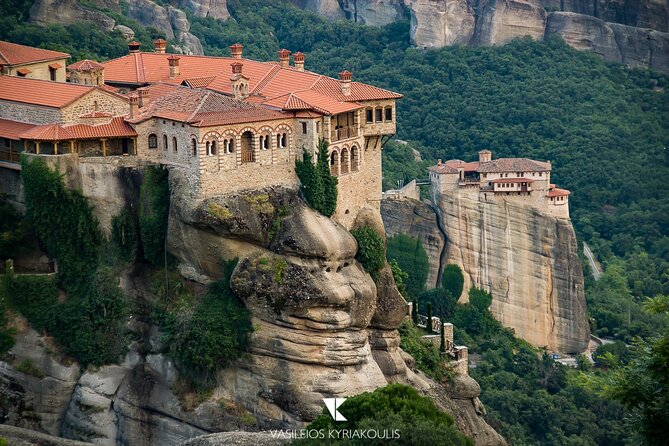
Meteora is one of Greece’s great surprises: huge stone towers rising from the plain, with monasteries perched on top as if placed there by a theatrical set designer. This 14-hour day trip from Athens gives you a practical way to see all six monasteries, enter three, and visit the hermit caves without renting a car or sorting out the mountain roads yourself.
I like two things here. First, the route includes more than the famous postcard views. You see Kastraki, the cave hermitages, the town of Kalambaka, and several photo stops. Second, guides such as Maria and Clement bring useful stories and good energy to a place that can otherwise feel hard to understand. The main drawback is simple: the journey is long, and traffic, road closures, or farmers’ protests can turn a demanding day into a very late one.
Key things to know before you book
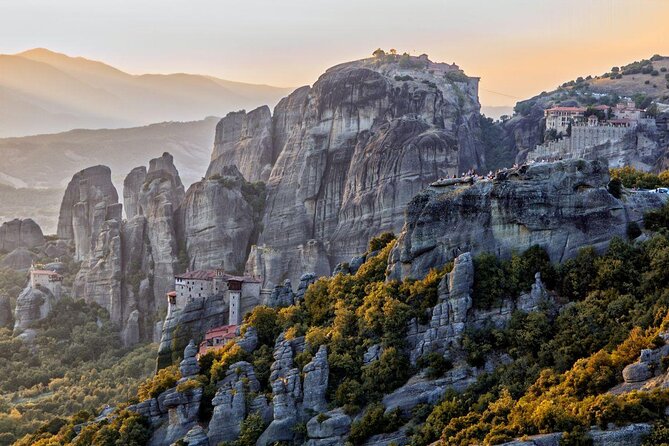
- Six monasteries in one day: You see all six from the road and enter three of the most important.
- A 14-hour schedule: Leave Larissis Station at 8:00 a.m. and normally return around 10:30 p.m.
- A scenic halfway stop: Kamena Vourla offers a chance to stretch by the coast, with Evia visible across the water on a clear day.
- Three monastery entrances cost extra: Bring cash for the €5 fee at each monastery, since there is no ATM in the area.
- Dress rules are strict: Women need skirts at or below the knee and cannot wear trousers, shorts, or sleeveless tops. Men cannot wear sleeveless shirts or shorts above the knee.
- Lunch is optional: You can add a Greek meal, but it is not included in the base price.
Why Meteora is worth the long ride
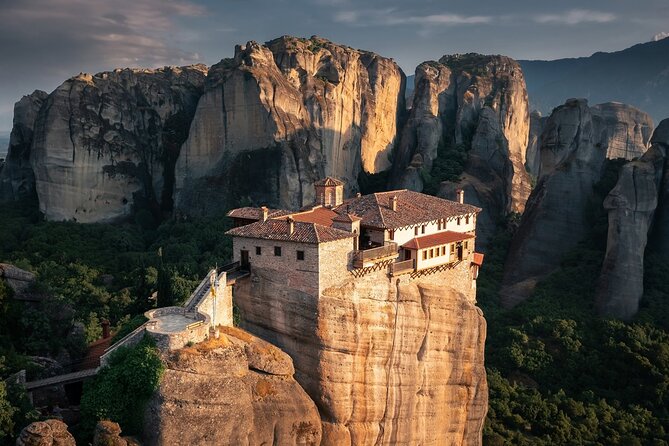
Meteora is not just a group of old religious buildings. It is a meeting of geology, faith, engineering, and sheer nerve. The monasteries sit on tall rock pillars above the Thessalian plain, and the setting does much of the talking before your guide says a word.
The first Christian hermits came to these cliffs seeking solitude. Later, monasteries were built high above the valley, where access was difficult and protection came naturally from the rock. Today, steps and bridges make the visit easier, though reaching the monastery doors still takes effort.
I would not choose this trip for a relaxed day. I would choose it because Meteora is a major Greek sight and you have limited time. The long bus ride is the price of seeing a place that is far enough from Athens to make an overnight stay sensible, but still reachable in one ambitious day.
The coach includes air conditioning, WiFi, and USB chargers. Most of the ride is broken into sections, with a stop around the midpoint. The countryside gives you something to watch, and the central Greek coastline appears during part of the outward journey.
Still, keep your expectations realistic. A normal day is already long. Road problems have caused some departures to reach Meteora much later than planned, leaving less daylight for the monasteries and pushing the return to Athens well past the expected time. If your schedule is tight, do not book this on the night before an early flight.
Trips with lunch around Greece:
- Athens: Meteora Monasteries Day Trip with Caves and Lunch
★ 4.7 · 4,670 reviews - Athens: Meteora Monasteries, Caves & Coastal Stopovers with Lunch
★ 4.5 · 1,432 reviews - Kayak Trip to Hidden blue Cave, with lunch & fruits.
★ 5.0 · 393 reviews
Meeting the coach at Athens Larissis Station
The departure point is Larissis Station, Athens. You need to be there at least 15 minutes before the 8:00 a.m. departure.
Look for the bus marked Meteora Thrones, Travel Center. It waits on the road across from the train station, not inside the station building. This is one detail worth taking seriously. The operator states that it is not responsible if you miss the bus, so arrive early rather than trying to make a last-minute dash across the street with luggage and coffee in hand.
The coach ride is not a guided sightseeing tour from Athens. Your main guide meets you in Kalambaka, so you should expect stretches of quiet travel between the stops. Bring water, snacks, a phone charger, and something to read.
The bus has a maximum group size of 35. That is not a private tour, but it is still manageable for a coach excursion. Some parts of the visit are naturally spread out because you enter the monasteries on your own, while the guide gives information at meeting points and during the Meteora portion.
Kamena Vourla gives the bus ride a useful break
About halfway to Meteora, the coach stops at Kamena Vourla for roughly 30 minutes. This is a seaside rest stop, with views toward Evia when conditions are clear.
It is not a major sightseeing visit, and you should not treat it as one. Its value is practical. You can use the toilets, buy something to eat, stretch your legs, and get out of the seat before the final section of the ride.
The timing also helps divide the journey into two more manageable blocks. Families and anyone who dislikes long coach rides will appreciate the break. If you plan to buy lunch in Meteora, this is a good place to pick up a snack in case the main meal does not suit you.
Kalambaka, Kastraki, and the first Meteora views
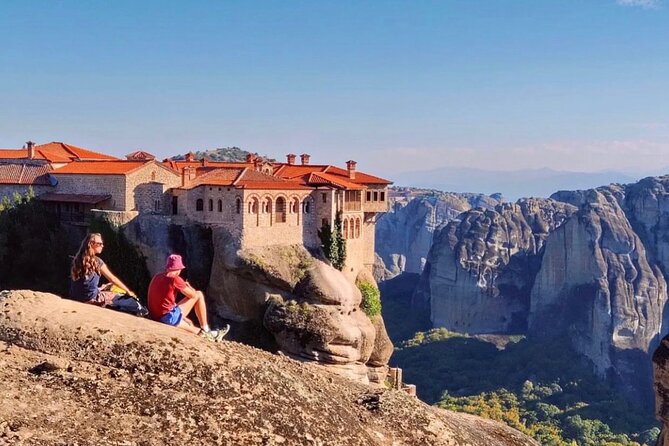
You arrive in Kalambaka around 12:30 p.m. under the normal schedule. Your local tour leader meets you at the bus stop. Maria and Clement are among the guides associated with this route, and both are known for making the history easier to follow with stories, humor, and clear explanations.
The first look at Meteora often comes near Kastraki, the small village below the cliffs. Kastraki has stone houses, quiet lanes, and a more traditional feel than a large Greek city. It is also a starting point for walking routes to the monasteries, though this day trip does not give you time for a proper hike.
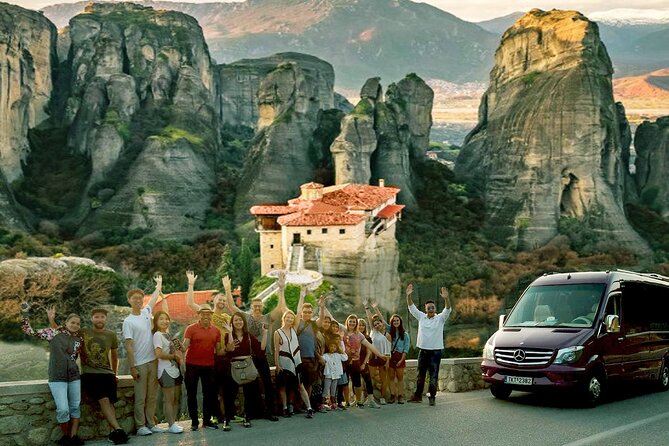
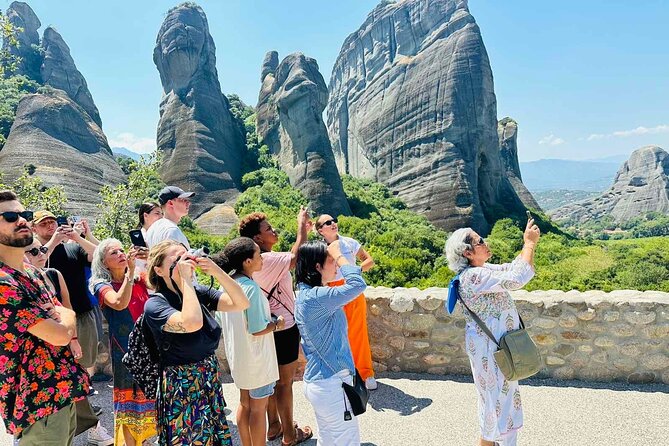
From here, the rocks begin to dominate the view. You will stop at several viewpoints for photographs, including places selected for broad views of the monastery towers and the valley. The guide also points out less obvious locations connected with the local monastic story.
The photo stops matter because you cannot appreciate Meteora fully from inside a monastery courtyard. The most memorable views are often across the valley, where several buildings appear suspended above the rocks.
More cave tours around Greece:
- From Corfu: Day Cruise to Paxos, Antipaxos, & the Blue Caves
★ 4.3 · 4,800 reviews - Zakynthos: Shipwreck Beach with Blue Caves Land & Sea Tour
★ 4.9 · 3,774 reviews - From Corfu Island: Antipaxos & Paxos Blue Caves Boat Cruise
★ 4.7 · 3,690 reviews - Zakinthos: Shipwreck Beach and Blue Caves Land and Sea Tour
★ 4.6 · 3,359 reviews
Great Meteoron, the oldest and largest monastery
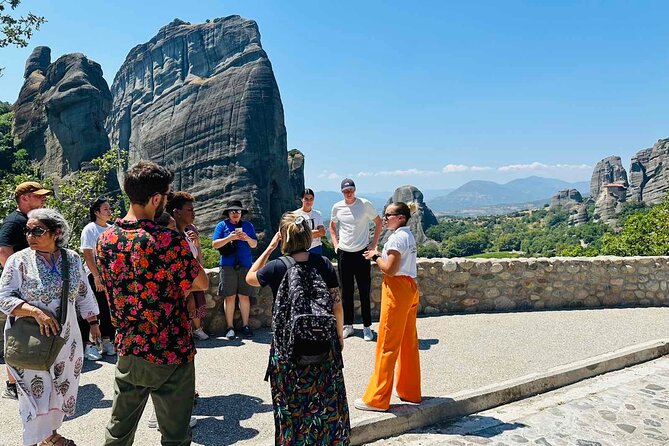
Great Meteoron is the largest monastery at Meteora and one of the essential stops. It was founded in the 14th century by Saint Athanasios.
Inside, you can see chapels, frescoes, and a small museum. The monastery also gives you broad views over the rock formations and the plain. It is a substantial visit, with about an hour assigned to the stop.
The climb requires stairs. There is no elevator, and the height of the monastery is part of its character. Take your time and use the handrails. You do not need to be a serious hiker, but this is not a flat museum visit.
Great Meteoron can be especially rewarding if you want context. Its size makes the scale of the whole Meteora community easier to grasp. It also helps explain how people lived in these isolated places before modern roads and tourist buses.
Varlaam and the rewards of the climb
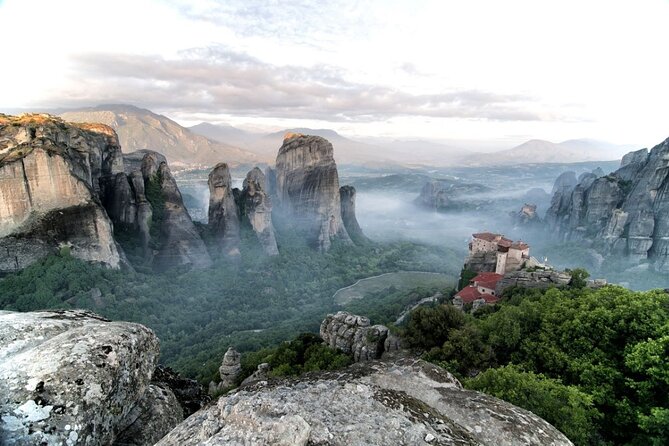
Varlaam is the second-largest monastery and receives about 45 minutes. It dates from the 16th century and is known for its frescoes, wooden barrel, courtyard, and views.
The approach involves more steps, though the climb is part of the experience rather than an obstacle to be rushed. Look back as you go. The views become wider with every turn, and the rock walls show why these sites were chosen for retreat and defense.
The interior visit is compact but worthwhile. You see religious art and working monastic spaces, not just an empty historic shell. The atmosphere is quiet, and visitors are expected to behave accordingly.
If you have limited stamina, do not assume you must race up. The group’s schedule is fixed, so ask your guide how much time you have at the entrance before starting the climb.
The hermit caves and Saint Nicholas Badovas
The hermit caves offer a different picture of Meteora. The monasteries are grand and carefully built, but these early shelters are simple spaces carved into the cliffs where solitary monks lived.
You spend about 15 minutes in this area, including the hermitage of Badovas and the cave sites. It is a short stop, but it adds meaning to the larger monasteries. Before communities built chapels and courtyards high on the rocks, individual ascetics were already seeking isolation here.
This is also one of the more distinctive parts of the route. Many visitors come for the monasteries and leave without understanding the earlier, rougher form of monastic life. The caves help fill in that story.
The visit to Saint Nicholas Anapafsas is handled as part of the monastery circuit. Its compact structure is built on a narrow rock and includes frescoes by Theophanis Strelitzas. About 15 minutes is assigned here, so expect a quick look rather than a long, quiet visit.
Agios Stefanos, the easiest monastery to reach
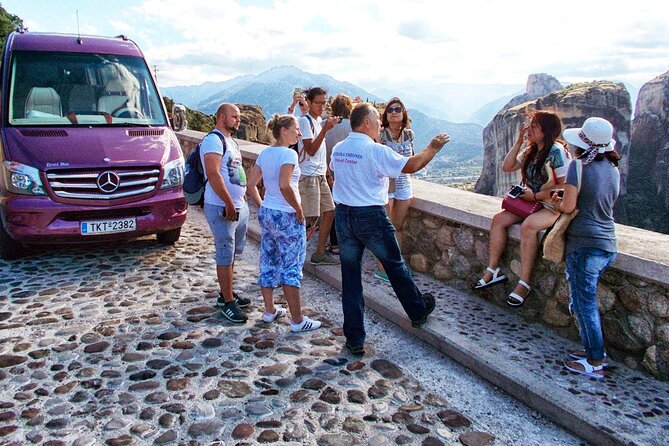
Agios Stefanos is the most accessible of the monasteries on this route. A small bridge replaces much of the stair climb, making it a useful stop for anyone concerned about steep approaches.
The site began in the 14th century and is now home to nuns. Inside, you can see frescoes and a calm chapel. The position above Kalambaka gives you clear views over the town and valley.
You have about 40 minutes here. That is enough to look around without feeling as pressed as you may at the smaller stops. I would pay attention to the contrast between the easy access and the dramatic setting. Meteora can feel remote, but Agios Stefanos shows how the religious communities remain part of a living place.
Appropriate clothing is required. Women need a skirt reaching the knee or below and cannot enter in trousers, shorts, or sleeveless tops. Men cannot wear sleeveless clothing or shorts above the knee. Pack a wrap or long skirt if needed, but do not count on borrowing clothing at every entrance.
Holy Trinity and Rousanou from the road and rock paths
Holy Trinity is among the most famous Meteora images. It sits on a steep rock and is reached by a path and stairs cut into the cliff. The view from above is excellent, but the approach is more demanding than Agios Stefanos.
The scheduled visit lasts about 35 minutes. That gives you time for the climb and a look around, but not an unhurried exploration. If the group is running late because of traffic, this is one of the places where daylight and opening hours may affect what you can see.
Rousanou, also called Saint Barbara, occupies a narrow rock pillar and is now a nunnery. It is one of the most photogenic buildings in the area, with balconies and views that make the structure seem even more precarious.
The stop lasts about 35 minutes. You may visit the interior, depending on the day’s schedule and access, but the outside view is a major part of its appeal. Keep your camera ready during the drive because the road provides several strong angles of the monastery.
Lunch, entrance fees, and the real cost
The base price is about $87 per person, which is a fair value if you want transport, a local leader, the Meteora circuit, and the convenience of returning to Athens the same night. Driving yourself would mean handling a long day behind the wheel, parking, directions, and the timing of six monasteries.
The price does not include the monastery entrance fees. Each monastery charges €5 per person, so visiting three inside costs €15. Bring cash. There is no ATM in the monastery area.
Lunch is optional. The meal includes a main dish, Greek salad, bread, and water, with vegetarian and vegan choices available. The food is described as a local Greek meal, with choices such as pasta, fried fish, moussaka, chicken, and salad.
I would add lunch if you value convenience and do not want to search for food during a tightly scheduled day. I would skip it if you prefer to control your meal, especially since the stop is short and some people find the dining setup basic rather than leisurely. A snack for the bus is still a good idea.
Guides, audio help, and the pace of the visit
The live tour is offered in English or Spanish. Maria and Clement are named guides on this route, and their best contribution is helping you connect the buildings, caves, town, and geography into one story.
You also receive a smart audio guide in English, French, Italian, Dutch, Spanish, Portuguese, Polish, Russian, Japanese, Korean, or Chinese. That is useful inside the monasteries, where a guide may not accompany you through every chapel and museum space.
The guide does not replace your own attention. Keep track of the meeting times, since the group must continue to the next site. The route covers a lot of ground in roughly four hours, and the schedule favors range over lingering.
Who should take this trip?
I would recommend it to you if:
- You have only one free day for Meteora.
- You do not want to drive several hours each way.
- You want to see all six monasteries from the outside and enter three.
- You enjoy scenic coach travel and can handle a long day.
- You want a guide to explain the hermits, monasteries, and local towns.
I would suggest staying overnight instead if you want time for walking, quiet photography, or a slower look inside the monasteries. An overnight stay also protects you from turning a road delay into a stressful late-night return.
The tour is workable for many older visitors, but the steps require care. Agios Stefanos is easier, while Great Meteoron, Varlaam, and Holy Trinity involve climbs. Anyone with mobility concerns should think carefully before booking.
Should you book the Meteora day trip from Athens?
Book it if your Greece itinerary is short and Meteora is high on your list. The rock formations, monastery views, and hermit caves are too special to dismiss simply because the ride is long. The combination of coach transport and a local guide removes much of the planning burden.
Do not book it expecting a relaxed excursion or guaranteed precision in every circumstance. The normal plan runs from 8:00 a.m. to about 10:30 p.m., and disruptions can add hours. Check the weather and any current road conditions before you commit.
For most people with limited time, this is a sensible way to reach Meteora. For anyone with two days available, staying in Kalambaka or Kastraki would give the place the time it deserves.
FAQ
Where does the tour depart from in Athens?
The tour departs from Athens Larissis Station. The bus waits on the road across from the station, marked Meteora Thrones, Travel Center. You should arrive at least 15 minutes before the 8:00 a.m. departure.
What time does the tour usually return to Athens?
The planned arrival back at the meeting point is around 10:30 p.m. Traffic, road closures, and other delays can make the return later.
How many monasteries do I visit inside?
You visit inside three monasteries. The route also gives you panoramic views of all six monasteries from outside.
Are monastery entrance fees included?
No. Each monastery charges €5 per person, and you should bring cash because there is no ATM in the area.
Is lunch included?
Lunch is included only if you select the lunch option when booking. The meal includes a main dish, Greek salad, bread, and water. Vegetarian and vegan choices are available.
What clothing do I need for the monasteries?
Women need skirts reaching the knee or below and may not wear trousers, shorts, or sleeveless tops. Men may not wear sleeveless clothing or shorts above the knee.
Is the tour suitable for people who have trouble with stairs?
The monasteries do not have elevators, and reaching several of them involves stairs. Agios Stefanos is the easiest to reach because it is connected by a small bridge. Consider your mobility before booking.
Newly added caves around Greece
- From Corfu: Paxos, Antipaxos & Blue Caves Day Trip by Boat★ 3.8 · 62 reviews
- Paleokastritsa: Paradise, Yali Beach & Blue Caves Boat Tour★ 4.8 · 293 reviews
- Paleokastritsa: Kasteli, Blue Caves, & Limni Beach Boat Trip★ 4.7 · 165 reviews
- Nidri: Papanikolis Cave, Meganisi, Lakka Beach & Scorpios★ 4.5 · 20 reviews
- Naxos: Cruise to Rina Cave & Ano Koufonissi with BBQ Lunch★ 3.8 · 55 reviews
- Naxos: Rhina Cave and Coastline Sea Kayaking Tour★ 5.0 · 82 reviews
- Naxos: Koufonissia and Rina Cave Boat Trip with BBQ★ 4.7 · 121 reviews
- Naxos: 2 hours Boat Trip from Panermos to Rina’s Cave★ 5.0 · 15 reviews
Athens Cave Tours worth comparing.
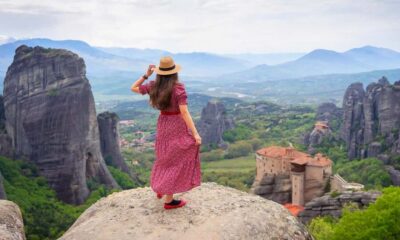
Athens: Meteora Monasteries Day Trip with Caves and Lunch
Read our review →
Athens to Meteora: Monasteries, Caves & Seaside Stopovers
Read our review →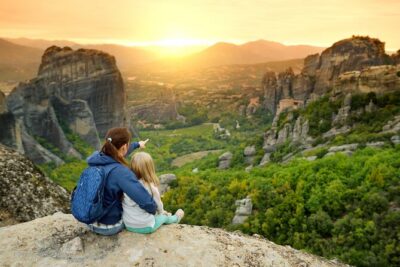
Athens: Meteora Monasteries, Caves & Coastal Stopovers with Lunch
Read our review →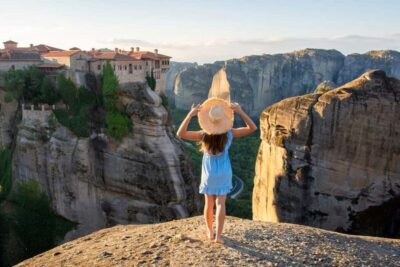
Athens: Meteora Monasteries, Hermit Caves & Seaside Escapes
Read our review →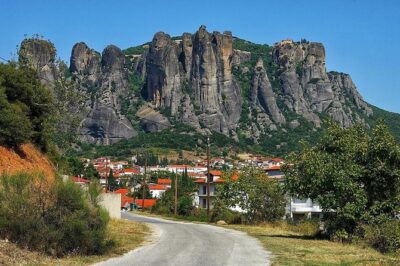
Meteora Monasteries Private Full Day Trip From Athens
Read our review →
Athens: Delphi, Corycian Cave, and 300 Battlefield Day Trip
Read our review →
Athens: 2-Day Meteora Monasteries/Caves Tour and Hotel Stay
Read our review →Lists this cave tour appears in