
Review · NORTHEASTERN REGION, ICELAND, ICELAND
From Jökulsárlón: Vatnajökull Glacier Blue Ice Cave Tour
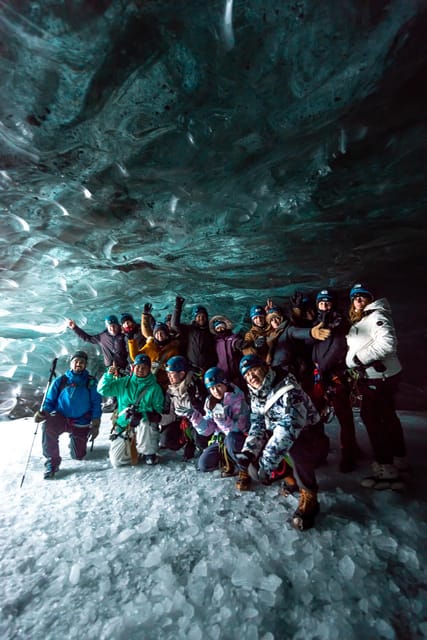
The best part of this tour is that you enter a real, changing ice cave inside Breiðamerkurjökull, a tongue of Vatnajökull, Europe’s largest glacier. The blue, green, and black ice can look completely different from one season to the next. I like the lively super jeep ride and the fact that the guide explains how weather, meltwater, and pressure shape the cave instead of treating it like a simple photo stop.
I also like the small group, which is limited to 14 people, and the patient pace inside the cave. Guides including Javier, Iga, Guillermo, Thor, and Valentino have been praised for their safety care, glacier knowledge, and willingness to take photos. The main drawback is the walk: it can reach 1 to 4 km, with roughly 1.5 km each way to the cave, and the icy, windy conditions demand proper clothing and sturdy boots.
Key points to know before booking
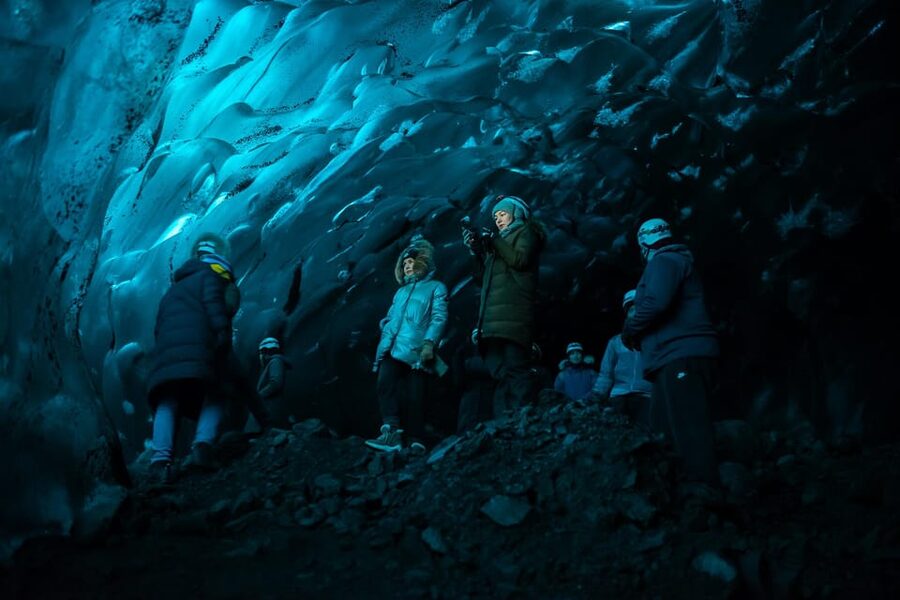
- The cave is natural and never guaranteed to look like the photos: Your guide chooses the safest and most impressive cave available that day.
- The super jeep is part of the fun: The custom 4WD takes about 40 to 45 minutes each way across rough glacial ground.
- You may walk on the glacier: The route can include 500 to 1,000 meters on the ice before reaching the entrance.
- The group stays fairly small: Up to 14 people means better access to the guide and less crowding than a large coach excursion.
- Bring serious outdoor clothing: Warm waterproof layers and hiking boots matter more here than a stylish Iceland outfit.
Why this Vatnajökull cave feels different
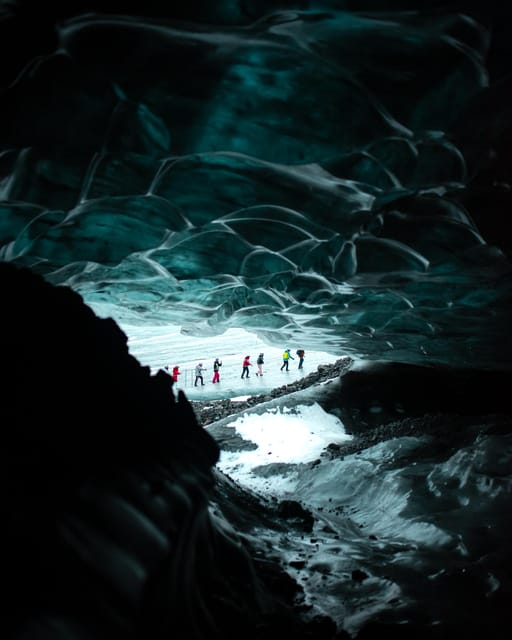
Iceland has several ways to see a glacier, but an ice cave gives you a rare look inside one. You are not simply standing beside a wall of ice. You may walk beneath a blue ceiling, follow a narrow chamber, or pause where sunlight passes through layers formed over many years.
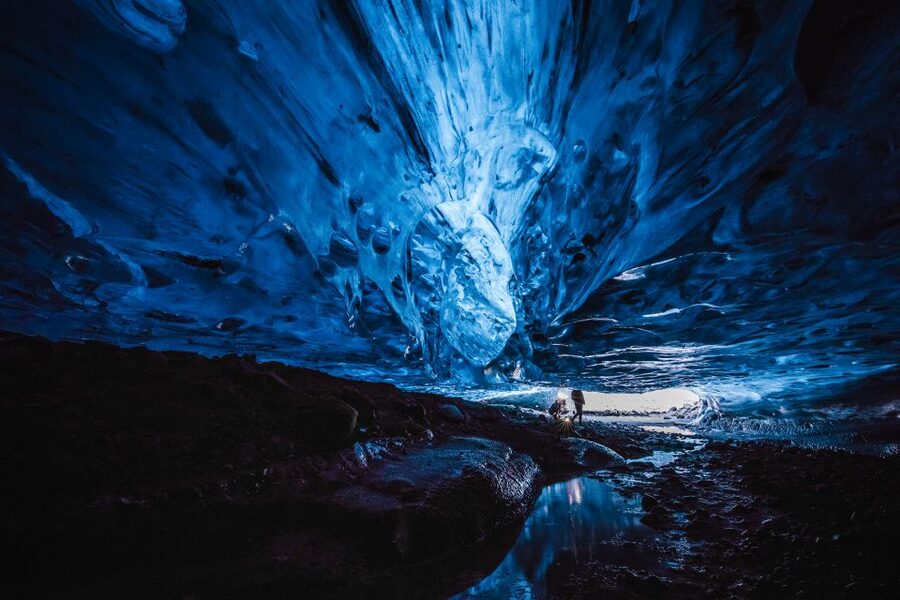
The color comes from dense ice and the way it filters light. Freshly exposed ice may look pale or clear, while older compressed ice can show strong blue tones. You might also see emerald green shades or dark, almost black ice where volcanic material has been trapped in the glacier. The cave may have several chambers, as it did for some groups, but the shape is never fixed.
That uncertainty is part of the appeal. The company does not promise one named cave because natural caves open, shrink, flood, or become unsafe. A cave found in September can change greatly by winter. The cave you enter may not match the photographs used to market the tour, but it will be the best accessible option for the conditions that day.
This is an important distinction. If you want a polished attraction with a fixed route, this may feel unpredictable. If you want to see a temporary natural formation before it changes, the uncertainty makes the experience more special.
More Ice Cave Tours in the world:
- From Vik: Katla Ice Cave and Super Jeep Tour
★ 4.6 · 2,110 reviews - Jökulsárlón: Vatnajökull Ice Cave Guided Tour
★ 4.2 · 2,046 reviews - Skaftafell: Ice Cave Tour and Glacier Hike
★ 4.5 · 1,746 reviews
Meeting at Jökulsárlón and boarding the super jeep
You meet beside the cafeteria at the ticket office of Jökulsárlón Glacier Lagoon, near the company’s super jeeps. Arrive a few minutes early. The meeting point is beside the vehicles and can be easy to miss if you are looking only for the main cafe or another tour operator.
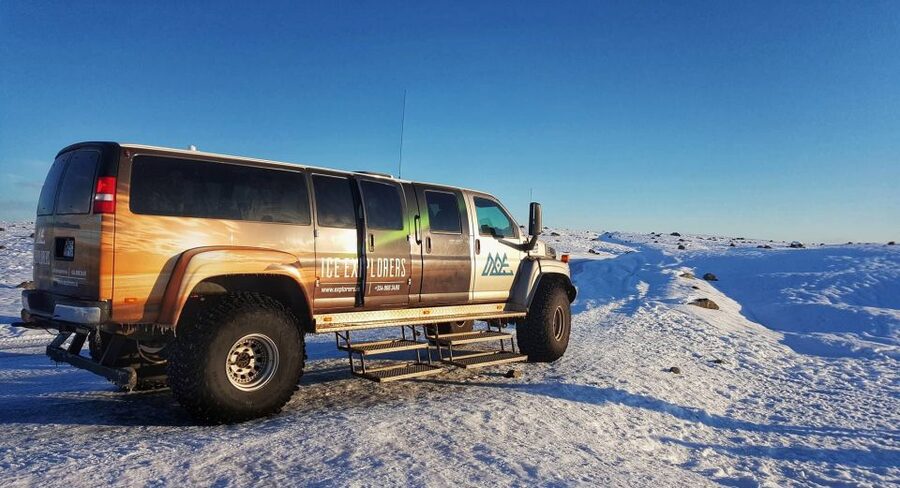
The custom-built 4WD is one of the tour’s pleasures. The ride toward Breiðamerkurjökull takes about 40 to 45 minutes, with the exact time depending on ground conditions. You are not sitting in a standard coach. The large tires and high clearance allow the vehicle to reach rougher ground near the glacier.
The ride is practical, but it also gives you time to watch the scenery change. Jökulsárlón is known for its floating ice, while the route toward the glacier leads into a wilder setting of snow, rock, and glacial runoff. The guide may explain ice cave formation, volcanoes, local culture, and the forces that keep reshaping the glacier.
The quality of this part depends partly on the guide. Iga, Javier, Guillermo, Thor, Thomas, and Valentino are among the guides specifically praised for clear explanations, good humor, and care with safety. One useful point from the tour experience is that not every guide gives the same amount of commentary during the drive. If you want more local context, ask questions rather than quietly watching the road.
Walking from the road to Breiðamerkurjökull
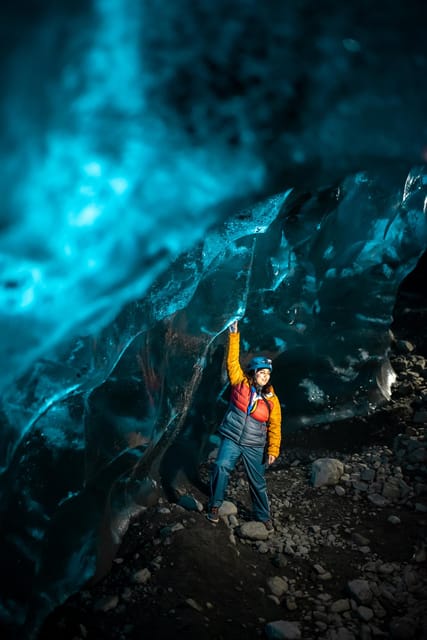
After the jeep stops, the active part begins. You may walk from the parking area to the glacier entrance, sometimes across uneven ground and sometimes over the ice itself. The stated walking distance can range from 1 to 4 km, and the approach to the cave may be about 1.5 km each way.
That range matters. A short approach can feel easy, while a longer route in wind or soft snow takes more effort. You do not need technical mountaineering skills, but you should be in good health and comfortable walking outdoors for a few hours.
Depending on the route, the guide supplies crampons or micro-spikes. You may also receive a helmet and, if needed, a safety harness. These are useful safeguards, but they do not replace sensible footwear. Wear sturdy hiking or walking boots with good support. High heels, open-toed shoes, and casual trainers are poor choices.
The walk is one of the tour’s strengths because it lets you see the glacier rather than teleporting straight to a cave entrance. You may notice cracks, layers, meltwater channels, and changes in the ice surface. At the same time, it is the section most likely to challenge anyone who underestimates Icelandic weather.
Bring warm layers, waterproof trousers, and a waterproof jacket. Rain gear and hiking boots can be rented at the meeting point, but relying on rentals adds cost and can slow your start. If your clothing is unsafe for the conditions, the operator may require you to rent equipment or refuse participation under the stated safety policy.
Entering a cave that may be blue, green, or black
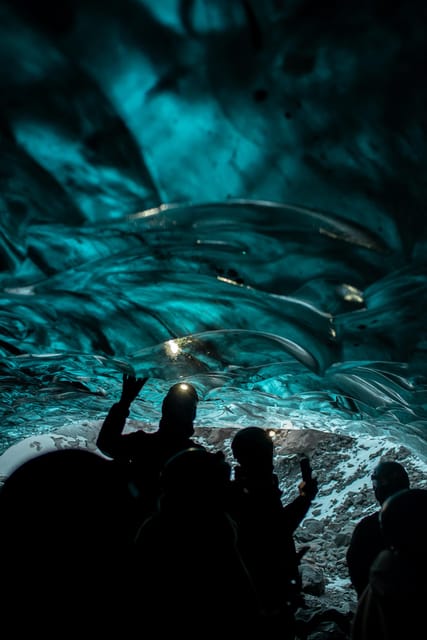
Before you enter, the guide gives a safety briefing and checks the group’s equipment. Listen carefully. Ice caves are not ordinary walking tunnels, and the route can have uneven ground, low sections, slippery patches, or narrow passages.
Inside, take your time. The light can shift as you move from one chamber to another. A wall that looks blue from one angle may appear almost silver from another. Black ice can reveal volcanic material, while green shades may appear where the ice and light combine in unusual ways.
The cave is usually the emotional high point of the outing, but it can also be busy. Afternoon groups may arrive close together, forcing you to pause while other people pass through or take photos. Some groups had about 30 minutes with little interruption by arriving early. Your guide controls the pace as much as possible, but a natural cave cannot be managed like a museum exhibit.
Photography is easy to understand but harder to master. The ice often looks darker to the eye than it does in a bright photograph, and the strongest colors may appear where light enters from above or through a thin wall. Guides such as Javier, Guillermo, and Evan have helped people take photos, which is useful when you want a picture of yourself rather than another shot of an empty wall.
Do not spend the entire visit looking at your phone. The cave can be short-lived, and its shape may be different by your next visit. Take a few pictures, then put the camera away and notice the sound, cold, and changing light.
More cave tours around the world:
- Portimão: Benagil Caves Speed Boat Tour with Sunset Option
★ 4.8 · 11,663 reviews - Albufeira: 2.5-Hour Benagil Caves & Dolphin Watching
★ 4.6 · 10,710 reviews - Blue Cave Small-Group Boat Tour from Dubrovnik
★ 5.0 · 9,360 reviews - Best Niagara Falls US Tour W/Boat Ride, Cave & More Wonders!
★ 5.0 · 8,372 reviews
What the guide adds to the three-hour route
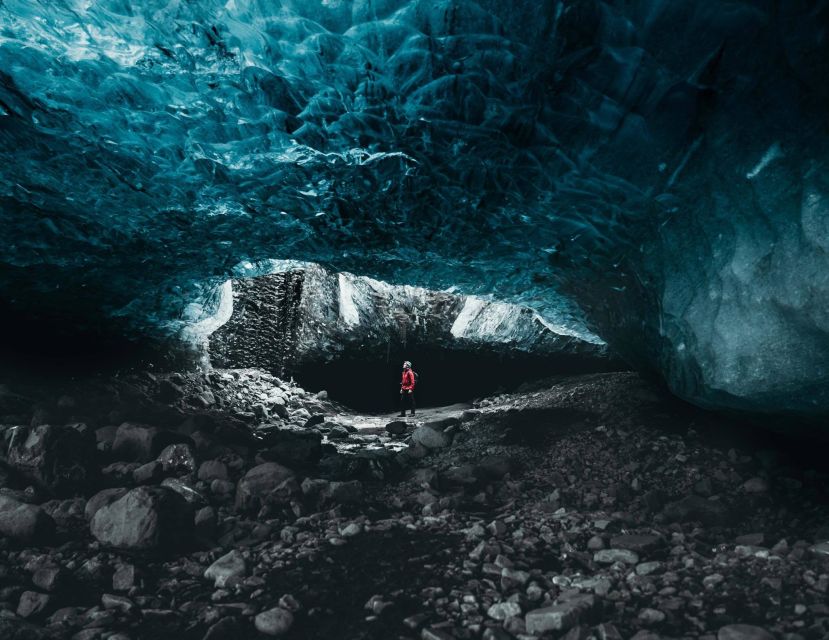
A good guide turns a pretty cave into an understandable natural event. You learn why ice caves form, how meltwater cuts through a glacier, and why a route that was safe earlier in the season may later close.
This explanation gives the tour lasting value. Without it, you might see a blue tunnel and leave with nice images but little sense of how temporary the place is. With it, you understand that the cave is part of a moving system, not a permanent room carved into ice.
Safety is another major part of the guide’s job. The best guides keep the group together, remind you where to walk, watch the route, and allow time for less confident walkers. Several guides were praised for being patient with people unused to snow and ice. That matters if you are fit but inexperienced.
The advertised tour is in English. A small group of up to 14 helps because you can hear instructions and ask questions without competing with a large crowd. The group size does not guarantee an empty cave, though. Other operators may be using the same area, especially at popular times.
The ride back and what three hours really means
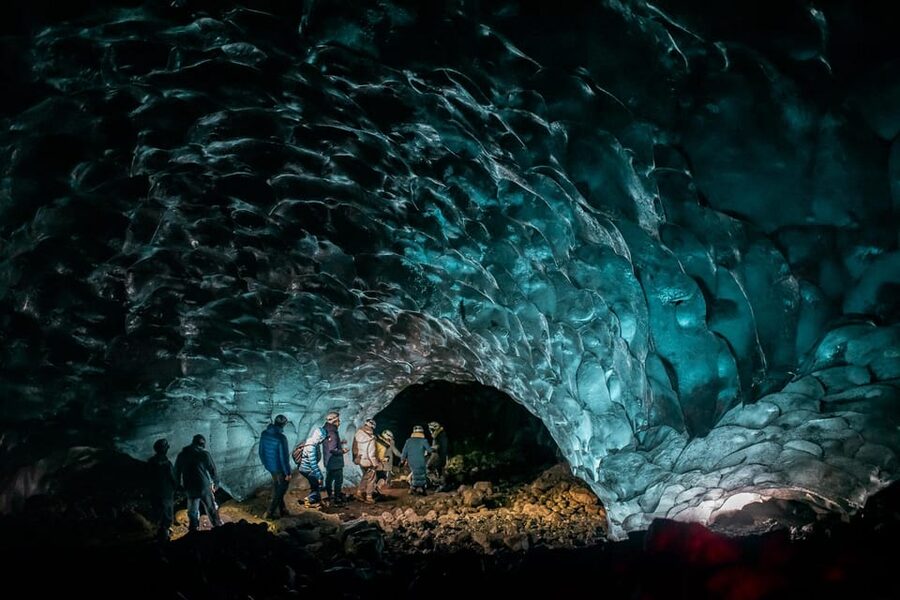
The return drive takes about another 40 to 45 minutes. The full outing is advertised at three hours, but the actual duration can range from about two and a half to three and a half hours. Weather, the walking route, cave access, and group pace all affect the timing.
Plan your day with breathing room. Do not schedule a flight, a tight dinner reservation, or another fixed activity immediately afterward. The tour starts and ends at Jökulsárlón, so it works best as part of a South Coast road trip rather than as a quick outing from Reykjavík.
The drive from Reykjavík is long, and the tour itself does not include pickup or drop-off at your accommodation. You need to arrange your own transport to Jökulsárlón. That makes this a better choice for people driving Iceland’s south coast or staying within reach of Höfn than for anyone hoping for a simple city excursion.
Is $165 a fair price?
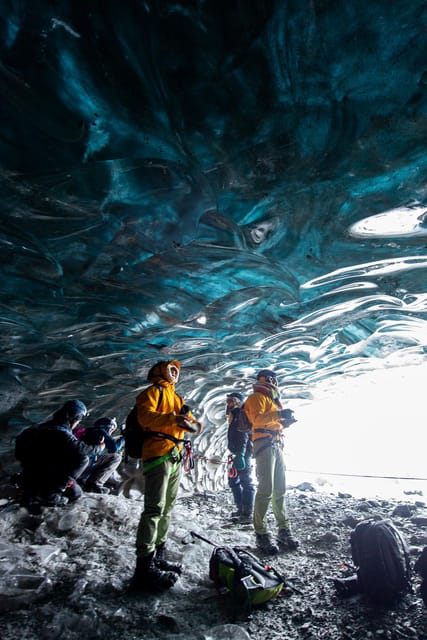
At $165 per person, this is not a cheap add-on. You are paying for a specialized 4WD, an English-speaking guide, safety equipment, access to a difficult-to-reach area, and a small group rather than a standard sightseeing bus.
I think the price is reasonable if the cave is your main goal and you value proper guidance. The super jeep gets you close to Breiðamerkurjökull, while helmets and traction equipment reduce the need to bring technical gear. You also receive interpretation about glaciers and volcanoes, not just transport to a viewpoint.
The value becomes less clear if you mainly want to see ice from a distance. Jökulsárlón Glacier Lagoon offers impressive scenery without a three-hour commitment, and this tour requires warm clothing, hiking boots, and a willingness to walk in difficult weather.
There is also a longer five to six-hour option that combines a cave visit with glacier exploration. Choose that version if you want more time on the ice. Choose this three-hour trip if you want the essential cave experience without spending most of the day on a glacier.
Who should book this tour?
I would choose this for an active adult, teenager, or older child who meets the minimum age of seven and is comfortable walking outdoors. The minimum height is 135 centimeters. You should also be able to manage uneven ground, cold temperatures, and a route that may change during the day.
It is not suitable for wheelchair users, people with mobility limitations, pregnant women, or people with heart problems. If you have concerns about walking on ice, ask the operator before booking rather than assuming the supplied crampons solve every issue.
This is especially good for photographers, nature fans, and anyone who wants a natural formation rather than a constructed ice tunnel. It also suits you if you enjoy learning how a place works. The strongest part of the tour is not only the color of the ice, but understanding that the cave is temporary.
Should you book the Vatnajökull blue ice cave tour?
Book it if you are already near Jökulsárlón, can handle a few hours outdoors, and want one of Iceland’s most unusual natural experiences. The changing cave, capable guides, small group, and super jeep make a strong package.
Skip it if you need a predictable route, dislike cold and wind, or have limited mobility. Also think twice if your schedule is too tight for the flexible two-and-a-half to three-and-a-half-hour timing.
My practical advice is simple: go early if your schedule allows, dress for rain and wind, wear real hiking boots, and expect the cave to look different from the pictures. Those choices give you the best chance of enjoying what this tour really offers: a temporary room of glacier ice that may not exist in the same form again.
FAQ
Where does the Vatnajökull ice cave tour meet?
You meet next to the cafeteria at the ticket office of Jökulsárlón Glacier Lagoon, at Jökulsárlón, 781 Höfn í Hornafirði. The meeting point is beside the company’s super jeeps.
How long does the tour last?
The advertised duration is three hours. Depending on weather, glacier conditions, the route, and group pace, it may last about two and a half to three and a half hours.
How far is the drive to the glacier?
The super jeep ride takes approximately 40 to 45 minutes each way. It travels from Jökulsárlón toward Breiðamerkurjökull.
How much walking is involved?
The total walking distance can range from 1 to 4 km. The route to the cave may involve about 1.5 km each way, and some tours require a 500 to 1,000-meter walk on the glacier.
Which ice cave will the tour visit?
The cave depends on the conditions on the day of your tour. The caves are natural and constantly change with the seasons and weather, so the route may lead to the safest and most impressive accessible cave at that time.
Are helmets and crampons included?
Yes. Helmets and crampons or micro-spikes are included when needed. A safety harness may also be provided if the route requires one.
What should I wear?
Wear warm, preferably waterproof clothing and sturdy walking or hiking boots. Rain jackets, rain trousers, and hiking boots are available to rent at the meeting point.
Is the tour conducted in English?
Yes. The tour includes a live English-speaking guide.
Is there an age or height requirement?
Children under seven cannot join. Participants must also be at least 135 centimeters tall.
What happens if the ice cave is unsafe?
The glacier and caves can change quickly. If the cave is closed or unsafe, the day’s activity may be adjusted, and some groups have received a glacier walk instead. The guide chooses the safest available option for the conditions.
Newly added caves around the world
- Phuket: Starlight Hong Sea Cave & Glowing Plankton by Kayak★ 4.9 · 145 reviews
- Phuket: Monkey Cave, Water Rafting, Zipline with ATV Option★ 3.7 · 161 reviews
- Phuket: Bamboo Rafting, Monkey Cave, and ATV Option★ 3.5 · 129 reviews
- Phong Nha: Zipline Dark Cave & Paradise Cave Exploration★ 4.9 · 84 reviews
- Phranang Cave Sunset with BBQ dinner & Plankton Tour★ 3.2 · 53 reviews
- Phong Nha/Dong Hoi: Phong Nha Cave and Paradise Cave Tour★ 4.9 · 82 reviews
- Phong Nha: Cave Exploration and Zipline Dark Cave Tour★ 4.7 · 87 reviews
- Phong Nha National Park: Paradise Cave Half-Day Tour★ 5.0 · 23 reviews