
Review · ROME
Explore Christian Rome and the Underground of San Clemente
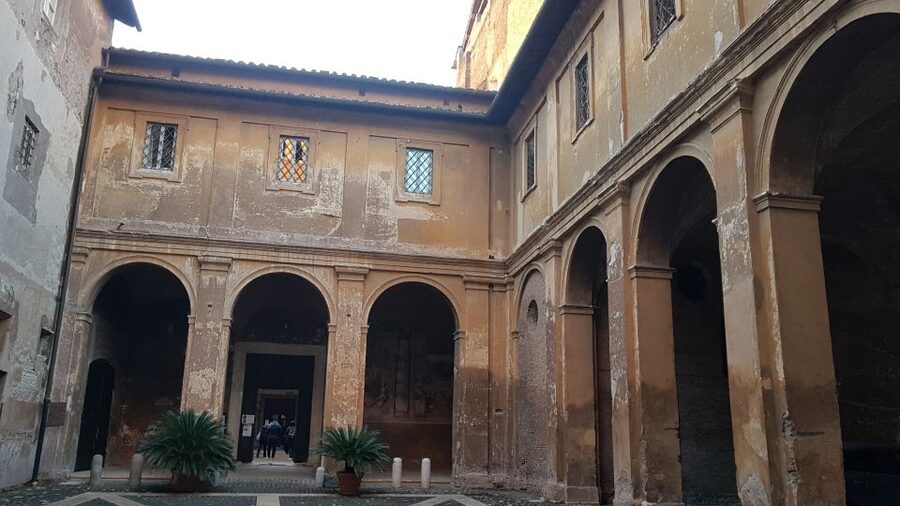
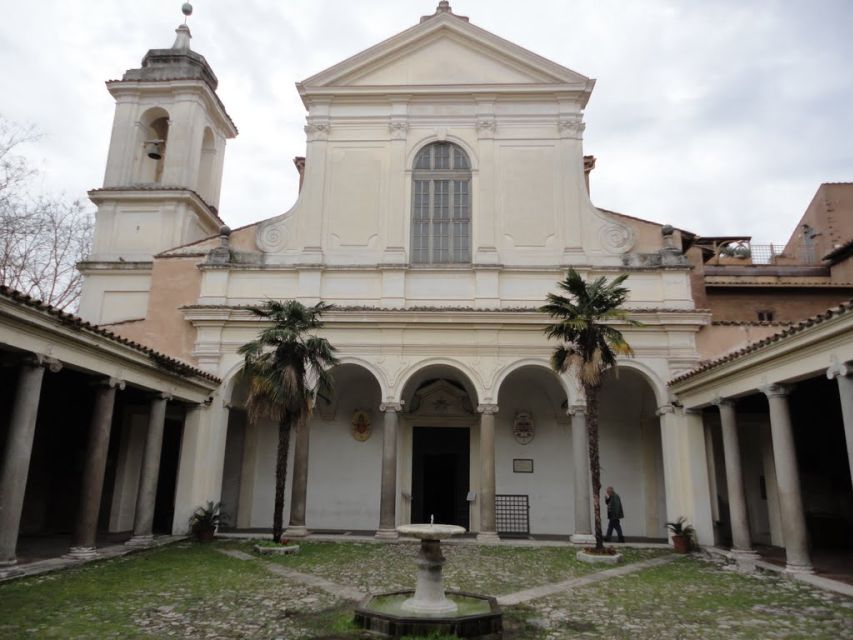
The most memorable part of this three-hour walking tour is San Clemente, where one church sits above another, and another lies below that. You move from a present-day basilica into medieval Rome, then farther down toward an ancient Roman house and a first-century altar dedicated to Mithras. It is one of the clearest places in Rome to see the city’s layers in one small space.
I like the route for two reasons. First, it links major churches with lesser-known interiors instead of treating Rome as a parade of famous facades. Second, the guides can give the sites real context. Roberto has been praised for his broad knowledge and calm delivery, while Mohamed has been described as a passionate storyteller. The main drawback is the pace: three hours covers several churches, and the tour is not suited to wheelchair users or people with mobility limits.
Key points to know before booking
- San Clemente is the main event: Explore three levels, from the 12th-century church down to Roman remains and a Mithraic altar.
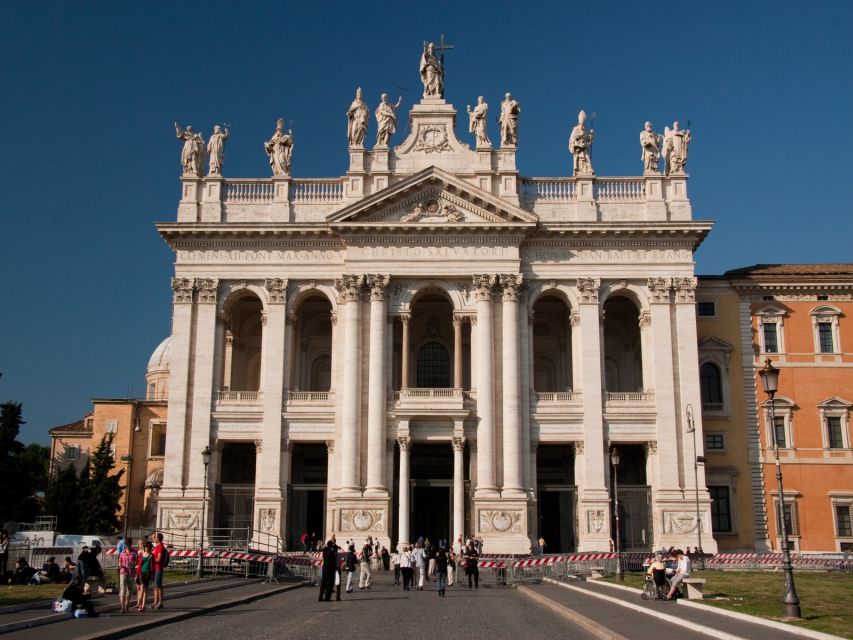
- St. John Lateran sets the scene: Visit Rome’s cathedral and the oldest of the four papal basilicas.
- Santi Quattro Coronati adds a rare surprise: See frescoes showing the Zodiac, the Four Seasons, the Liberal Arts, and King Solomon.
- Michelangelo closes the walk: St. Peter in Chains contains his famous Moses, created for the tomb of Pope Julius II.
- This is a proper walking tour: Wear comfortable shoes and expect stairs or uneven movement in historic buildings.
- Dress for church entry: Shorts, miniskirts, and uncovered shoulders are not permitted.
Why this route gives you a different Rome
Rome has no shortage of major churches. The challenge is knowing which ones reward your time. This route picks several with a strong connection to Christian Rome, then adds archaeology beneath the streets.
The tour begins in the Lateran area. The name comes from the Lateran family, which owned the land where the popes lived before the papal court moved to Avignon and later returned to Rome. That background helps explain why this part of the city matters. You are not just visiting another basilica. You are seeing the former center of papal Rome.
The route then moves through San Clemente, Santi Quattro Coronati, and St. Peter in Chains. Each stop has a different focus. St. John Lateran is the grand cathedral. San Clemente reveals buried layers. Santi Quattro Coronati offers unusual medieval art. St. Peter in Chains delivers the final artistic highlight with Michelangelo’s Moses.
You should think of this as a history walk inside churches, not a general introduction to Rome. It works best if you want religious architecture, archaeology, and stories about how Rome changed over many centuries.
More ways underground around Rome:
- Colosseum: Underground and Ancient Rome Tour
★ 4.7 · 12,691 reviews - Rome: Capuchin Crypts and Catacombs Tour with Transfers
★ 4.6 · 6,456 reviews - Expert Guided Tour of Colosseum Arena OR Underground, and Forum
★ 4.5 · 5,041 reviews
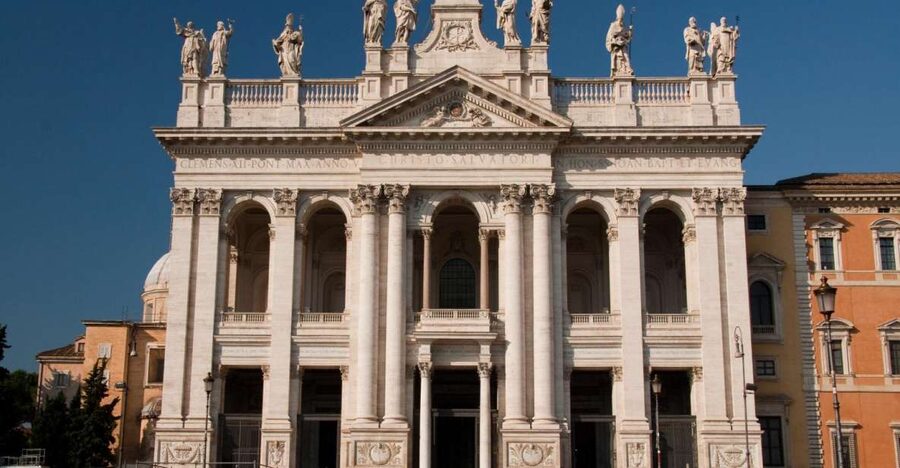
Starting at St. John Lateran, Rome’s cathedral
Meet your guide in front of Laterano Caffè. The meeting point is in the city center, inside the Aurelian Walls, and the guide waits outside the café. Take a moment to arrive early, since a late start can quickly affect a short walking tour with several scheduled stops.
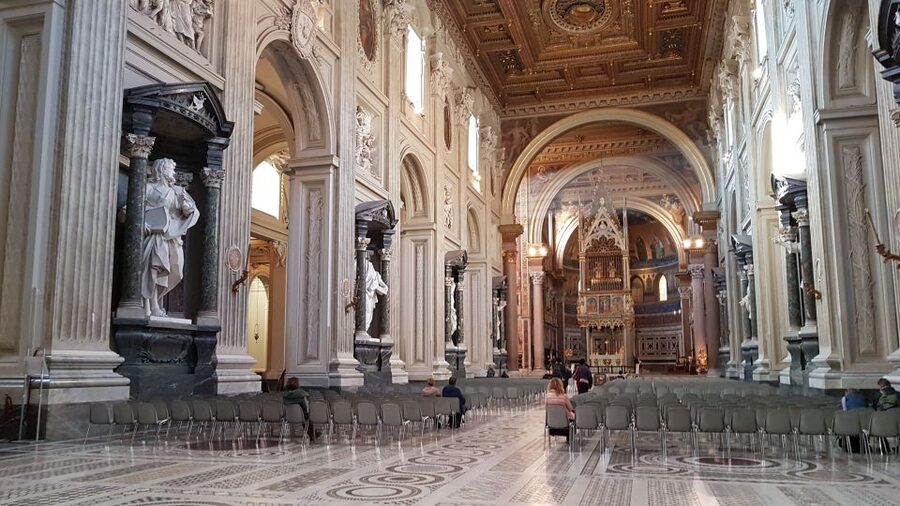
The first visit is the Basilica of San Giovanni in Laterano, commonly called St. John Lateran. It is the oldest of Rome’s four papal basilicas and is regarded as the church of Rome because it is the cathedral where the Bishop of Rome has his seat.
That title gives the church a different role from St. Peter’s Basilica in Vatican City. St. Peter’s may be more famous, but St. John Lateran is Rome’s cathedral. Your guide can use the building to explain the organization of the Catholic Church and the long link between the Lateran district and the papacy.
The planned visit lasts about 30 minutes. That is enough for an introduction and guided look, but not enough for a slow, detailed examination of every chapel and monument. I see this as a useful opening rather than the centerpiece. It gives you the religious and political setting before the tour turns toward archaeology.
Going below ground at San Clemente
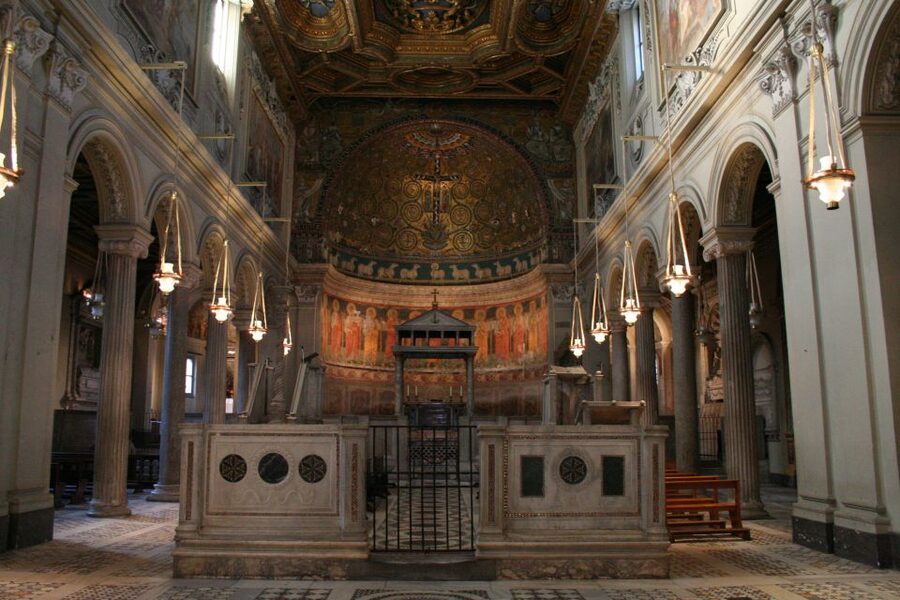
San Clemente is where this experience earns its price. The basilica is known for being built across three levels, with construction and use extending from the first century to the 12th century. You do not simply look at a church from the nave. You move downward through earlier phases of Roman life.
The upper church introduces the medieval basilica. From there, the tour takes you beneath the current building to older structures. The lower areas show how Rome was repeatedly rebuilt, reused, and adapted. A Christian church can sit above earlier Roman buildings, with each period leaving its own layout and purpose.
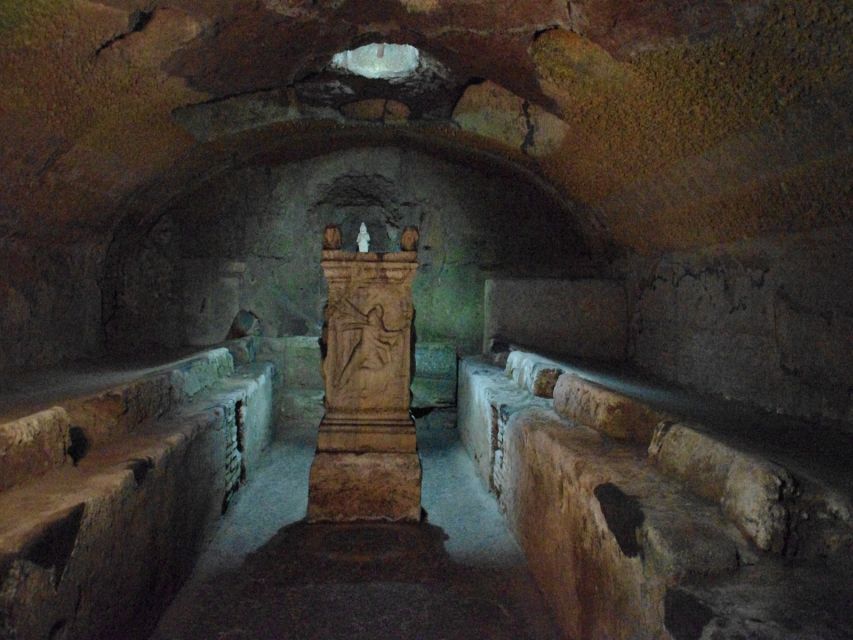
One of the most unusual features is the first-century altar connected with Mithras. Mithraism was a Roman mystery religion, and the presence of a Mithraic space below a Christian church makes the site especially useful for understanding how religious practices changed over time. You are not getting a simple story in which one era disappears when another begins. The older Rome remains physically below the later church.
The San Clemente visit takes about 90 minutes, making it the longest stop. That is sensible. You need time to understand the sequence of levels, follow the guide through the underground areas, and appreciate why the building is so important.
The underground portions may involve stairs and confined passages. The tour data specifically says it is not suitable for people with mobility impairments or wheelchair users. If stairs are difficult for you, San Clemente should be the deciding factor before you book.
A quiet surprise at Santi Quattro Coronati
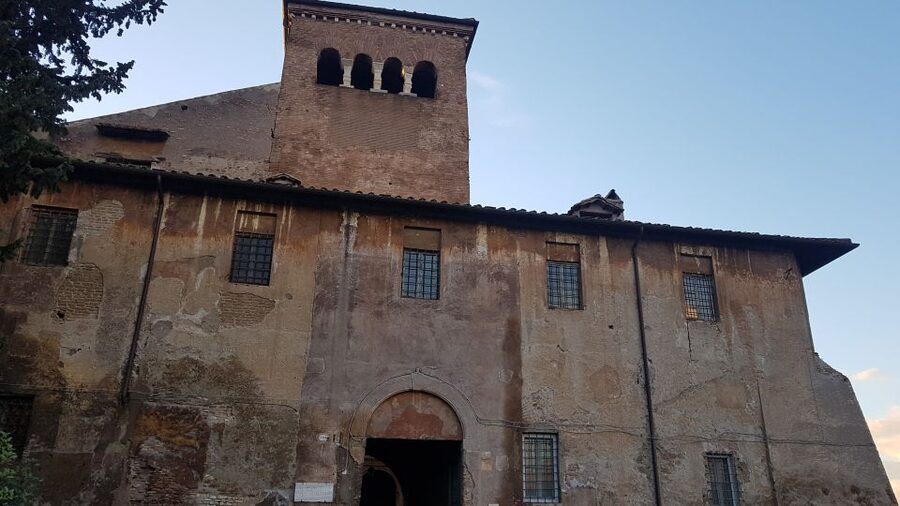
The next stop is the Church of the Four Crowned Saints, or Santi Quattro Coronati. The name refers to four anonymous saints and martyrs. Compared with the larger basilicas, this stop is brief, about 15 minutes, but it may be one of the most unusual.
An extraordinary series of frescoes was found here in 2002. The scenes include the Zodiac, the Four Seasons, the Liberal Arts, and King Solomon. Those subjects widen the story beyond church decoration. They show how medieval religious spaces could also contain ideas about the calendar, learning, philosophy, and kingship.
The short visit means you should listen closely. There is little time to wander while the guide explains the artwork. If the building is quiet and accessible during your visit, this can feel like a welcome change from the grand scale of the major basilicas.
I also like the contrast in the route. St. John Lateran gives you official cathedral history. San Clemente gives you archaeology. Santi Quattro Coronati brings you a more intimate medieval setting with a surprising range of painted subjects.
Same rock, a different way in:
- The Original Roman Crypts and Catacombs Tour with Transfers
★ 4.5 · 4,896 reviews - Rome: Colosseum Underground Small Group Guided Tour
★ 4.7 · 4,844 reviews - Rome: St. Peter’s Basilica, Dome Climb, and Underground Tour
★ 4.8 · 3,404 reviews - Rome: Colosseum Underground, Arena & Forum Tour
★ 4.7 · 3,272 reviews
Finishing with Michelangelo’s Moses
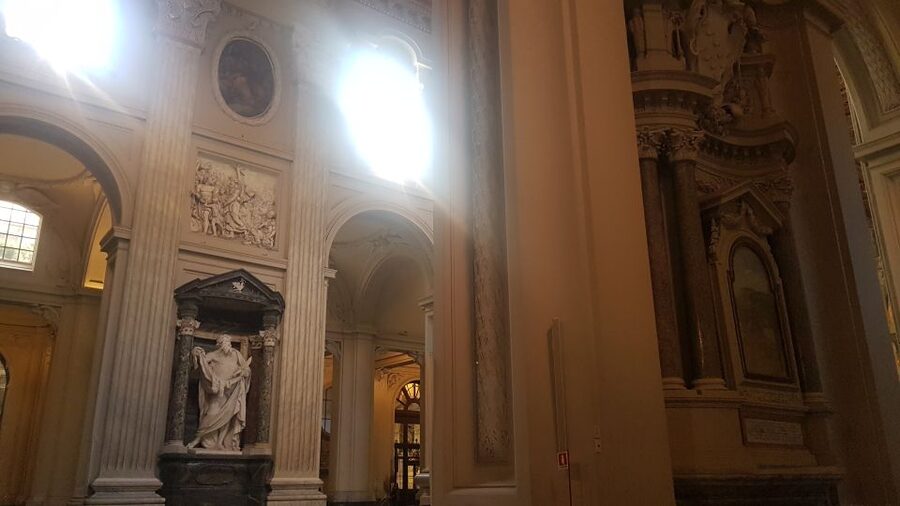
The tour ends at the Basilica of San Pietro in Vincoli, or St. Peter in Chains. The church takes its name from the chains traditionally associated with St. Peter. According to tradition, Helena, the mother of Emperor Constantine, brought the chains to Rome, where they joined with another chain associated with St. Peter through a miracle.
The central artistic reason to visit is Michelangelo’s Moses. The statue was made for the tomb of Pope Julius II and is described as Michelangelo’s most important work included in the tour. You have about 15 minutes here, so the visit is focused rather than leisurely.
That limited time is worth keeping in mind. You will see the statue and receive the main explanation, but you may not have much time for a quiet, extended study of the church. If Moses is your main reason for booking, consider returning on your own later if you want to look closely at the sculpture and surrounding tomb.
As a final stop, St. Peter in Chains works well. The route ends with a single famous artwork rather than another large group of buildings. It gives the walk a clear finish and leaves you near one of Rome’s most recognized works of Renaissance sculpture.
What the guides add to the experience
This route depends heavily on the guide. The churches are worth seeing on their own, but their meaning is easier to grasp when someone connects the dates, beliefs, and building layers.
An archaeologist has led this experience, bringing a useful focus to San Clemente and the underground remains. Roberto has been singled out for extensive historical knowledge and a direct style that keeps the subject in the foreground. Mohamed has also led departures with a strong focus on history, culture, and storytelling.
Guide assignments can change, so you should not book on the assumption that one specific person will lead your departure. Still, the feedback suggests that the best part of the experience is not a forced performance. It is a guide who can explain Christian Rome without turning every stop into a theatrical speech.
English, Spanish, and French are offered. Choose the language in which you can follow detailed explanations most easily. San Clemente in particular rewards careful listening, since its importance comes from how the levels relate to one another.
Price, pace, and practical value
At $167.66 per person, this is not a cheap church walk. The value depends on what you want from Rome. You are paying for a three-hour professional guide, entry to San Clemente, and a focused route through four important sites. The access to San Clemente matters most because the underground visit is the part that benefits most from explanation.
The tour also saves you from planning a route between churches and figuring out which sites belong together. If you already know Rome well and prefer to read plaques at your own pace, the price may feel high. If you want a clear explanation of Christian history and archaeology, the structure makes more sense.
The itinerary includes walking between sites, and comfortable shoes are essential. Bring sunglasses and a camera if you want them, but do not bring luggage or large bags. The tour operates rain or shine, so check the forecast and dress for a walking route rather than a short indoor visit.
Church dress rules are firm. Shorts, miniskirts, and uncovered shoulders are not allowed in the basilicas. Wear clothing that covers your shoulders and knees from the start, since changing between stops is inconvenient.
The activity offers free cancellation up to 24 hours in advance and a reserve-now, pay-later option. One part of the booking information also refers to a 72-hour cancellation condition, so check the exact terms shown for your selected departure before paying. Missed flights, buses, or trains are not covered as a reason for a refund.
Who should book this three-hour church walk?
I would choose this tour if you want Rome’s Christian story, but you are more interested in archaeology and old layers than in simply checking off famous buildings. San Clemente is the strongest reason to go, and the other stops give it a useful setting.
It suits first-time visitors who want a guide to explain why the Lateran area matters. It also works for repeat visitors who have seen the Colosseum and Vatican but have not explored the churches below street level.
The tour is less suitable if you want a relaxed pace, extensive free time, or a route without stairs. It is also not a good fit for wheelchair users or anyone with major mobility limits. The short visits at Santi Quattro Coronati and St. Peter in Chains may feel too brief if you like to linger over artwork.
Should you book it?
Book this experience if San Clemente’s underground levels sound more appealing than another crowded headline attraction. The combination of Roman archaeology, Christian history, medieval frescoes, and Michelangelo’s Moses gives you a varied three hours with little wasted travel time.
Skip it if you dislike guided pacing or already have detailed plans for these churches. For most curious visitors, though, the route offers a strong look at the Rome beneath Rome, with a guide helping you read the layers instead of merely walking past them.
FAQ
How long does the tour last?
The tour lasts three hours. Starting times vary, so check availability for the date you want.
Where does the tour begin?
It begins at Laterano Caffè. The guide waits outside the café.
Where does the tour finish?
The scheduled finish is at the Basilica of San Pietro in Vincoli.
Which languages are available?
The tour is offered in English, Spanish, and French.
Is the entrance to San Clemente included?
Yes. The San Clemente entrance ticket is included.
Can I wear shorts or leave my shoulders uncovered?
No. Shorts, miniskirts, and uncovered shoulders are not permitted when entering the basilicas.
Is the tour suitable for wheelchair users?
No. The activity is not suitable for wheelchair users or people with mobility impairments.
What should I bring?
Wear comfortable shoes and consider bringing sunglasses and a camera. Luggage and large bags are not allowed.
Newly added caves around Rome
- Rome: Appian Way Golf Cart Tour with Roman Catacombs Entry★ 4.9 · 429 reviews
- Rome: Colosseum Underground and Arena Floor Tour★ 4.4 · 59 reviews
- Rome: Exclusive Colosseum Underground and Roman Forum Tour★ 4.8 · 569 reviews
- Colosseum Underground All-Access Experience w/ Ancient Rome★ 4.9 · 850 reviews
- Catacombs of Saint Agnes Entry Ticket & Guided Tour★ 4.5 · 72 reviews
- From Rome: Capri Guided Day Trip with Blue Grotto★ 4.2 · 199 reviews
- Rome: Appian Way, Catacombs & Aqueducts by eBike + Transfer★ 4.9 · 421 reviews
- Rome: Appian Way E-Bike Tour Catacombs, Aqueducts & Picnic★ 4.6 · 727 reviews
Rome Cave Tours worth comparing.
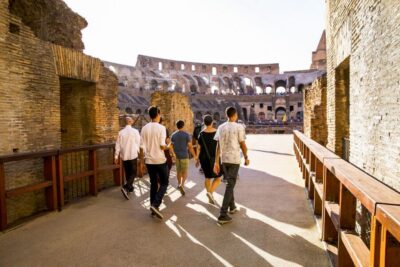
Colosseum: Underground and Ancient Rome Tour
Read our review →
Rome: Capuchin Crypts and Catacombs Tour with Transfers
Read our review →
Expert Guided Tour of Colosseum Arena OR Underground, and Forum
Read our review →
The Original Roman Crypts and Catacombs Tour with Transfers
Read our review →
Rome: Colosseum Underground Small Group Guided Tour
Read our review →
Rome: St. Peter’s Basilica, Dome Climb, and Underground Tour
Read our review →
Rome: Colosseum Underground, Arena & Forum Tour
Read our review →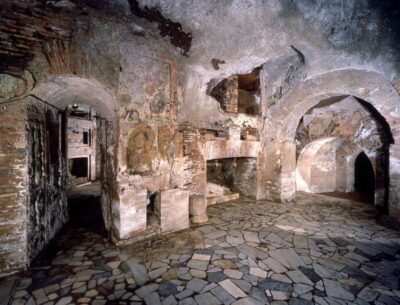
Rome: Catacombs of St. Callixtus Entry Ticket & Guided Tour
Read our review →Lists this cave tour appears in