
Review · CENTRAL HUNGARY, HUNGARY
Budapest: Buda Castle Cave Tour
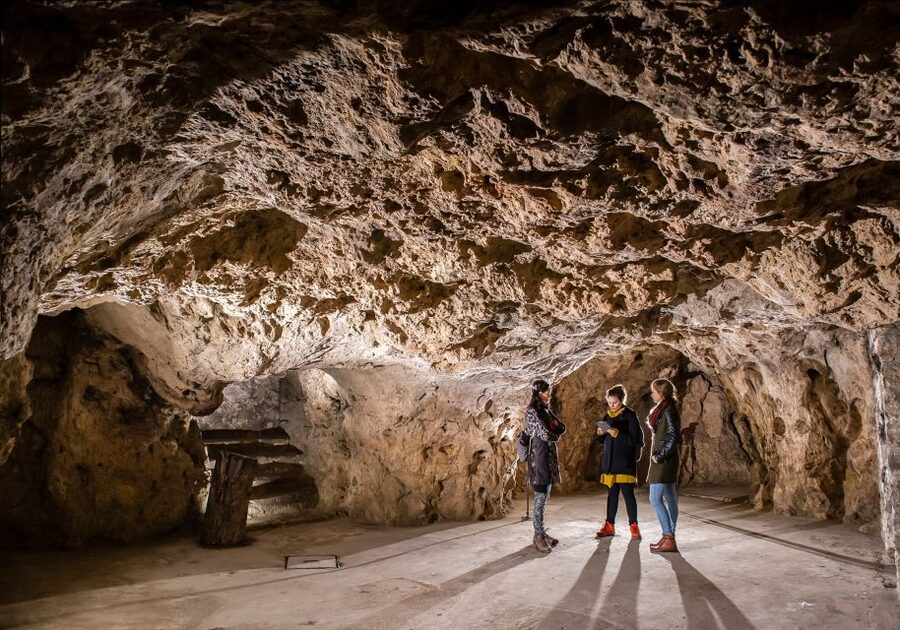
Beneath Budapest’s grand Buda Castle lies a cool, winding world of natural limestone caverns and man-made cellars. This tour links Ice Age geology, medieval storage rooms, wartime shelters, and darker chapters of the castle district in one unusual walk. I like the way it shows you a side of Castle Hill that most visitors never see, and I like the guides’ lively storytelling, especially when a guide such as Vicky adds humor to the facts.
The main route lasts about 1.5 hours and covers roughly 1.5 kilometers on paved, lit paths. A 40-minute option is available, but it reaches fewer sections. The main drawback is practical: the cave is cool at 12°C, some areas may be muddy, and the route is not suitable for wheelchair users, people with mobility issues, or anyone uncomfortable in enclosed spaces.
Key points to know before you go
- A real underground network: Walk through natural caverns joined to 800-year-old cellars beneath the Buda Castle District.
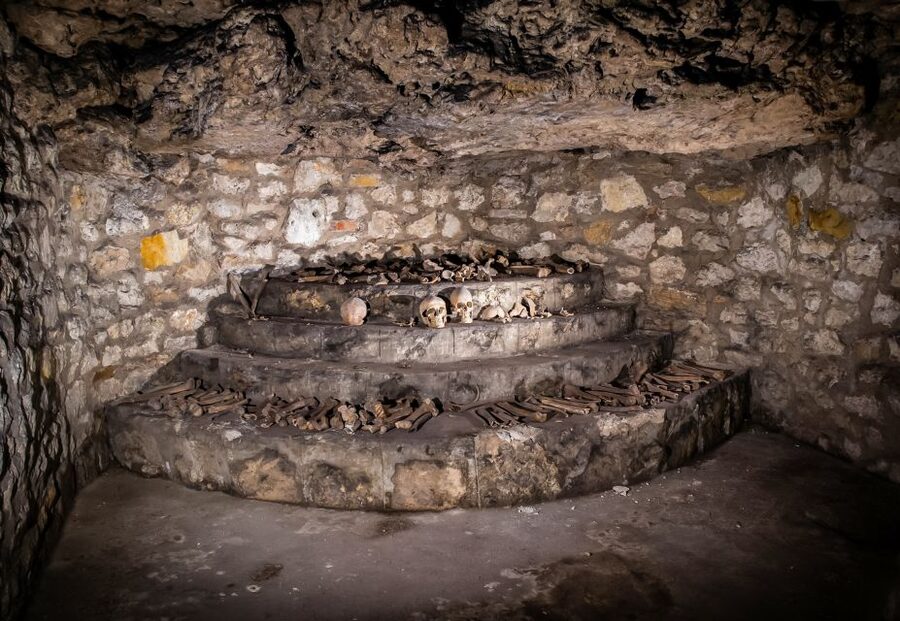
- More than geology: The caves have served as wine cellars, shelters, storage areas, and a medieval prison.
- Choose your length carefully: The shorter tour lasts 40 minutes, while the regular route takes about 1.5 hours.
- English guides make the difference: Guides including Vicky, Viktoria, and Eva are praised for clear explanations, humor, and strong storytelling.
- Dress for 12°C: Bring a warm layer, closed-toe shoes, and clothing that can get dirty.
- Not a casual stroll for everyone: The tour is unsuitable for wheelchair users, people with mobility limitations, and those with claustrophobia.
Why the caves beneath Buda Castle are worth seeing
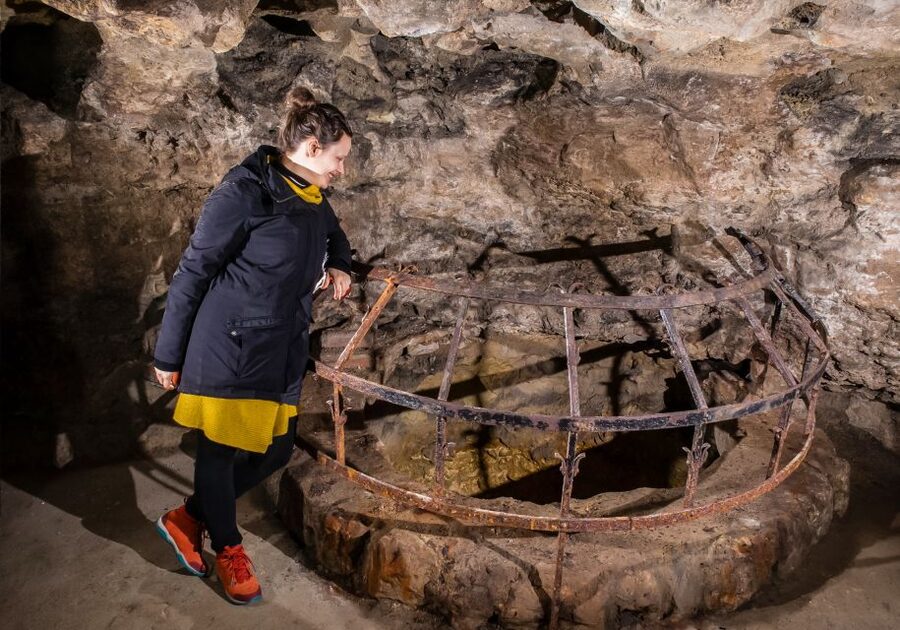
Buda Castle is usually associated with rooftops, courtyards, churches, and broad views over the Danube. The cave tour changes your angle completely. Instead of looking across Budapest, you go below the streets and see how nature and centuries of human work shaped the hill from the inside.
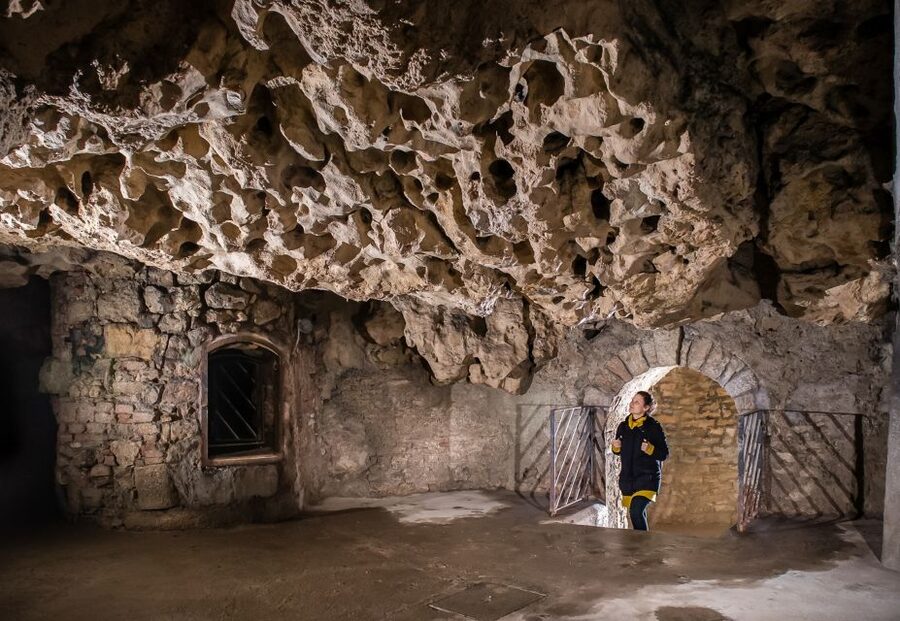
The caves are not simply one natural cavern. They form a labyrinth-like network of passages and chambers beneath the castle district. Some sections began as natural limestone formations. Others were cut, widened, or adapted by people over many centuries.
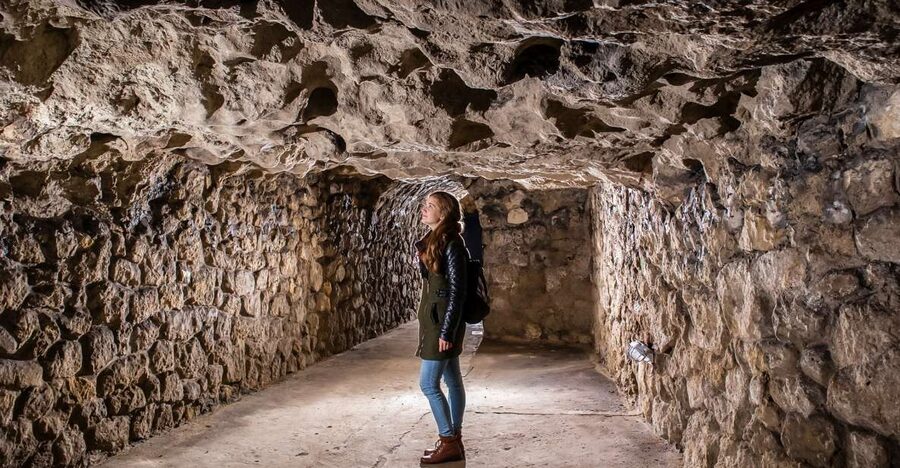
That combination is the main appeal. You are not walking through a polished museum with objects behind glass. You are moving through the actual underground spaces, following a route where geology and human use sit side by side. One section may feel like a natural cave, while another shows the marks and proportions of a man-made cellar.
I find this kind of experience especially useful after exploring the castle above ground. It gives Castle Hill a second identity. The buildings on top are only part of the story. Underneath them is a cool, sheltered world that helped local people store goods, survive danger, and use the hill in ways that are easy to miss from the surface.
More cave tours around the world:
- Portimão: Benagil Caves Speed Boat Tour with Sunset Option
★ 4.8 · 11,663 reviews - Albufeira: 2.5-Hour Benagil Caves & Dolphin Watching
★ 4.6 · 10,710 reviews - Blue Cave Small-Group Boat Tour from Dubrovnik
★ 5.0 · 9,360 reviews
Starting at Trinity Square or Dárda Street
The meeting point depends on the option you book. The longer tour meets at Trinity Square, known in Hungarian as Szentháromság tér. The shorter route begins at Dárda Street, where you enter the underground cave system.
Read the meeting point carefully before leaving for the tour. One practical weakness is that the location can be less obvious than expected, and the meeting point may vary between options. Give yourself time to find the correct entrance rather than arriving at the last minute.
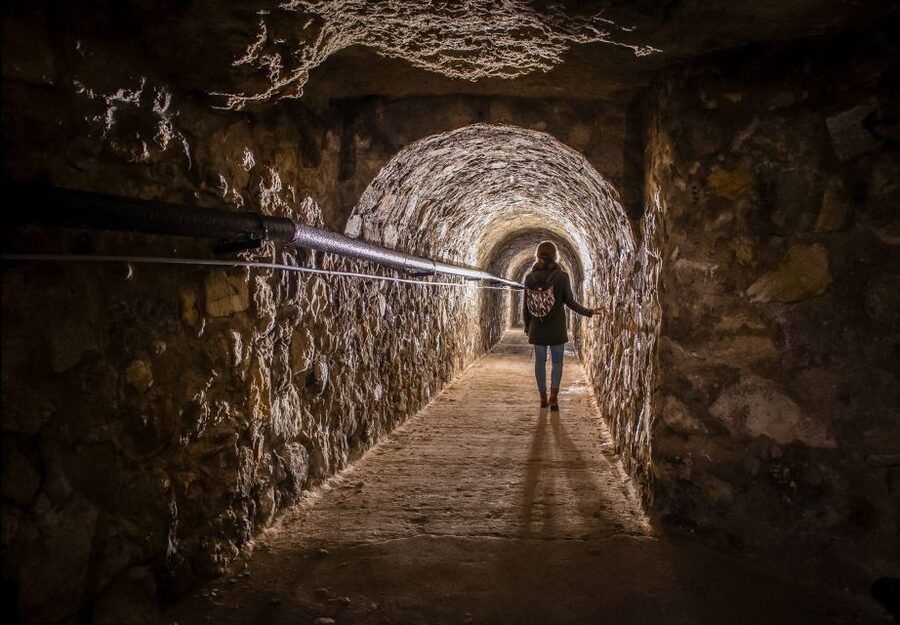
After a short introduction, the guide leads the group underground. The tour is conducted in English, and the route uses paved roads with lighting. There is no mobile phone service inside, so do not count on checking maps or contacting friends once you enter.
The route is organized as a guided walk rather than a free-roaming visit. That matters here. A cave network can be confusing, and the guide gives the passages a clear order. The stories also help you understand why a plain-looking chamber matters.
Natural limestone and 800-year-old cellars
The first major pleasure is simply seeing the cave formation up close. The limestone caverns are not presented as a grand show cave with elaborate lighting or theatrical effects. Their appeal is more direct. You see rough rock, enclosed chambers, low or irregular sections, and the evidence of water and time.
Alongside the natural formations are 800-year-old man-made cellars. These spaces show the practical side of medieval Castle Hill. People cut into the rock because underground rooms offered stable temperatures and protection from the weather. Over time, the same spaces gained new uses.
The guide explains how natural gaps and human-made passages became part of one connected system. That is where the tour moves beyond a geology lesson. You begin to see the cave as a record of changing needs. Wine storage, shelter, imprisonment, and wartime protection all left their mark.
The caves are described as spacious in several sections, but that does not mean the experience feels open throughout. You still pass through an enclosed underground setting, and some visitors may find the lack of daylight or phone signal uncomfortable. If you are mildly uneasy in confined spaces, the wider chambers may be reassuring, but you should still think carefully before booking.
A journey from medieval prison to wartime shelter
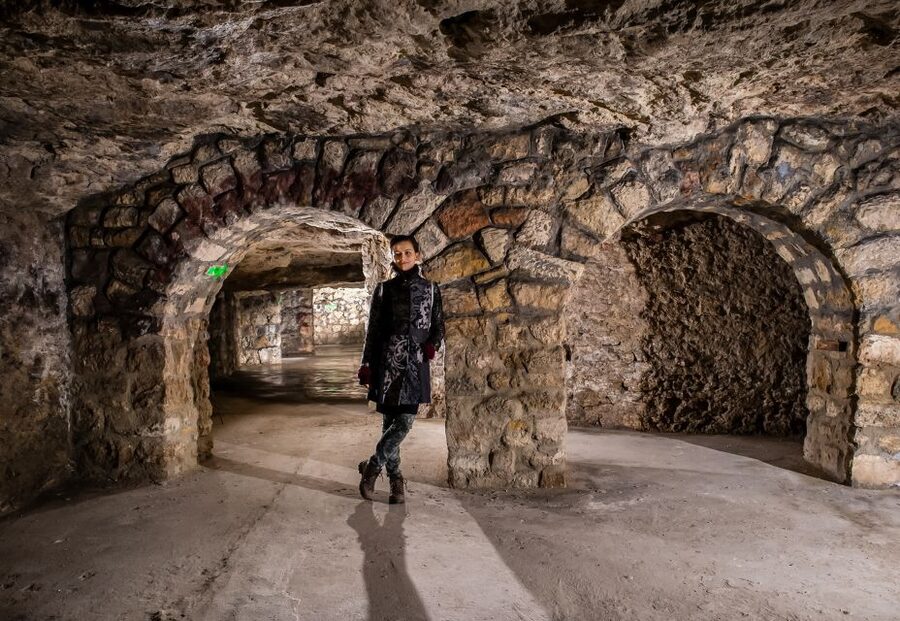
The historical range is unusually broad for a short walking tour. The guide connects the medieval period with later military use, including the Second World War. The caves served as bomb shelters, a role that gives the underground network a serious and human dimension.
You also hear about the cave’s use as a medieval prison. This is one of the darker parts of the visit, and the guide may include grisly details. The tour does not treat the caves as a simple curiosity. It shows how the same space could be useful, frightening, and vital at different points in time.
The historical stories work best when tied to the physical rooms. A shelter is easier to understand when you are standing in the protected space itself. A cellar feels more practical when you can see how the rock surrounds it. This is the difference between reading a date on a display and standing in a place that was shaped by those events.
Some tours also include references to Ottoman-era connections, ventilation systems, artifacts, and unusual remains found in the rock. The exact stories can vary with the guide and route, but the general pattern stays the same: each passage adds another layer to the cave’s past.
Same rock, a different way in:
- Best Niagara Falls US Tour W/Boat Ride, Cave & More Wonders!
★ 5.0 · 8,372 reviews - Aruba UTV, ATV Adventure to Secret Beach and Cave Pool
★ 5.0 · 7,730 reviews - Aruba Natural Pool and Indian Cave Rugged Jeep Safari
★ 5.0 · 7,713 reviews - Blue cave, Mamma Mia and Hvar, 5 islands speedboat tour
★ 5.0 · 7,150 reviews
What the guide adds to the experience
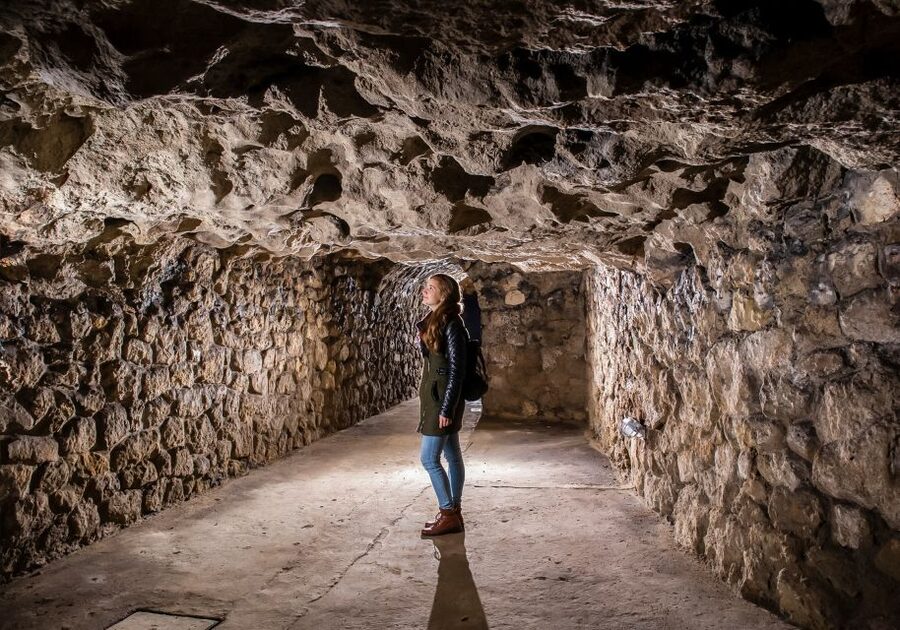
The guide is central to the tour. Without one, you would see stone walls and corridors but miss much of the meaning behind them. The best guides keep the pace moving while giving you enough time to look around.
Vicky is repeatedly praised for being funny, friendly, and clear. Viktoria is also noted for combining stories with good visual explanation, while Eva is praised for explaining both the natural cave features and the historical uses. These names do not guarantee who will lead your particular departure, but they show the kind of guiding style you can expect: personal, lively, and built around stories rather than a dry recital of dates.
I particularly like the balance between geology and human history. A guide may explain how the limestone formed, then shift to the work required to create the cellars. The next point may concern a shelter or a prison. That mixture keeps the tour from becoming either too technical or too vague.
The guides also seem comfortable with different ages and levels of interest. Children old enough to join can find the tunnels and unusual stories engaging, while adults get more context about Castle Hill and Budapest’s past. Still, the tour is not designed for very young children. Those under three cannot participate.
The 40-minute route or the 1.5-hour tour?
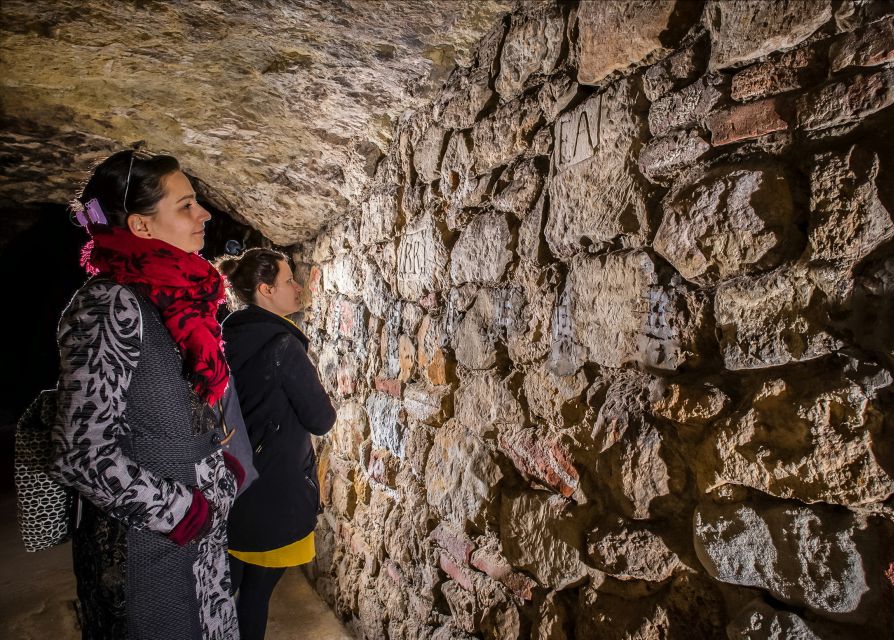
The shorter option suits you if you want an unusual addition to a busy day in the castle district. At 40 minutes, it gives you a taste of the underground world without taking up a large part of your schedule. It can work well if you have limited time or if someone in your group prefers a shorter enclosed experience.
The tradeoff is clear: you see less of the network. One visitor who chose the shorter route still found it worthwhile, but specifically noted that the longer tour would be a better choice if available. Another found the 1.5-hour option valuable because it reached distinctive underground sections that the brief route could not cover.
I would choose the longer tour if the caves are a main reason for booking. The system is large enough that 40 minutes can feel like an introduction rather than a full visit. The regular route covers about 1.5 kilometers, so it offers a better sense of the scale and changing uses of the underground spaces.
Choose the short route if you are combining the tour with several castle sights, have younger members in your group, or are unsure how you will react to the enclosed setting. It is better to enjoy a focused 40 minutes than to book the longer route and feel trapped by the duration.
Temperature, clothing, and walking conditions
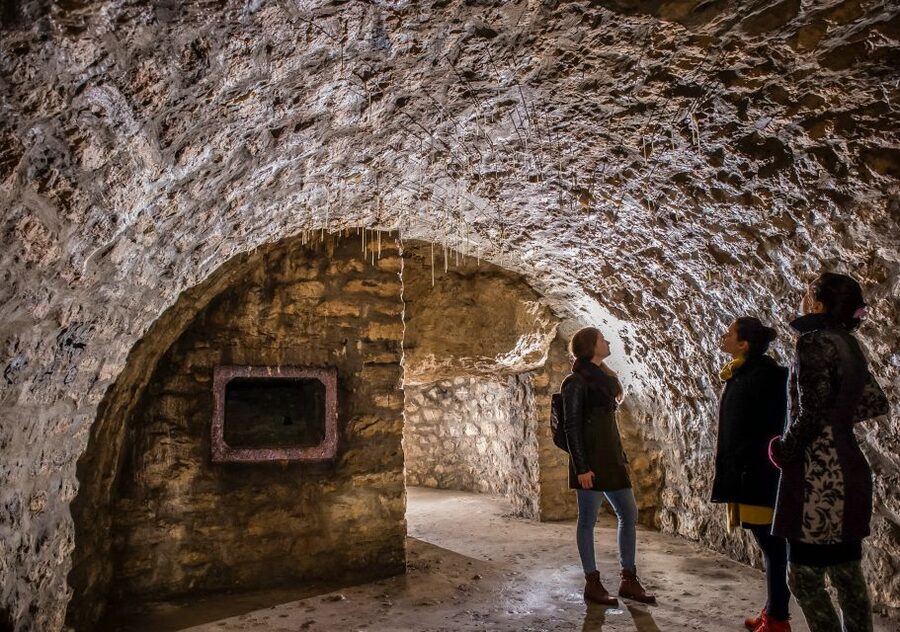
The cave temperature is about 12°C, or 54°F, throughout the year. In summer, this will feel pleasantly cool compared with the city above. In winter, it can feel cold, especially if you are already dressed for Budapest’s outdoor weather.
Bring a warm layer even on a mild day. Closed-toe shoes are important because the route is underground and conditions can vary. The paths are paved and lit, but some areas may be muddy, and your clothes or shoes can get dirty if you lean against the walls.
This is not the place for delicate footwear or clothing you want to keep spotless. Wear practical shoes with a secure sole, and avoid bringing food or drinks into the cave. Smoking, alcohol, drugs, and littering are not allowed.
The route is a walking tour, not a technical caving trip. You do not need climbing equipment, but you do need to be comfortable walking underground for the duration of your chosen option. The guide’s instructions are binding once you enter, so listen carefully at the start and throughout the route.
Who should book this Budapest cave tour?
I would recommend it most strongly to you if you enjoy unusual historical sites, underground spaces, geology, or stories that connect daily life with major events. It is also a good choice if you have already seen the main castle buildings and want something less predictable nearby.
History fans will get the most from the mix of medieval, Ottoman-era, and wartime references. People interested in geology will appreciate seeing natural limestone alongside rooms cut by hand. Even if you are not an expert in either subject, the guide keeps the material approachable.
The tour is less suitable for anyone with serious mobility limitations. It is not wheelchair accessible, and it is not recommended for people with mobility issues or claustrophobia. It is also listed as unsuitable for people with visual impairments, so consider that limitation before booking.
Strollers and baby carriages are not allowed, and children under three cannot join. The cave has no cell phone service, so arrange a meeting point with anyone waiting above before you enter. The route may finish somewhere different from where it began, so confirm the end point if your group plans to meet afterward.
Is $19 a fair price?
At $19 per person, the tour is reasonably priced for a guided experience lasting 40 minutes to 1.5 hours. You are paying for access to a place that is difficult to understand on your own, along with an English-speaking guide who supplies the context.
The value is strongest on the longer route. A 1.5-hour walk through natural caverns, medieval cellars, prison spaces, and wartime shelters gives you a substantial activity for the cost. The 40-minute option is still fair if you want a brief introduction, but the price feels better justified when you see more of the network.
There is no audio guide included, but that is not a serious disadvantage here. The experience depends on being led through the passages and hearing explanations at the right location. A prerecorded track would not give you the same chance to ask a question or pause for a story.
Free cancellation is available up to 24 hours before the tour, and you can reserve now and pay later. That helps if your Budapest schedule is still shifting, though tour times may be announced only some weeks or days before the actual departure.
Small practical details that matter
Book ahead if you want the longer route. The timing can be limited, with one longer departure and one shorter departure on some days, so leaving this until the last minute may force you into the brief option.
Check your confirmation for the correct meeting place. Trinity Square and Dárda Street are not interchangeable, and the meeting point depends on your selected route. Wear the right clothes from the start because there may not be a convenient chance to adjust once underground.
Leave food and drinks behind, and do not plan to film. Video recording is not allowed. Also, do not attend after drinking alcohol or taking drugs. Anyone who is disruptive or under the influence can be refused entry or removed without a refund.
The experience depends on following the guide’s safety instructions. That is sensible in a cave network, where the route, walls, and other visitors require attention. Treat it as an active guided walk rather than a place to wander independently.
Should you book the Buda Castle Cave Tour?
Yes, if you want to see Budapest from an unusual angle and are comfortable with a cool, enclosed walking route. The mix of limestone, medieval cellars, wartime shelters, and strong English storytelling gives the tour more substance than its modest price suggests.
Choose the 1.5-hour route if you can. It gives you a fuller sense of the underground network and makes the journey feel like a proper exploration. Pick the 40-minute option if your schedule is tight or you would rather test the caves before committing to a longer walk.
Skip it if you need step-free access, dislike enclosed spaces, or want a relaxed outdoor activity. For everyone else, pack a warm layer, wear shoes that can handle a little mud, and allow extra time to find the correct entrance. This is one of Budapest’s more distinctive history stops, and the best guides make the cold stone corridors easy to remember.
FAQ
How long does the Buda Castle Cave Tour last?
The available options last either about 40 minutes or about 1.5 hours. The regular walking route is roughly 1.5 kilometers long.
Where does the tour meet?
The meeting point depends on the option booked. The longer tour meets at Trinity Square, or Szentháromság tér, while the shorter option meets at Dárda Street.
What temperature is it inside the cave?
The cave temperature is about 12°C, or 54°F. Bring warm clothing even if the weather above ground is mild.
What should I wear?
Wear warm clothing, closed-toe shoes, and clothes that can get dirty. Parts of the route may be muddy, and your clothes may pick up dirt if you lean against the walls.
Is the tour suitable for children?
Children under three are not permitted. Baby strollers and baby carriages are also not allowed.
Is the cave tour wheelchair accessible?
No. The tour is not accessible for wheelchair users and is not recommended for people with mobility issues or visual impairments.
Can I cancel the booking?
Yes. You can cancel up to 24 hours in advance for a full refund. Reserve now and pay later is also available.
Newly added caves around the world
- Phuket: Starlight Hong Sea Cave & Glowing Plankton by Kayak★ 4.9 · 145 reviews
- Phuket: Monkey Cave, Water Rafting, Zipline with ATV Option★ 3.7 · 161 reviews
- Phuket: Bamboo Rafting, Monkey Cave, and ATV Option★ 3.5 · 129 reviews
- Phong Nha: Zipline Dark Cave & Paradise Cave Exploration★ 4.9 · 84 reviews
- Phranang Cave Sunset with BBQ dinner & Plankton Tour★ 3.2 · 53 reviews
- Phong Nha/Dong Hoi: Phong Nha Cave and Paradise Cave Tour★ 4.9 · 82 reviews
- Phong Nha: Phong Nha Cave Expedition 4.5 km by Kayak★ 5.0 · 42 reviews
- Phong Nha: Cave Exploration and Zipline Dark Cave Tour★ 4.7 · 87 reviews