
Review · NAPLES
Naples: Catacombs of San Gennaro Entry Ticket & Guided Tour
Beneath Naples, the Catacombs of San Gennaro open into broad underground chambers, old basilicas, tombs, mosaics, and Christian paintings that reach back more than 1,000 years. This is less a spooky tomb crawl than a clear window into Naples’ religious and artistic past.
I like the way the guide connects the site to the living city above. I also like the excellent value: for about $15, you get the guided visit here plus entry to the Catacombs of San Gaudioso and the Basilica di Santa Maria della Sanità. The main drawback is practical: you must arrive 15 minutes early, and the many steps make this a poor choice for anyone with mobility problems.
What makes this visit worth your time
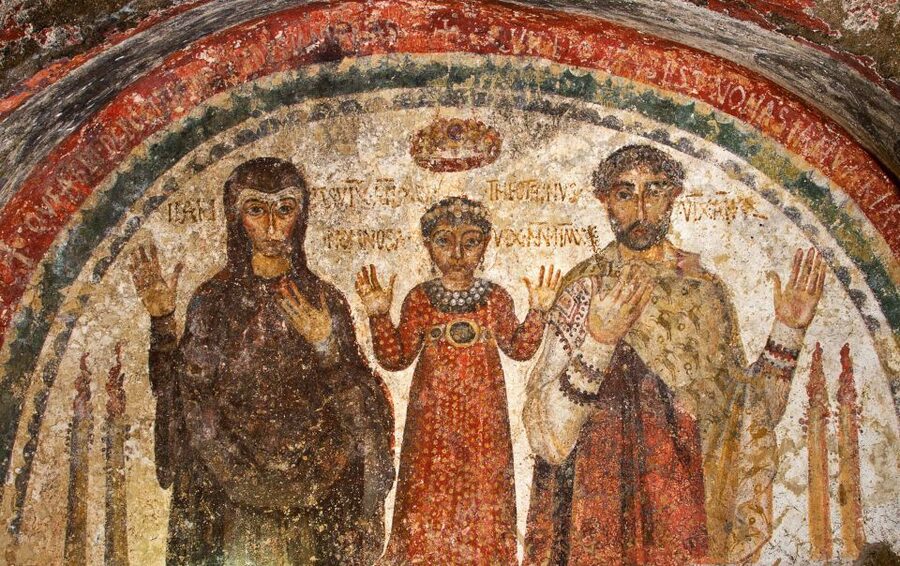
- Early Christian art: See frescoes, Byzantine paintings, mosaics, and third-century decoration in the so-called Pompeian style.
- A large underground setting: The catacombs are far more spacious than many first-time visitors expect, with basilicas and wide chambers rather than only narrow passageways.
- Stories tied to Naples: Learn how St. Agrippinus, St. Gennaro, bishops, and the city’s religious traditions shaped the site.
- Strong local purpose: Ticket income supports work in the Rione Sanità district, including cultural and community projects.
- Three sites for one price: Your pass also covers San Gaudioso and Santa Maria della Sanità for up to 12 months.
- Warm, engaging guides: Nello, Emmanuel, Antonia, Antonio, and others have been praised for clear English, humor, and an inviting approach to questions.
Entering the Catacombs of San Gennaro
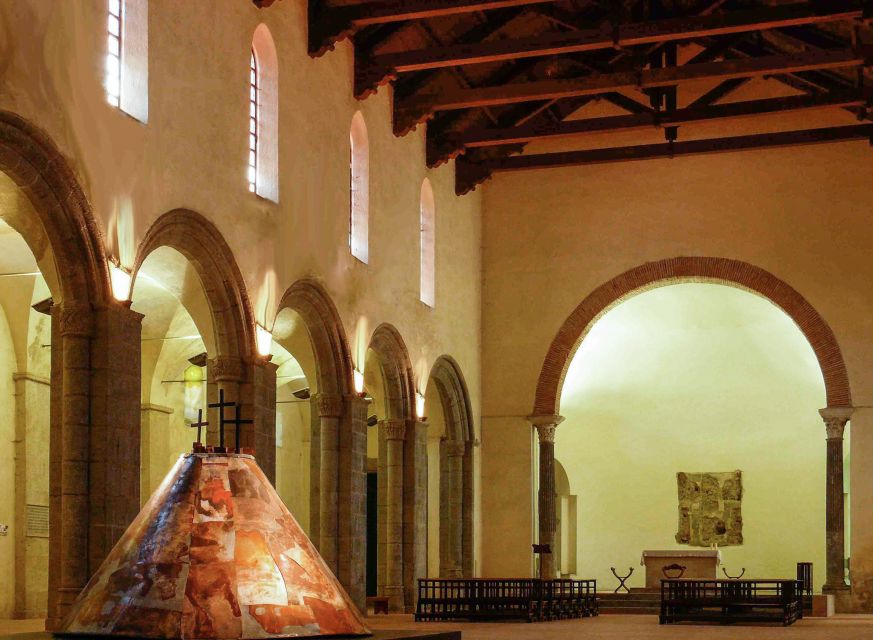
You meet at the reception desk of the Catacombs of San Gennaro at Via Capodimonte 13. The ticket office opens at 9:30 AM, and you should arrive at least 15 minutes before your booked time. This matters because the ticket is tied to a specific day and departure time. Arrive late, and you cannot simply join a later group.
The visit lasts about 45 minutes, though the itinerary describes the guided portion as roughly 50 minutes. I would set aside an hour for the tour itself, with extra time if you want to orient yourself before or after. English and Italian tours are available.
The entrance sits uphill from the historic center. If you are coming from the old town or the port, allow time for the climb. One visitor described the walk from the port as a major effort, so a taxi or local transport may make sense if you do not want to arrive already tired. There is also a parking area near the meeting point, with free spaces reported there, though availability can change.
More Catacombs and Underground City Tours in Italy
- Naples: San Gaudioso Catacombs Guided Tour
★ 4.7 · 1,105 reviews - Rome: Capuchin Crypts and Catacombs Tour with Transfers
★ 4.6 · 6,456 reviews - The Original Roman Crypts and Catacombs Tour with Transfers
★ 4.5 · 4,896 reviews
A catacomb that feels larger than expected
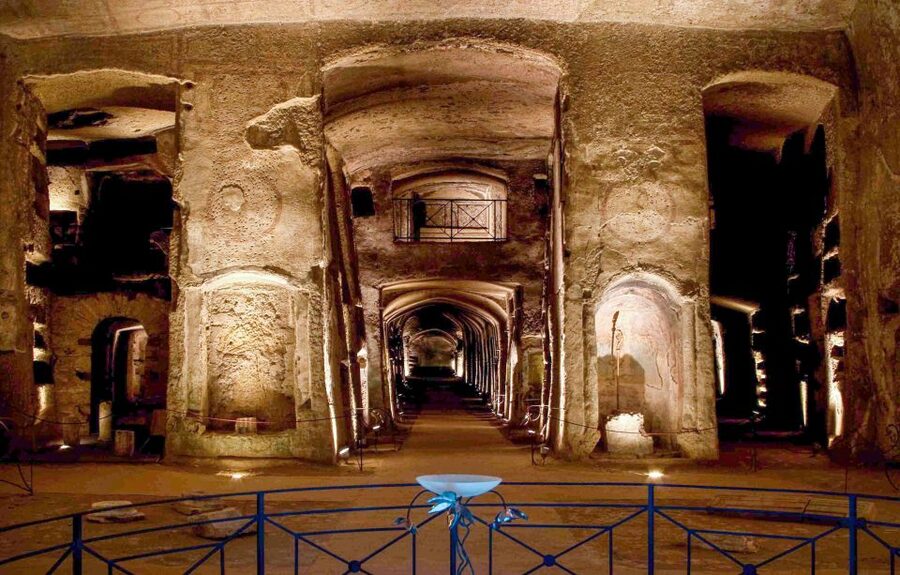
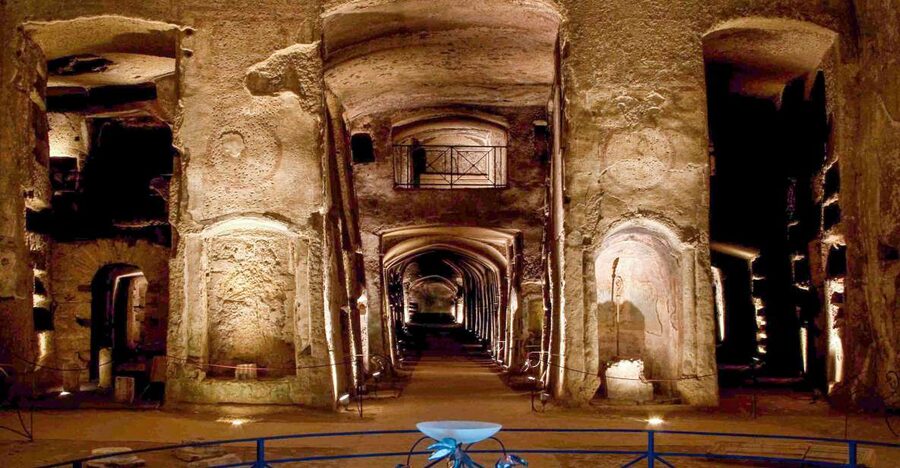
The first surprise is scale. You do not simply shuffle past a few wall tombs. The Catacombs of San Gennaro contain large underground areas, basilicas, passages, and decorated spaces that reveal how important this burial site became.
Your guide places the catacombs in the story of Naples over more than 2,000 years. The subject can sound heavy on paper, but the best guides keep the pace lively. Nello, in particular, has been praised for mixing humor with careful explanations, while Emmanuel has been singled out for his engaging delivery. Other guides named by visitors include Antonia, Antonio, Valentina, Serena, and Claudia.
That variety matters because the tour depends heavily on the guide. The physical site is impressive, but the meaning of the frescoes, tombs, and changes in the catacombs becomes much clearer when someone explains what you are seeing. Expect information, but not a lecture packed so tightly that you cannot look around.
St. Agrippinus and the fourth-century expansion
One of the central stories concerns St. Agrippinus, an early bishop of Naples. After his remains were transferred to the site, the catacombs expanded in the fourth century around an underground basilica dedicated to him.
This detail helps explain why the catacombs became more than a burial ground. They developed into a place of worship and memory, with the dead, the church, and the city’s religious identity tied closely together.
The connection between Naples and its patron saints is one of the strongest parts of the visit. You are not only looking at old stone. You are learning how faith helped shape the city’s sense of itself, and why the people of Naples still feel such a close bond with their saints.
The upper catacomb and its Pompeian-style paintings
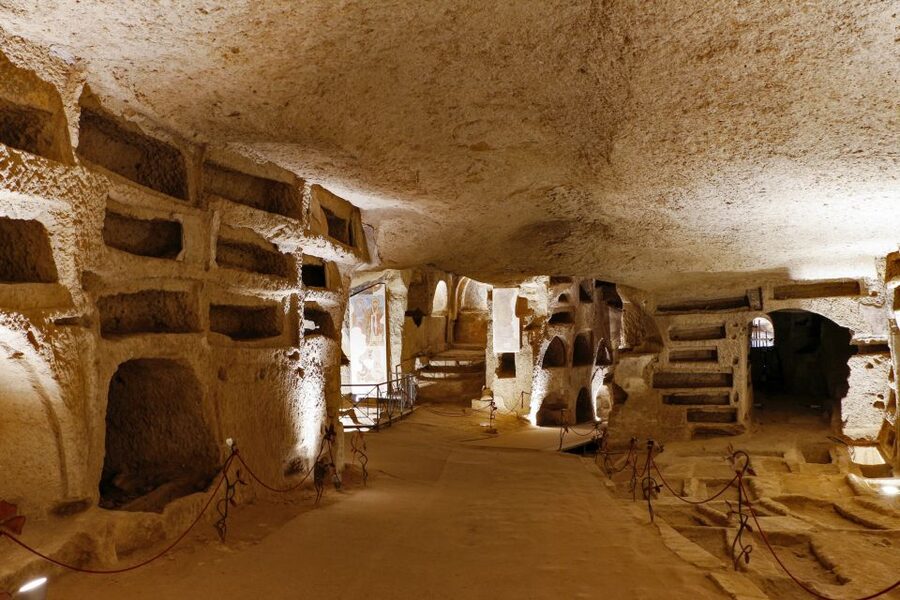
The upper catacomb contains decoration from the third century in what is described as a Pompeian style. These paintings are among the earliest Christian artworks in Italy.
You may find the art more understated than the grand paintings in Naples’ later churches, but that is part of its power. The images belong to a period when Christian art was still developing its visual language. The guide can help you notice how older Roman artistic habits appear alongside Christian subjects.
The frescoes are also a reminder that early Christian communities did not exist apart from the wider Roman world. They borrowed techniques, styles, and visual ideas while giving them new religious meaning.
Photography is not allowed. This disappoints some people, especially when the paintings and mosaics are the very things they want to remember. Still, the restriction protects a fragile site and keeps the group focused. Bring your attention rather than expecting a phone gallery at the end.
More Catacombs and Underground City Tours in Naples:
- Rome: Catacombs of St. Callixtus Entry Ticket & Guided Tour
★ 4.6 · 3,037 reviews - New York Catacombs by Candlelight
★ 4.5 · 2,863 reviews - Full Day Cappadocia Tour( Red Tour + Underground City )
★ 5.0 · 1,862 reviews - Rome: Guided Roman Catacombs Tour with Transfers
★ 4.6 · 1,830 reviews
The Crypt of the Bishops and fifth-century mosaics
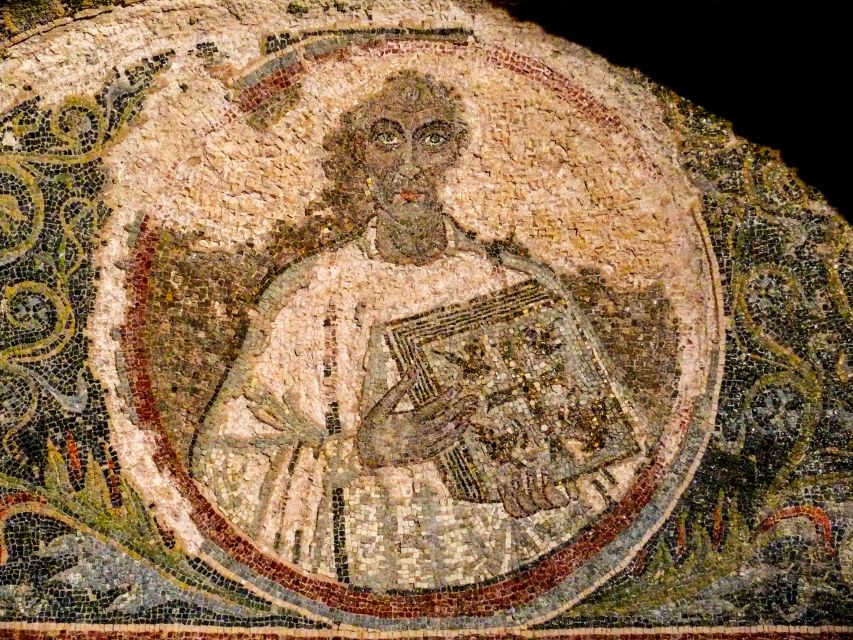
The Crypt of the Bishops is another key stop. Here, fifth-century mosaics include one showing St. Quodvultdeus, the Bishop of Carthage.
The mosaics make this part of the visit especially rewarding for anyone interested in early Christian art. You can see how religious figures were represented and how Naples was connected to a wider Mediterranean church. The guide’s explanation gives the artwork a human setting instead of leaving you to guess at names and symbols.
This is also where the tour’s balance works well. You get art, burial customs, church history, and local stories in one compact visit. You do not need to be an expert in archaeology or theology to follow along.
The baptismal font and Bishop Paul II
The catacombs also contain a baptismal font commissioned by Bishop Paul II. During the eighth-century iconoclastic struggles, he took refuge in the catacombs.
That story adds another layer to the site. These chambers were not used only by the dead. At different moments, they offered space for worship, protection, and the preservation of religious practice.
The font is a useful reminder that the catacombs remained active in the life of the church long after their earliest construction. Your guide will connect this period to the wider religious conflicts of the time, giving you a better sense of why the underground site could become a place of safety.
From burial ground to neighborhood renewal
The strongest modern part of the story concerns the Rione Sanità district. The organization running the catacombs uses cultural visits to support the redevelopment of the neighborhood and create opportunities for local people and young workers.
That gives the $15 ticket more weight than a simple entrance fee. You are paying for a guided cultural site, but your visit also helps fund the care of the catacombs and wider activity in the area. Several visitors have found this community connection meaningful, especially because the guide explains how the district has changed over roughly the last 10 to 15 years.
I would not treat the social project as a reason to ignore the quality of the site itself. The catacombs are worth seeing on their own. But knowing that the ticket supports local work makes the experience feel connected to present-day Naples rather than sealed away in the past.
The extra ticket that changes the value
Your San Gennaro ticket includes entry to the Catacombs of San Gaudioso and the Basilica di Santa Maria della Sanità. The pass is valid for 12 months, so you do not have to fit every site into the same day.
This is the deal’s biggest advantage. At around $15, the price is already fair for a guided underground visit. Add the second catacomb and the basilica, and the cost becomes excellent if you have time for all three.
San Gaudioso is farther down the hill toward the city, making it a useful pairing with San Gennaro. Some people arrange the second visit on the same day, while others return later during their stay. If you have just finished the first tour and still have energy, ask about available times at San Gaudioso.
The Basilica di Santa Maria della Sanità adds a different setting from the underground chambers. One visitor wished for a short explanation inside the church about artwork being restored, so do not expect the main San Gennaro tour to cover every detail of the basilica. Think of the additional entry as a chance to explore more of the district at your own pace, with the second catacomb visited according to its own schedule.
What the walk and underground setting are really like
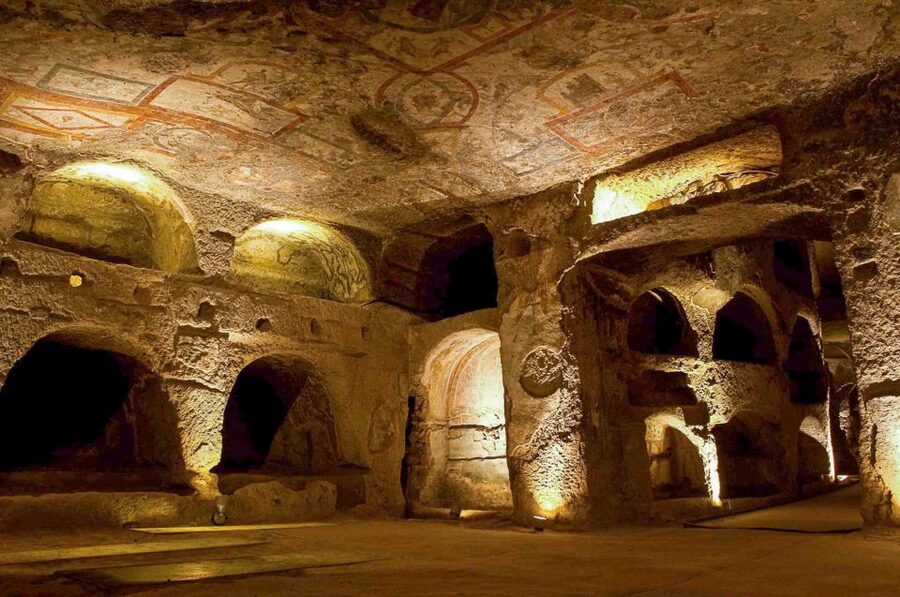
This is not a good fit for every body. You descend a number of steps before reaching the main tour area, and people with mobility problems may find the route difficult. Wear shoes that feel secure and comfortable.
The underground setting itself is part of the appeal. Several people have been surprised by how large the catacombs feel, while others appreciated the carpet-like surface in parts of the route, which makes walking easier. Still, the stairs remain an important consideration.
The tour is generally quiet and well paced. It suits adults who want history without spending half a day in a museum. Small children may struggle with the subject, the quiet, and the need to listen. One family found that young children, even when behaving well, disrupted the group, so I would choose this for older children who can manage a guided historical visit.
How the guiding affects the experience
The best feature here is the human delivery. Guides have been praised for clear English, warmth, humor, and an ability to answer questions without losing the group.
Nello receives especially strong praise for his friendly welcome and funny, thoughtful explanations. Emmanuel is noted for energy and engagement. Antonia and Antonio are also praised for making complex history easy to follow. That does not mean every tour will have the same guide, but it gives you a useful sense of the standard to expect from the team.
Group size can vary. One small group had only five people and felt almost personal, while the general format is a shared guided tour. You should be able to ask questions, but the amount of individual attention depends on the size of your departure.
The pace is one of the tour’s successes. You get enough detail to understand the catacombs without being buried under dates. The guides also place the site in the story of Naples, which helps you see later churches, including the Duomo, with more context.
Who should book this tour
I would book it if you like archaeology, early Christian art, religious history, or unusual parts of Naples that sit away from the standard sightseeing route. It also works well if you want a short activity that adds depth to a day in the city.
It is especially useful for:
- History fans who want to see original art in its setting
- Visitors curious about the link between faith and Neapolitan identity
- People looking for a meaningful activity in the Rione Sanità district
- Anyone who values guided interpretation more than taking photographs
- Visitors able to manage stairs and an uphill approach
I would think twice if you dislike underground spaces, cannot manage steps, or want a free-flowing visit with no fixed departure. The no-photo rule may also bother you, though it is understandable for a fragile historic site.
Practical details before you go
The meeting point is the reception at Via Capodimonte 13, Naples. You arrange your own transport because hotel pickup and drop-off are not included.
Book a time you can reach comfortably, then arrive 15 minutes early. The ticket office opens at 9:30 AM, and late arrival can mean missing the tour entirely. The ticket is tied to the purchased date and time, so do not treat it like an open entry pass.
The tour is offered in English and Italian. Cancellation is free up to 24 hours before the visit, according to the booking terms, but tickets are not refundable after that point. A reserve-now, pay-later option is also available.
Should you book the Catacombs of San Gennaro?
Yes, if you want a compact but substantial look at Naples below street level. The combination of ancient frescoes, basilicas, mosaics, saints, bishops, and neighborhood renewal gives the visit more substance than a standard sightseeing stop.
The best reason to book is the value of the complete pass. San Gennaro alone is worthwhile, but San Gaudioso and Santa Maria della Sanità make the $15 price particularly attractive. Just plan for stairs, arrive early, and accept that your camera stays in your bag.
FAQ
Where is the Catacombs of San Gennaro?
The meeting point is the reception at Catacombs of San Gennaro, Via Capodimonte 13, 80136 Naples.
How long does the guided tour last?
The activity is listed as 45 minutes, while the guided itinerary describes the visit as about 50 minutes. Allow around an hour for the tour itself.
What languages are available?
Live guided tours are available in English and Italian.
What does the ticket include?
The ticket includes a guide and entry to the Catacombs of San Gennaro. It also includes entry to the Catacombs of San Gaudioso and the Basilica di Santa Maria della Sanità.
How long is the additional entry valid?
Entry to the Catacombs of San Gaudioso and the Basilica di Santa Maria della Sanità is valid for 12 months.
Do I need to arrive early?
Yes. You should arrive at the ticket office 15 minutes before your booked time. The ticket is valid only for the selected day and time, and late arrival does not allow you to join a later tour.
Is the tour suitable for people with mobility problems?
The route includes many steps before reaching the start of the tour, so it may not be suitable for anyone with mobility problems.
Newly added caves around Naples
- Naples Top Sights & Underground small group tour★ 4.7 · 59 reviews
- Naples: City Walking Tour w/ Underground Roman Ruins Ticket★ 4.6 · 284 reviews
- Naples: Historic Center Guided Tour with Underground Ruins★ 4.7 · 18 reviews
- From Naples: Full-Day Capri Island and Blue Grotto Tour★ 3.8 · 224 reviews
- From Naples: Capri and Blue Grotto Day Tour★ 4.7 · 966 reviews
- From Naples: Blue Grotto, Capri, and Anacapri Group Tour★ 4.8 · 102 reviews
- Exclusive Capri, Anacapri & Blue Grotto Private Tour from Naples★ 5.0 · 121 reviews
- Private Capri Island and Blue Grotto Day Tour from Naples or Sorrento★ 5.0 · 311 reviews
Naples Cave Tours worth comparing.
Naples: Spanish Quarters Underground Guided Tour
Read our review →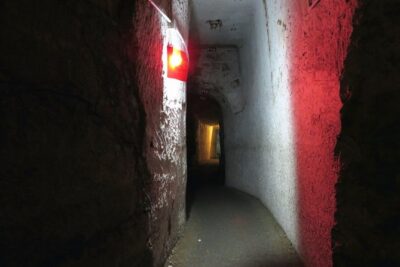
Naples Underground Spanish Quarters with Guide
Read our review →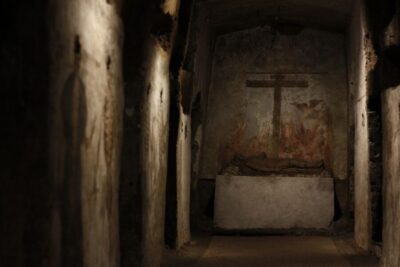
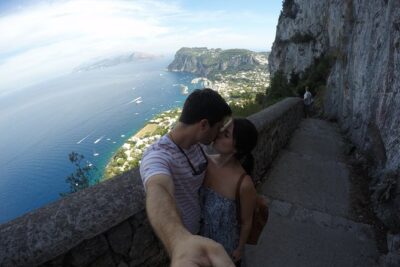
Day Trip to Capri and Blue Grotto From Naples & Sorrento
Read our review →

Private Capri Island and Blue Grotto Day Tour from Naples or Sorrento
Read our review →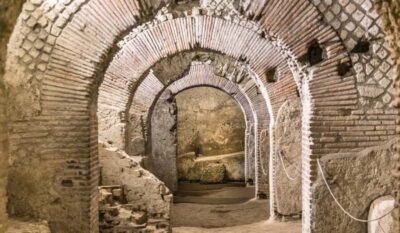
Naples: City Walking Tour w/ Underground Roman Ruins Ticket
Read our review →
Exclusive Capri, Anacapri & Blue Grotto Private Tour from Naples
Read our review →Lists this cave tour appears in