
Review · NORTH ISLAND, NEW ZEALAND
Aranui Cave 1-Hour Guided Tour
Aranui Cave gives you a quieter kind of Waitomo experience: no boat, no glowworm ceiling, just a natural entrance leading into delicate limestone chambers. I like the small group limit of 18 and the chance to see cave wetas, New Zealand insects that look like long-legged cave crickets, almost as soon as you enter.
I also like the careful storytelling. Guides such as Cori and Baba have helped families understand the cave’s geology, Maori legends, and odd formations without rushing them. The main drawback is time: the cave portion can feel brief, especially if you want to linger over every stalactite and stalagmite.
Key points to know before you book
- A natural cave entrance: Aranui begins in the Ruakuri Scenic Reserve, with a short guided bush walk before you reach the cave.
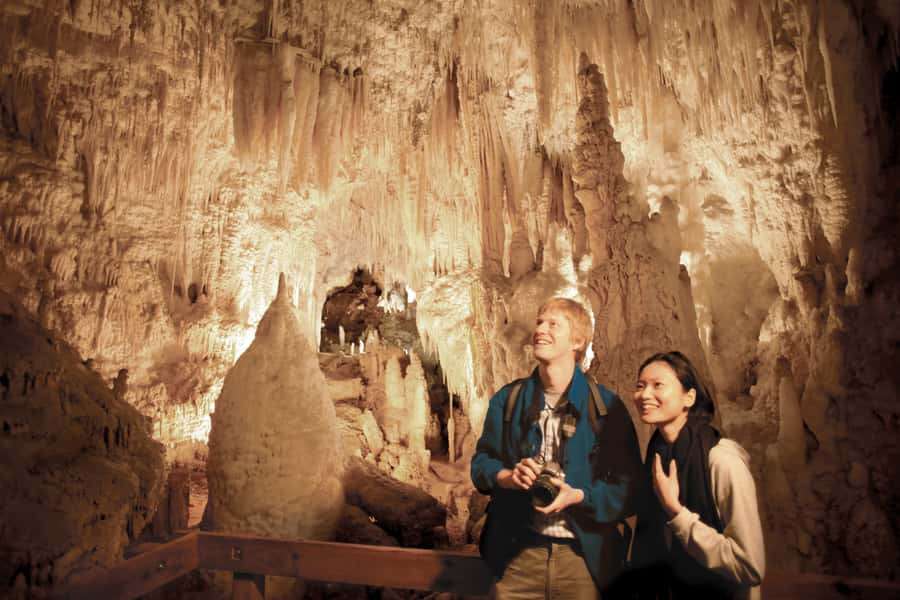
- A delicate underground world: Pale brown, pink, and white limestone formations fill the high chambers.
- Cave wetas near the entrance: These large New Zealand insects are one of the first unusual sights inside.
- An English-speaking local guide: Expect stories about Maori tradition, geology, and the cave’s formation.
- A small, intimate group: Numbers are limited to 18, though recent groups have been smaller.
- A short walking tour: Allow about one hour for the cave experience, plus an additional 15-minute guided bush walk.
Aranui Cave is Waitomo’s quieter underground show
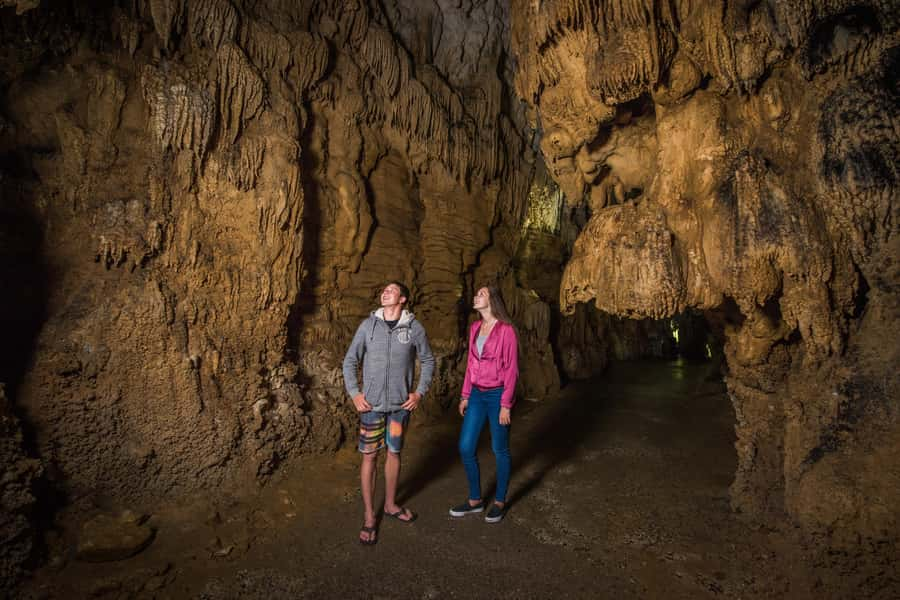
Waitomo is best known for its Glowworm Caves, where visitors float beneath a ceiling of tiny lights. Aranui Cave offers a different experience. Here, the interest is in the rock itself: tall chambers, narrow passages, large stalactites, stalagmites, and soft shades of limestone.
I would choose Aranui if you prefer to look closely rather than simply pass through. The cave is the smallest and most delicate of Waitomo’s three main caves, which helps explain its more intimate feel. It is not a grand underground cathedral on the scale of some famous caves overseas, but its smaller size makes the formations feel close and personal.
The cave also has a strong connection to Maori myth and legend. Your guide explains those stories alongside the geology, giving the visit more meaning than a walk through rock with names attached. The best guides keep both strands moving together: how the cave formed, and what it has meant to people.
The tour begins at the Waitomo Glowworm Caves Visitor Centre on Waitomo Village Road. Aranui Cave is only about a five-minute drive from the main Glowworm Caves area, so it is easy to fit into a day focused on Waitomo.
One-hour experiences around the world:
- Leuca: Caves tour 1h 30 min
★ 4.6 · 244 reviews - Lagos: Ponta da Piedade Grotto 1-Hour Tour with Local Guide
★ 4.9 · 217 reviews - Benagil cave 1 hour tour with local guide
★ 4.7 · 153 reviews
The bush walk sets the mood
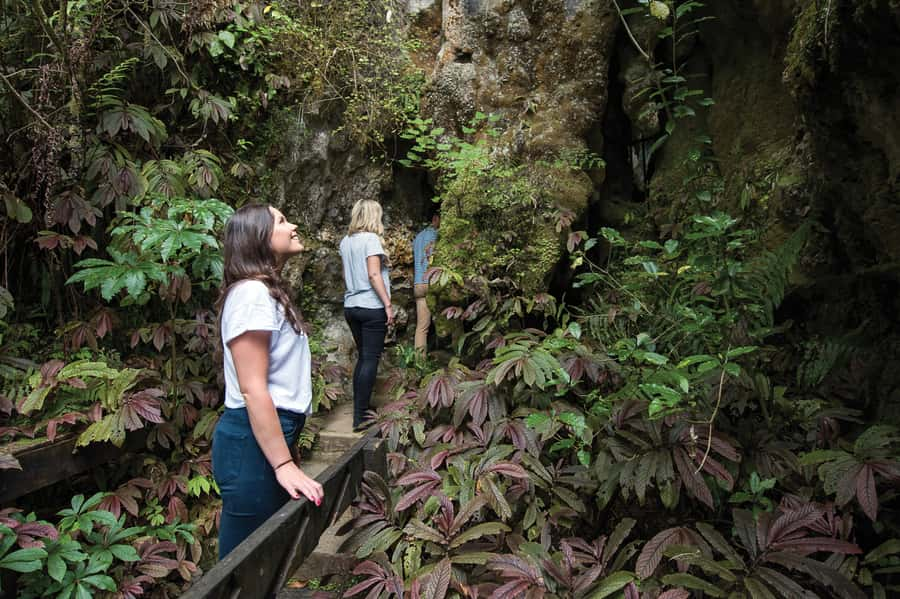
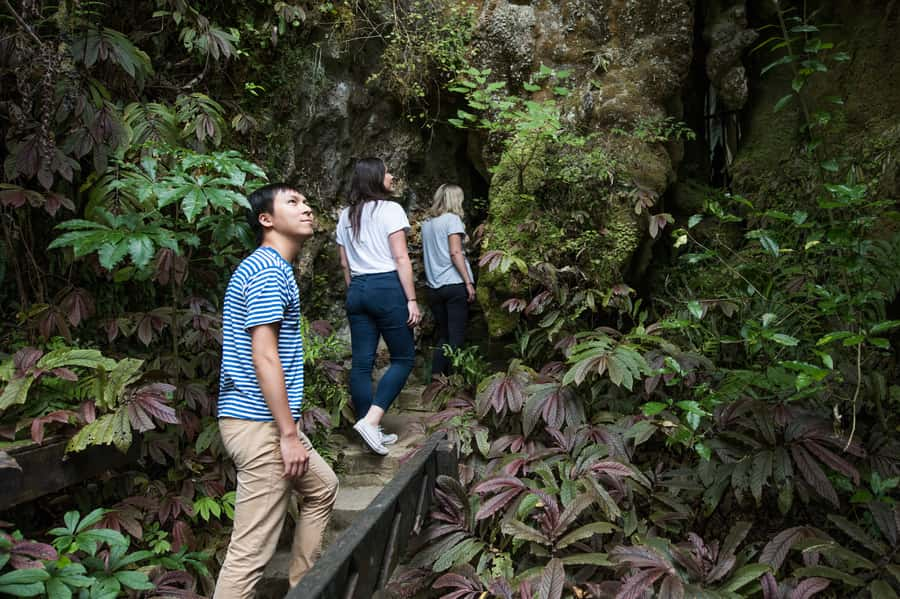
The visit is not only underground. From the visitor centre, you take a guided walk through the Ruakuri Scenic Reserve before reaching the cave. This additional bush walk lasts about 15 minutes and gives you a chance to shift from roadside sightseeing to a more natural setting.
I like this approach. The forest helps explain why Aranui feels so separate from the main tourist centre, even though it is close by. You are not simply stepping from a building into a cave. You first move through native surroundings, then arrive at a natural cave entrance.
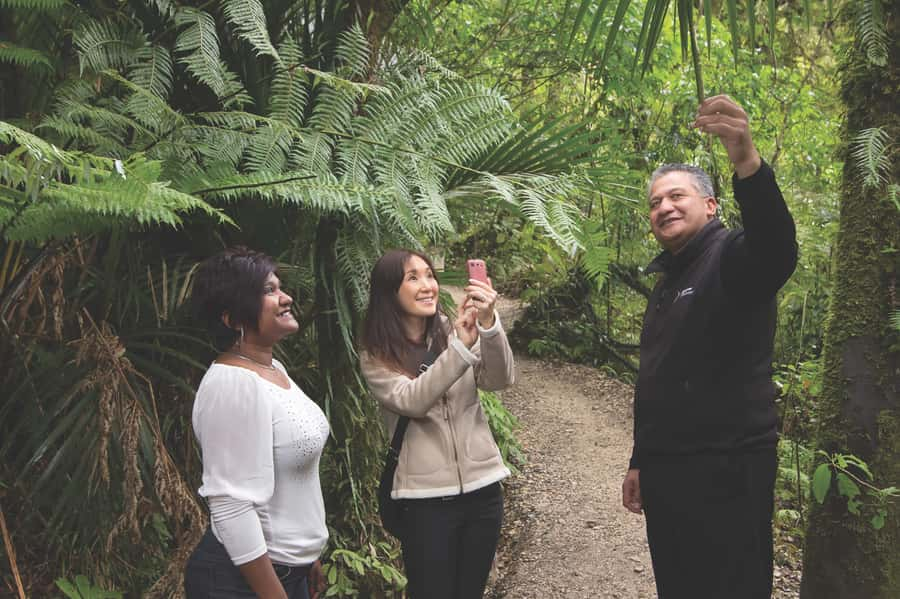
The walk is guided, so your guide can introduce the setting and help you notice the local environment. The information provided does not give a detailed account of every plant or animal along the path, so you should not book this as a dedicated forest walk. Think of it as a short approach to the cave, with a little extra context.
Wear comfortable walking shoes. The path and cave walk are suitable for visitors who can manage ordinary walking, but the experience is not wheelchair accessible and is not suitable for people with mobility problems.
Entering through the natural opening
Aranui Cave has a natural entrance rather than a dramatic constructed doorway. As you enter, the atmosphere changes quickly. The forest gives way to rock, the light drops, and the narrow chambers begin to show the first signs of the cave’s unusual life.
One of the first things to look for is the colony of cave wetas. These large insects are unique to New Zealand and are found just inside the entrance. They may not be everyone’s favorite greeting committee, but they are an important part of the cave’s character.
Your guide can help you spot them without disturbing them. I appreciate that this turns a small creature into part of the story rather than treating the cave as nothing more than a display of rock. Aranui is a living place, and the wetas make that clear.
The entrance area also helps you understand the cave’s scale. The route soon narrows into chambers, but the tour does not involve a boat or a glowworm viewing area. You are walking, looking up, and listening to the guide as the cave opens around you.
Narrow chambers and high limestone formations
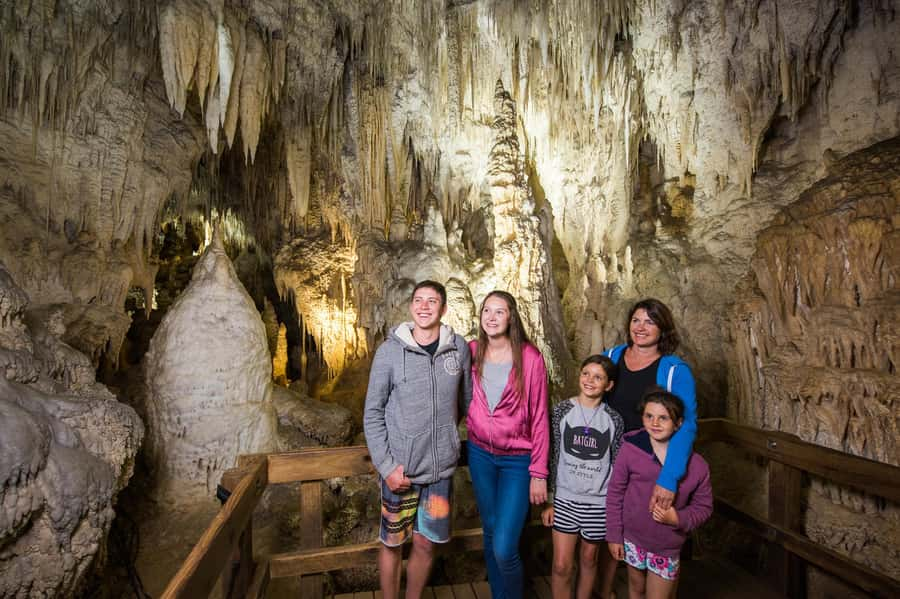
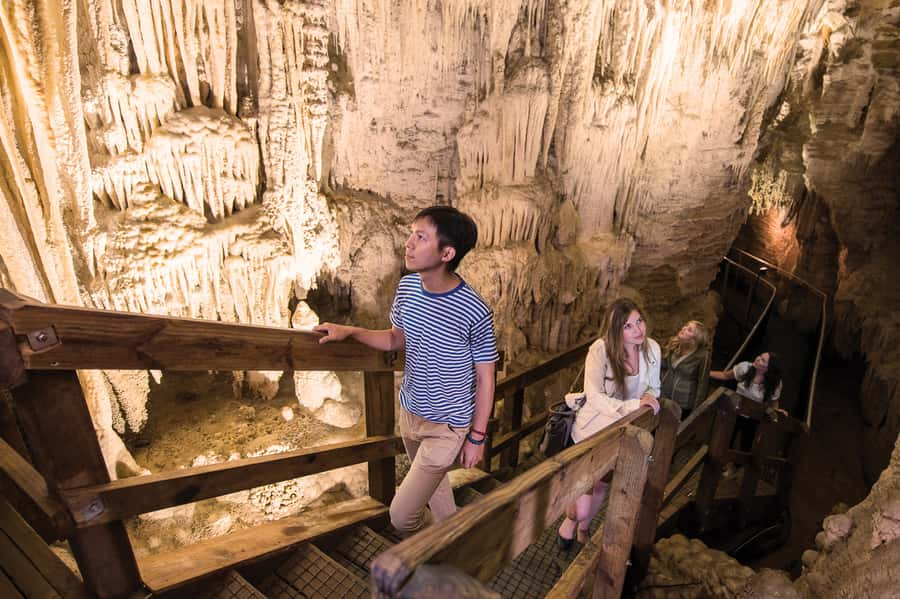
The walking route follows safe boardwalks into the cave. This keeps the main path clear and helps protect the fragile formations underfoot. You should still expect to walk carefully and pay attention to where you place your feet.
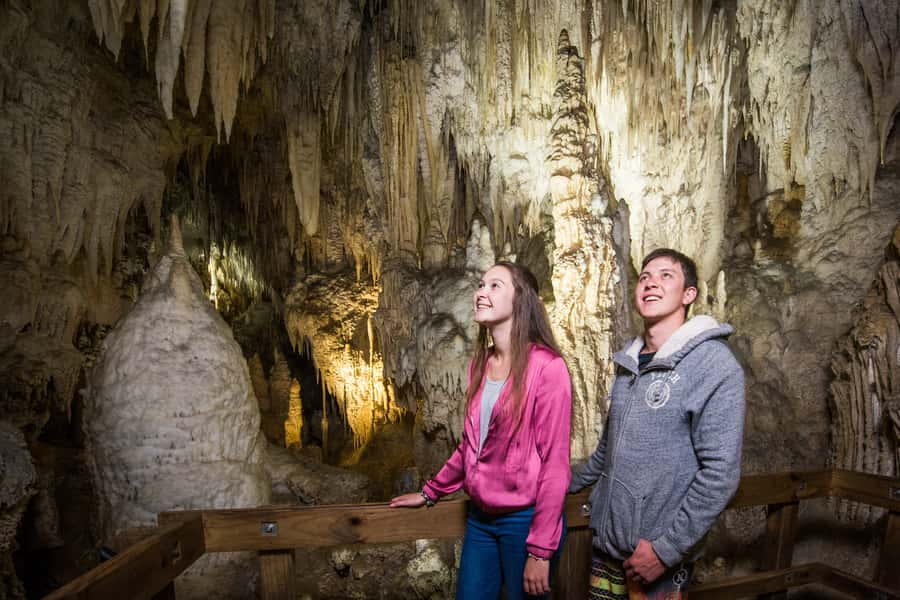
As you move farther inside, the chambers become higher and more impressive. Huge stalactites hang from the ceiling, while stalagmites rise from the floor. The formations come in pale brown, pink, and white tones, rather than one uniform gray.
This color range is one reason the cave rewards a slower look. A quick glance can make limestone seem plain. Once your eyes adjust, you begin to see the small changes in texture and color across the walls and formations.
The guide’s role matters here. Without explanation, a stalactite is simply a rock hanging from the ceiling. With a clear account of how water and minerals shape a cave over time, the formation becomes a record of natural change. Guides also point out features that you could easily miss from the boardwalk.
Cori has been especially effective with family groups, answering repeated questions while keeping the story lively. Baba has also helped visitors take family photographs and allowed the group enough time to look around. Guide names and availability can change, but those examples show the kind of personal attention you may receive in a small group.
Guided tours around the world:
- Waitomo: Glowworm Caves Guided Tour by Boat
★ 4.5 · 4,908 reviews - Hobbiton & Waitomo Caves Guided Day Trip from Auckland incl lunch
★ 5.0 · 2,677 reviews - Benagil: Caves, Beaches, and Secret Spots Guided Kayak Tour
★ 4.8 · 2,675 reviews - Te Anau: Glowworm Caves Guided Tour
★ 4.6 · 2,611 reviews
What the guide adds to the hour
This is a guided tour, not a self-guided cave walk. The English-speaking guide carries much of the experience, explaining the cave’s geology, Maori traditions, and unusual features as you move through it.
The strongest guides use the cave as their material. They do not simply list dates or geological terms. They connect the high chambers and limestone formations to the long process that made them, then add the human stories connected with the place.
That blend works well for families. Children can focus on cave wetas, strange shapes, and large formations, while adults get more from the cultural and geological context. The tour can also feel calm and reflective. One recent visitor described the cave as peaceful compared with the heavier atmosphere of the Glowworm Cave.
I would not expect a long lecture before entering. The experience is built around moving through the forest and cave, with interpretation along the way. One recent tour included a lengthy talk at a shelter before entering, which made the cave portion feel rushed for that group. That is a useful reminder to ask your guide how the hour will be divided if timing feels tight.
Aranui compared with the Glowworm Caves
The two experiences are close together, but they offer different rewards. The Glowworm Caves focus on the glowworms and the underground boat ride. Aranui focuses on formations, cave life, Maori stories, and the feel of walking through a natural cave.
You should choose Aranui if you want:
- A walking tour rather than a boat ride
- More attention to stalactites and stalagmites
- A small group with a more personal guide
- A short bush walk as part of the visit
- Photography inside the cave
- A quieter, more reflective setting
You should not choose it as a replacement for the Glowworm Caves if your main goal is to see the famous glowing ceiling. Aranui is not presented as a glowworm experience. It has its own appeal, but the focus is different.
If you have time for both, they make a good pair. One gives you the famous underground lights. The other gives you a closer look at limestone, cave insects, and the stories tied to the area.
Is $47 good value for one hour?
At $47 per person, this is not a bargain-priced short walk. You are paying for entry, a local guide, the guided cave tour, and the organization needed to protect a delicate natural site.
The value improves if you care about interpretation and small groups. A group capped at 18 people is easier to manage than a large crowd. You have a better chance of hearing the guide, seeing the formations without blocking the path, and asking questions when something catches your attention.
The time is the main point to weigh. The tour itself lasts about one hour, with an additional 15-minute guided bush walk. That is enough for a focused introduction, but not enough for a leisurely underground expedition. If you like to photograph every formation or pause often, you may feel the schedule is brisk.
Photography is allowed in Aranui Cave, which adds value for people who want more than a memory of the visit. Still, you should keep your camera use considerate. The cave is narrow in places, and stopping too long can slow the group.
The tour also offers free cancellation up to 24 hours before the scheduled time and a reserve-now, pay-later option. Those policies are helpful when your North Island plans are shifting, but they do not protect you from arriving late. A missed or late tour forfeits the ticket, and a new booking costs the full price if space is available.
Timing, group size, and practical comfort
Bookings are essential because numbers are restricted. The listed time may shift by 15 to 30 minutes depending on available spaces, so avoid planning another timed activity immediately afterward.
Arrive early at the Waitomo Glowworm Caves Visitor Centre, 39 Waitomo Village Road. This matters more than it might on a casual walking tour. If you miss your scheduled departure, the ticket is nonrefundable, and later space may not exist.
Wear comfortable walking shoes and bring a warm jacket. Cave temperatures can feel cool, and you may notice the change after spending time in the forest. The walk is not described as strenuous, but it includes a bush approach, boardwalks, and narrow cave chambers.
The tour is conducted in English. If you need wheelchair access, choose another Waitomo activity, since Aranui Cave has no wheelchair access.
Who will enjoy Aranui Cave most?
I would recommend this tour to anyone who likes natural features with a human story attached. It is a good fit for families, especially if children enjoy unusual insects, tall spaces, and asking questions. Cori’s patient answers to a group of boys show how well the format can work for curious young visitors.
It also suits people who find the Glowworm Caves too focused on one famous feature and want a more varied underground visit. The cave wetas, forest setting, formations, and Maori stories give you several points of interest in a compact hour.
Photography fans should also consider it, since photographs are permitted inside. The cave’s pale brown, pink, and white formations can offer more visual variety than a dark glowworm viewing experience.
I would hesitate if you dislike enclosed spaces, need step-free access, or want a slow, unstructured visit. The tour follows a fixed schedule, and the cave section may feel short if you want to stop at every formation.
Should you book Aranui Cave?
Book it if you want a small-group walking tour that puts limestone formations, New Zealand cave life, and Maori storytelling ahead of glowworms. At $47, the price is fair when you value a good guide and a close look at a fragile natural place.
Skip it if you have only enough time for one Waitomo attraction and your top priority is the famous glowworm ceiling. If you can fit both into your schedule, Aranui adds a different side of Waitomo and gives you a quieter hour underground.
FAQ
Where does the Aranui Cave tour meet?
The tour meets at the Waitomo Glowworm Caves Visitor Centre, 39 Waitomo Village Road, Waitomo, New Zealand.
How long does the experience last?
The cave tour lasts about one hour and includes an additional 15-minute guided bush walk.
What is included in the price?
The $47 price includes entry fees, the one-hour walking tour, and a local English-speaking guide.
Is the tour conducted in English?
Yes. The tour has a live guide and is conducted in English.
Can I take photographs inside Aranui Cave?
Yes. Photography is permitted inside Aranui Cave.
Is Aranui Cave wheelchair accessible?
No. The cave has no wheelchair access and is not suitable for visitors with mobility problems.
What happens if I miss my scheduled tour?
If you are late or miss the scheduled time, your ticket is forfeited and is not refundable. A new booking requires the full tour price and depends on available space.
Newly added caves around the world
- Phuket: Starlight Hong Sea Cave & Glowing Plankton by Kayak★ 4.9 · 145 reviews
- Phuket: Monkey Cave, Water Rafting, Zipline with ATV Option★ 3.7 · 161 reviews
- Phuket: Bamboo Rafting, Monkey Cave, and ATV Option★ 3.5 · 129 reviews
- Phong Nha: Zipline Dark Cave & Paradise Cave Exploration★ 4.9 · 84 reviews
- Phranang Cave Sunset with BBQ dinner & Plankton Tour★ 3.2 · 53 reviews
- Phong Nha/Dong Hoi: Phong Nha Cave and Paradise Cave Tour★ 4.9 · 82 reviews
- Phong Nha: Cave Exploration and Zipline Dark Cave Tour★ 4.7 · 87 reviews
- Phong Nha National Park: Paradise Cave Half-Day Tour★ 5.0 · 23 reviews