
Review · LIMA PROVINCE, PERU
Lima : City Tour by Panoramic Bus – Walking & Catacombs
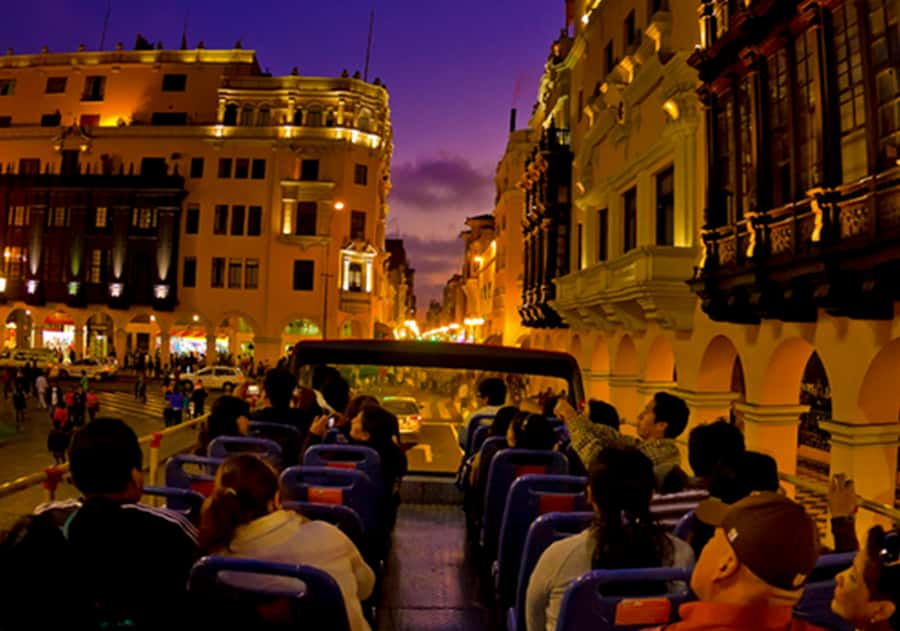
Lima’s scale becomes clear from the top of this bus. In four hours, you move from Miraflores and modern San Isidro to colonial plazas and the underground catacombs of San Francisco. I like the wide city view and the smart mix of bus sightseeing with a proper walk. I also like that the route includes places you would struggle to cover on foot, such as Huaca Pucllana and the Magic Water Circuit.
The main drawback is that much of the first half is viewed from the bus, not visited. Bus commentary can also be hard to hear at times, especially when the guide switches between Spanish and English, so sit where you can listen clearly and keep your attention on the guide.
Key points to know
- Four eras in one route: See pre-Columbian Huaca Pucllana, republican Miraflores, modern San Isidro, and colonial Lima in a single outing.
- The catacombs are the main indoor visit: Expect a guided underground tour lasting about 30 to 40 minutes.
- The bus saves your feet: Lima’s districts are spread out, making this a useful first look at the city.
- Most landmarks are viewed from outside: Huaca Pucllana, Parque de la Reserva, and the Magic Water Circuit are not full stop-and-tour visits.
- The walking section has real substance: Plaza San Martín, Plaza Mayor, the Cathedral area, and San Francisco give you time off the bus.
- Best for a first Lima day: The tour gives you orientation and major sights, but not much free time for museums or lingering.
Why this four-hour route works in Lima
Lima is not a city you can understand by strolling around one compact center. Miraflores, San Isidro, and the Historic Center each feel different, and the distance between them matters. This tour handles that problem well by using the bus for the long connections and saving your walking time for the city’s most important plazas.
I like the balance. You get an overview without spending four hours entirely behind glass, but you also avoid trying to walk from the Pacific-side districts to the colonial core. The route is especially useful if you have only a short stay, a free afternoon, or a first day when you want to learn the shape of Lima before choosing where to return.
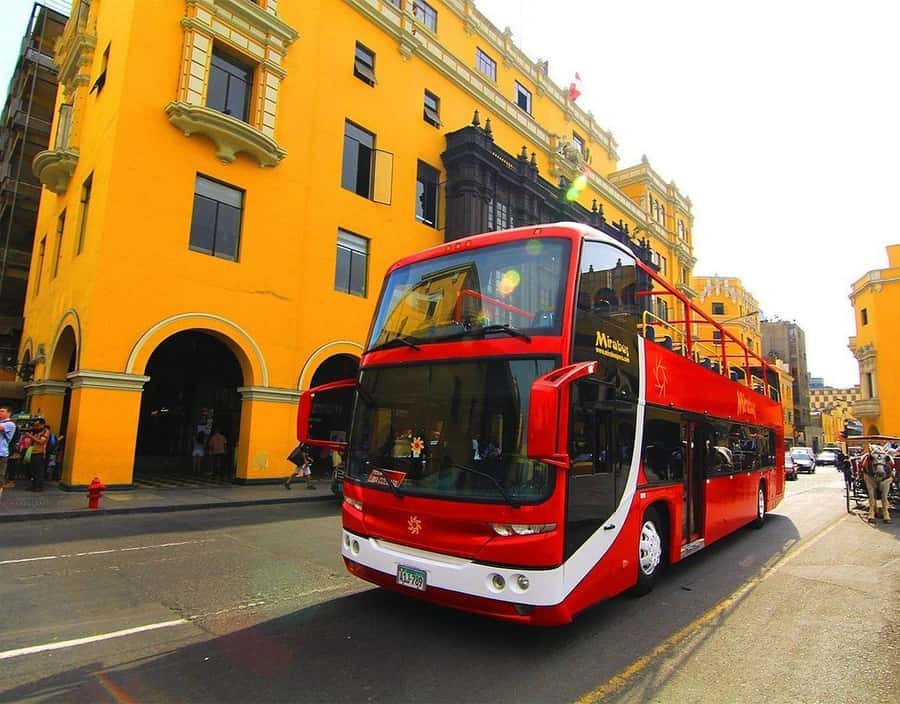
The experience begins in Miraflores. Look for the red Tourbus at the stated meeting point. It arrives about five minutes before departure, so do not cut it too close. Hotel pickup and drop-off are not included, and you need to make your own way to the meeting point.
The bus is wheelchair accessible, and the tour includes an official guide in English and Spanish. The bilingual format is helpful, though it can make the spoken information easy to miss if you are also watching the streets. One useful suggestion from the feedback is to listen for the language change, since the guide may move smoothly from one language to the other without a strong pause.
More Catacombs and Underground City Tours in the world:
- Full Day Cappadocia Tour( Red Tour + Underground City )
★ 5.0 · 1,862 reviews - Green Cappadocia Underground City and Valleys Tour. Lunch incl.
★ 5.0 · 1,103 reviews - Cappadocia: Highlights Tour (Red Tour & Underground City)
★ 4.8 · 955 reviews
Huaca Pucllana gives the route an ancient beginning
One of the first major sights is Huaca Pucllana, an archaeological center in Miraflores built roughly 1,500 years ago. You see it from outside rather than entering the site, but even that brief view adds important context to modern Lima.
The contrast is the point. Office buildings and busy city streets surround a large adobe ceremonial complex from a much earlier culture. From the bus, you get a sense of how old Lima is, long before the Spanish founded the present city in 1535.
This is also where you should keep your expectations in check. If you want to walk among the ruins or study the construction closely, you will need a separate visit. Here, Huaca Pucllana is an orientation stop, not a full archaeological tour.
The bus then passes republican residences in Miraflores, many shaped by European and American architectural influence. These are not formal house visits. They are part of the moving view, giving you a quick look at the district’s older character beneath its modern image.
San Isidro shows Lima’s modern side
The route continues into San Isidro, Lima’s financial district. This section helps explain the city’s present-day identity. Tall business buildings and polished streets replace the low colonial blocks of the center, while the guide links the modern district with the older parts of the city.
I find this contrast more useful than a tour that shows only churches and plazas. Lima is not a preserved colonial town. It is a large capital with ancient ruins, republican buildings, financial offices, and crowded public spaces all within the same wider city.
You remain on the bus here, so the stop is about seeing and listening rather than exploring. If your main interest is architecture, photography, or local city planning, sit on the side with the clearest view and pay close attention to the commentary. The upper deck gives the best outlook when available, but the open view also means sun and wind can be factors.
Parque de la Reserva and the Magic Water Circuit
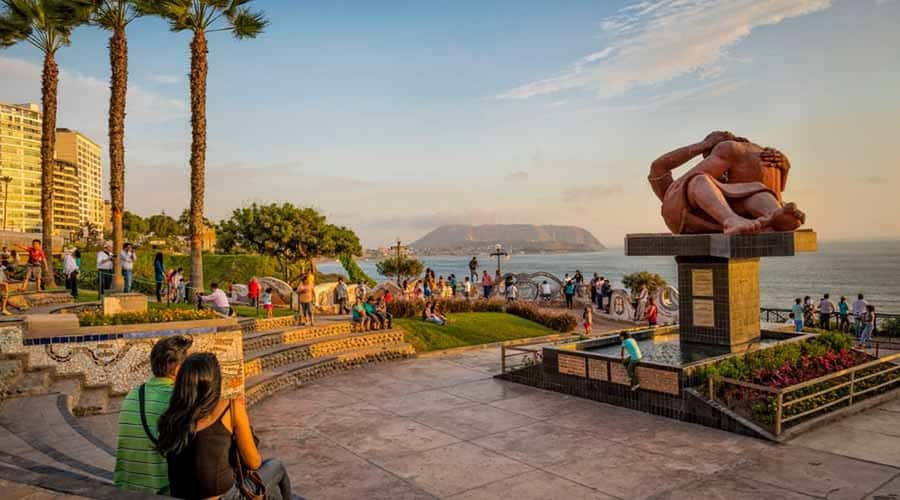
Next comes Parque de la Reserva, a historic park linked to the Peruvian reservists who gathered there to defend Lima during the Pacific War. You view the park from outside, along with the Magic Water Circuit, a fountain complex created in 2007.
The Magic Water Circuit holds a Guinness World Record as the largest fountain complex in a public park. That detail sounds grand, but the practical point is simpler: it is a visually striking city project, and the bus gives you a quick way to see its scale without adding another full attraction visit to your schedule.
The tour does not promise time inside the fountains or a separate evening fountain show. You see the complex from the bus, so treat it as a passing highlight. If you want photographs, have your camera ready before the bus reaches the park. The moving vehicle gives you only a short window.
This is one of the route’s strongest examples of its purpose. You are not getting a deep visit to every location. You are collecting a clear first impression of several parts of Lima, then spending more time at the Historic Center and San Francisco.
Same rock, a different way in:
- Portimão: Benagil Caves Speed Boat Tour with Sunset Option
★ 4.8 · 11,663 reviews - Albufeira: 2.5-Hour Benagil Caves & Dolphin Watching
★ 4.6 · 10,710 reviews - Blue Cave Small-Group Boat Tour from Dubrovnik
★ 5.0 · 9,360 reviews - Best Niagara Falls US Tour W/Boat Ride, Cave & More Wonders!
★ 5.0 · 8,372 reviews
Plaza San Martín begins the walking portion
The bus takes you into the Historic Center, a UNESCO World Heritage Site and the place where Lima was founded in 1535. You get off for a guided walk through pedestrian streets, beginning around Plaza San Martín.
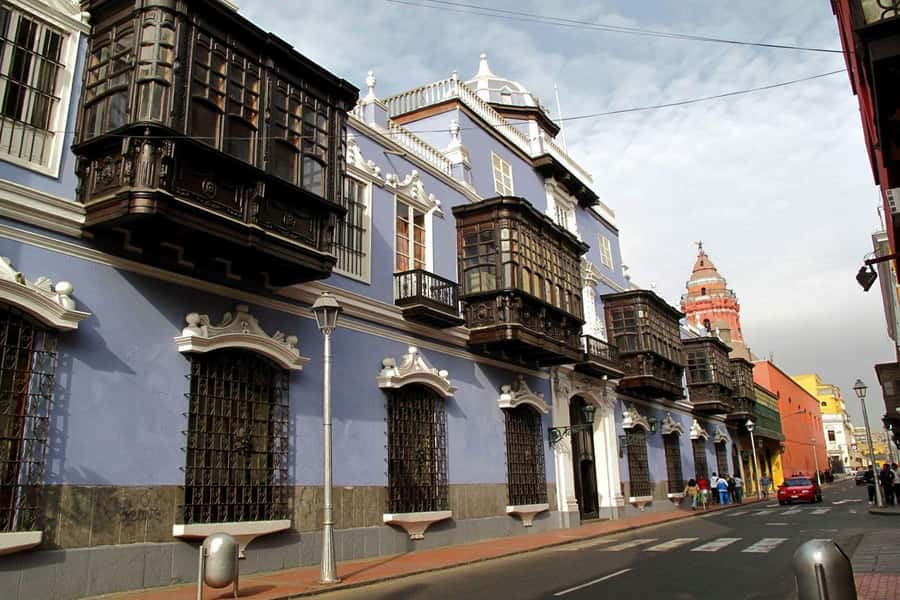
The square is named for Don José de San Martín, the liberator of Peru. Its surrounding buildings show the formal republican side of central Lima, with grand facades, balconies, and palaces influenced by Europe and North America.
This is where the experience becomes more personal and easier to follow. From a bus seat, you see a lot. On foot, you can stop, look up, and notice details in the balconies and facades. The guide can also point out the relationship between the square and the streets leading toward the older colonial center.
Allow for a moderate amount of walking on paved city streets. The tour is wheelchair accessible, but the pace and street conditions can still affect comfort. If mobility is a concern, confirm the exact arrangements when booking.
Plaza Mayor brings Lima’s power into one view
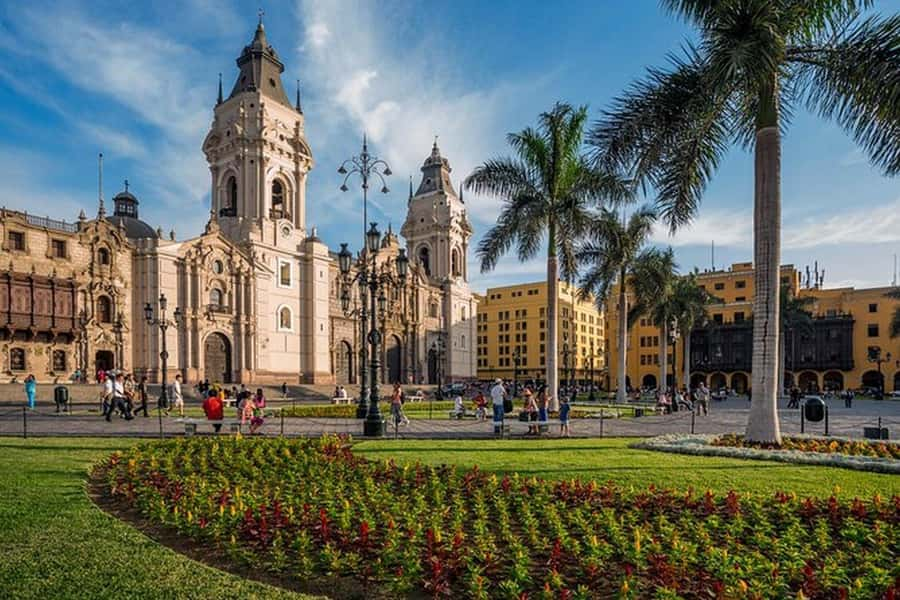
The walk continues to Plaza Mayor, also called Plaza de Armas. This is Lima’s central civic space, surrounded by major government and religious buildings.
You see the Presidential Palace, the Metropolitan Municipality of Lima, the Archbishop’s Palace, the Union Club, and the Cathedral of Lima. Even from the outside, the grouping explains how colonial planning placed political, religious, and social power around one square.
I like this part because it gives the city center a clear framework. Instead of seeing isolated buildings, you understand why the plaza matters. The guide’s explanation is important here, especially if you are new to Peru and want more than a quick photograph.
The walking tour is also a useful correction to the bus portion. You have now moved from broad city views to details at street level: balconies, colonial buildings, public squares, and the flow of pedestrians through the old center. The schedule is still compact, so you should not expect long independent time in the plaza.
San Francisco’s catacombs are the tour’s most memorable visit
The final major stop is the San Francisco Basilica and Convent, where you take a guided tour of the catacombs. The underground visit lasts about 30 to 40 minutes and is conducted through vaults built with brick, lime, and stone.
The catacombs are not presented as a horror attraction. Their real value is historical. You see how bodies were arranged to make efficient use of limited burial space, and the guide explains the role of burial beneath the religious complex during colonial times.
The setting is naturally somber. Some people will find the preserved bones and burial chambers fascinating, while others may prefer to skip this part. If you are sensitive to enclosed spaces or human remains, this is the one section to consider carefully before booking.
The catacombs also give the walking tour a strong ending. You begin with Lima’s public squares and grand buildings, then move below the city to a less polished and more intimate part of its past. The tour provides an express security check, which should help the visit fit within the planned schedule.
The Cathedral area may also be part of the guided center visit, but the catacombs at San Francisco are the clearly defined underground tour. Do not assume every building on the plaza includes a full interior visit.
What the bus experience is really like
The panoramic bus is the practical heart of this outing. Lima’s districts are spread out, and the bus lets you cover far more ground than a walking-only tour could manage in the same time.
You get 360-degree views of the city, with the greatest benefit coming between Miraflores and the Historic Center. The elevated position helps you see over traffic and notice how the architecture changes from district to district.
The tradeoff is sound. One person found the bus audio somewhat low, while another had trouble following the language changes because the English and Spanish explanations flowed together. I would choose a seat close enough to hear the guide, keep distractions to a minimum, and ask for clarification during a stop if you miss an explanation.
The guide quality can vary by departure, as it does on any group outing. The available feedback includes strong praise for a friendly guide who explained everything in both languages, along with one serious report of a family being left behind after a stop. That incident is not a reason to assume the tour will fail, but it is a good reason to follow the guide’s return instructions closely and make sure the group is together before the bus moves.
Do not wander off during any stop without telling the guide. Keep your ticket or booking details with you, and note the bus appearance so you can recognize the red Tourbus easily.
Is $42 a fair price for the time?
At $42 per person, this is a reasonable price if you value transport, commentary, the walking tour, and the catacombs as one package. You are paying for four hours of movement across several districts, not simply for entry to one attraction.
The price works best for first-time visitors who want an efficient introduction. A taxi between Miraflores and the Historic Center, a separate guide, and a catacomb visit could easily require more planning. The tour also saves you the effort of deciding how to connect distant sights.
It is less attractive if you prefer a slow pace. Huaca Pucllana and the Magic Water Circuit are viewed from outside, and the city-center walk is scheduled rather than leisurely. You may leave with a list of places you want to revisit independently.
One booking detail is worth noting: a Pisco tasting appears to have been included on at least one departure, but it is not listed among the fixed inclusions. Treat it as a possible extra, not a promised part of the tour. The confirmed inclusions are the panoramic bus, official guide, Historic Center walk, and San Francisco catacombs tour. Food and drinks are not included.
Who should book this Lima city tour?
I would choose this tour if you have a short amount of time and want a broad first look at Lima. It suits people who prefer having transport arranged, families who want to avoid a long cross-city walk, and anyone who wants both the famous public squares and a guided catacomb visit.
It is also a good fit if you are staying in Miraflores and want to reach the Historic Center without planning the route yourself. The combination of open-top views and street-level sightseeing gives you a useful sense of how the city fits together.
I would choose something else if your priority is Huaca Pucllana archaeology, an extended visit to the Magic Water Circuit, museum time, or independent photography. Those interests need more time than this four-hour route allows.
The tour is offered with English and Spanish guides, accepts reservations with payment later, and allows cancellation up to 24 hours before departure for a full refund. Check the available starting time before booking, since the exact departure schedule is not fixed in the basic description.
Should you book it?
Book it if you want an efficient Lima orientation with three clear strengths: wide city views, a useful Historic Center walk, and access to the San Francisco catacombs. At $42, the mix is good value for a first visit.
Skip it if you dislike set schedules or want to enter every major sight. The route is an overview, and several attractions are seen from the bus. For most first-time visitors with only a few free hours, that compromise makes sense. Just listen carefully, stay with the group at stops, and keep your expectations focused on breadth rather than lengthy visits.
FAQ
How long does the Lima city tour last?
The tour lasts four hours, including the panoramic bus ride, the walking tour in the Historic Center, and the San Francisco catacombs visit.
Where does the tour meet?
The meeting point is in Miraflores. Look for the red Tourbus, which arrives about five minutes before the departure time.
Is hotel pickup included?
No. Hotel pickup and drop-off are not included, so you must make your own way to the meeting point.
Which languages are available?
The live guide speaks English and Spanish. Commentary is bilingual, and you may need to listen carefully when the guide changes languages.
Are Huaca Pucllana and the Magic Water Circuit visited inside?
No. The route passes Huaca Pucllana and Parque de la Reserva, where the Magic Water Circuit is located, with these sights viewed from outside or from the bus.
How long is the catacombs visit?
The guided underground tour of the San Francisco Basilica and Convent catacombs lasts about 30 to 40 minutes.
Is the tour wheelchair accessible?
Yes, the activity is listed as wheelchair accessible.
Can I cancel the booking?
You can cancel up to 24 hours in advance for a full refund. The activity also offers a reserve now and pay later option.
Newly added caves around the world
- Phuket: Starlight Hong Sea Cave & Glowing Plankton by Kayak★ 4.9 · 145 reviews
- Phuket: Monkey Cave, Water Rafting, Zipline with ATV Option★ 3.7 · 161 reviews
- Phuket: Bamboo Rafting, Monkey Cave, and ATV Option★ 3.5 · 129 reviews
- Phong Nha: Zipline Dark Cave & Paradise Cave Exploration★ 4.9 · 84 reviews
- Phranang Cave Sunset with BBQ dinner & Plankton Tour★ 3.2 · 53 reviews
- Phong Nha/Dong Hoi: Phong Nha Cave and Paradise Cave Tour★ 4.9 · 82 reviews
- Phong Nha: Cave Exploration and Zipline Dark Cave Tour★ 4.7 · 87 reviews
- Phong Nha National Park: Paradise Cave Half-Day Tour★ 5.0 · 23 reviews