
Review · NORTHEASTERN REGION, ICELAND, ICELAND
Jökulsárlón: Glacier Hike to a Remote Ice Cave
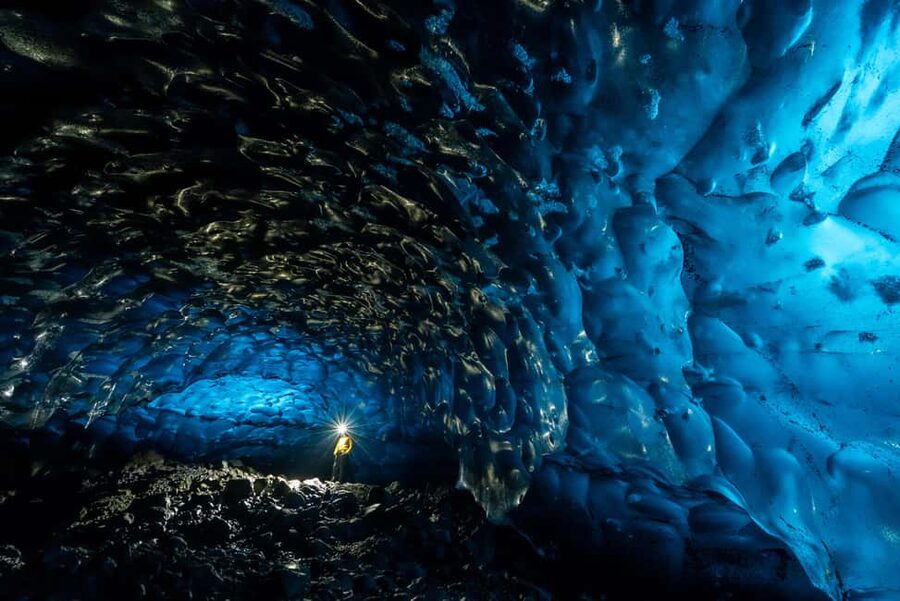
The best thing about this Jökulsárlón tour is that it takes you beyond the easy-to-reach edge of the glacier. After a rough 4×4 ride, you hike into a quieter part of Breiðamerkurjökull, where natural blue ice caves and canyons feel far removed from the busy lagoon parking area. The remote route is the real prize.
I like the small-group feel and the guides’ careful pace. I also like that this is not just a photo stop: you learn how glaciers move, how caves form, and why blue ice appears in winter. The tradeoff is clear: this is a serious six-hour outing requiring good fitness, sturdy boots, and the willingness to accept a changed route if weather or ice conditions turn unsafe.
Key points to know before booking
- A longer glacier hike: Plan to hike about 8 kilometers, with uphill sections and several hours on the ice.
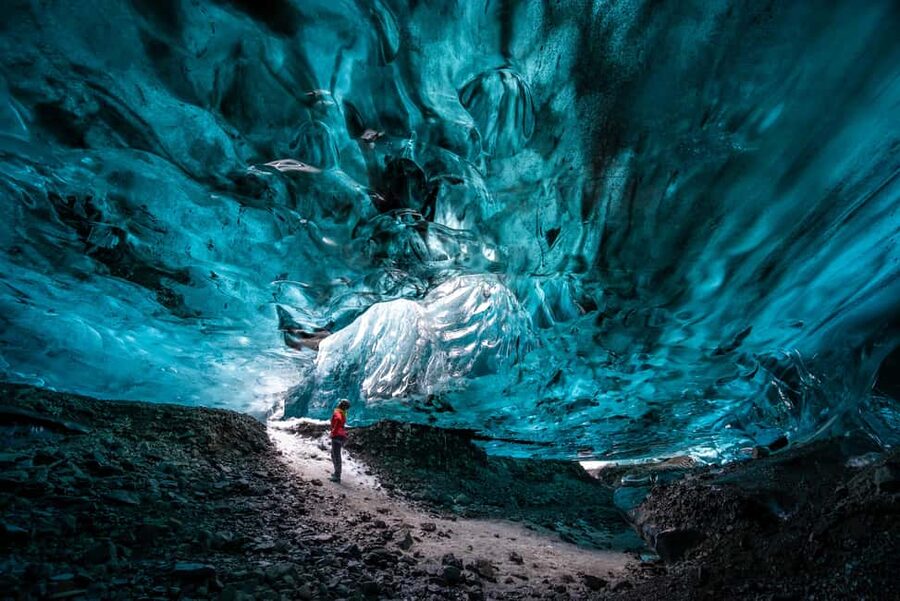
- Remote ice-cave access: The route aims to go farther than standard cave visits, often reaching quieter formations.
- Small groups: Past outings have commonly had about four to eight people, a useful size for a demanding hike.
- Real weather flexibility: A cave may be replaced, or the tour may be changed or cancelled, if conditions become unsafe.
- Strong guide service: Martin, Ola, Marcin, Katherina, Luke, and other Ice Walkers guides are praised for safety, pacing, glacier facts, and photography help.
- Bring proper boots: You need ankle-covering, relatively stiff hiking boots, warm layers, gloves, and rain protection.
Why this tour goes beyond the usual ice-cave stop
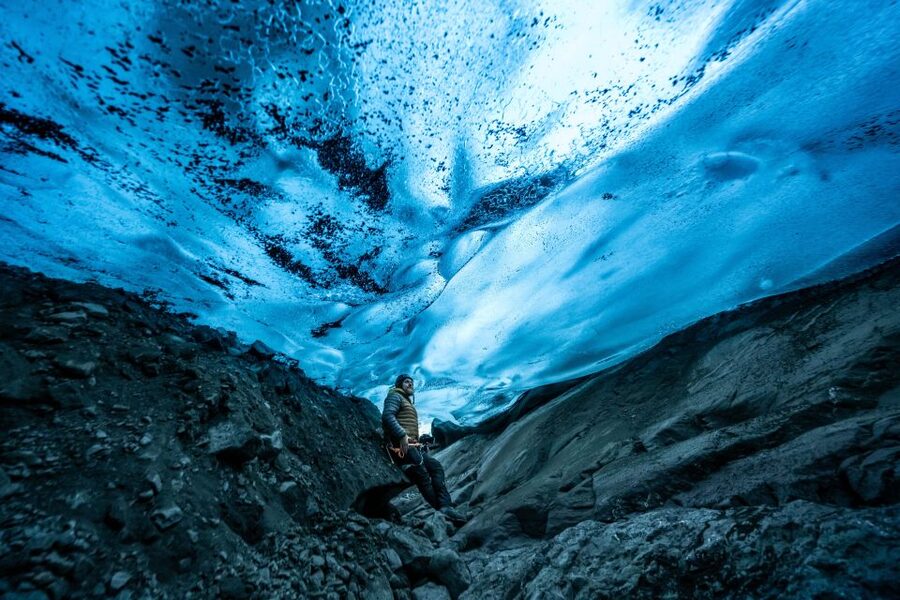
Many glacier excursions are built around getting people to an ice cave quickly, taking a few pictures, and returning before the weather changes. This experience takes a different approach. The stated aim is to hike farther than most groups, spending around three to three and a half hours on the glacier and inside caves.
That extra walking changes the character of the day. You are not simply stepping from a vehicle into a cave. You are learning how to move across uneven ice, watching the glacier’s shapes change around you, and earning the cave at the end of a longer route.
The blue color is not painted onto the ice. It comes from dense, compressed ice that absorbs much of the red light and lets more blue light pass through. Your guide explains this sort of basic glaciology as you go, along with how meltwater cuts channels and tunnels through the glacier.
The caves themselves are temporary. They can melt, flood, collapse, or change shape from one season to the next. That is why the most beautiful cave shown in a photograph cannot be promised for your departure date. The upside is that your guide is choosing from the conditions in front of you rather than taking you blindly toward a fixed attraction.
More Ice Cave Tours in the world:
- From Vik: Katla Ice Cave and Super Jeep Tour
★ 4.6 · 2,110 reviews - Jökulsárlón: Vatnajökull Ice Cave Guided Tour
★ 4.2 · 2,046 reviews - Skaftafell: Ice Cave Tour and Glacier Hike
★ 4.5 · 1,746 reviews
Meeting at Jökulsárlón and riding into the interior
You meet 15 minutes before departure at the main parking area beside Jökulsárlón Glacier Lagoon. Look for a modified 4×4 vehicle marked with the Ice Walkers logo. This is not a standard sightseeing bus, and the off-road vehicle is important because the approach to the glacier is rough and remote.
The drive takes roughly 40 to 45 minutes each way. During the ride, your guide explains how the ice caves form, describes current conditions, and points out features of the Jökulsárlón area. This is a useful start because you arrive with a better idea of why the route may change and what hazards to watch for.
The transfer also adds about 90 minutes to the day. That is time you should count when planning meals, driving onward, or booking another activity. The tour is advertised as six hours, but some outings have run longer when conditions, the route, or the group required extra time.
Bring food with you. Lunch is not provided, though there should be time to eat your own meal on the ice. A compact lunch and a drink make more sense than anything bulky. You will want your hands free while walking and taking pictures.
Getting ready for Breiðamerkurjökull
Once you reach the glacier area, the guide gives a safety briefing and introduces the glacier equipment. Headlamps and glacier gear are included. Your guide also shows you how to walk on ice and how to handle uneven or sloping sections.
No previous glacier experience is required. That does not mean the outing is easy. You need enough fitness to hike about 8 kilometers, including uphill parts, and you should be comfortable walking for several hours in cold, wet conditions.
The correct footwear matters. Wear ankle-covering, relatively stiff hiking boots. Ordinary soft shoes, trainers, or casual winter footwear may not provide enough support, and a lack of suitable boots can lead to being refused participation. Bring a hat, gloves, rain gear, and warm winter clothing. The tour does not provide your clothing.
The pace is one of the strongest parts of the experience. Guides stop to explain ice formations and check that everyone is managing. That helps, but it does not turn the trip into a gentle stroll. If your fitness is low, choose a shorter glacier activity instead.
The long walk across the ice
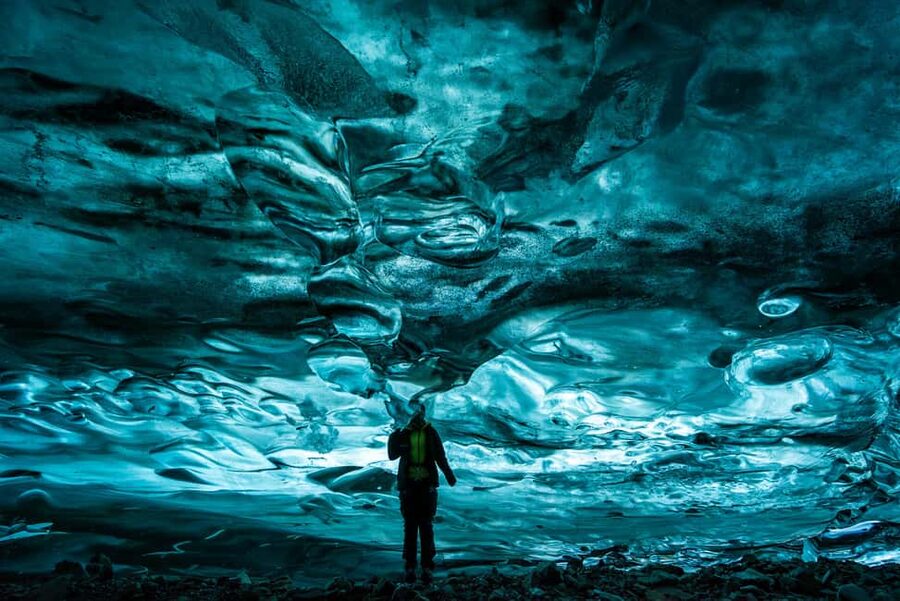
The hike is where this tour earns its price. You spend much of the day walking through a broad, shifting world of blue ice, ridges, channels, walls, and cracks. The scenery can be repetitive at times, especially during a long stretch of ice, but the changing light and formations give the guide plenty to point out.
You may stop to look at ice canyons or watch meltwater passages. If conditions allow, the route can include more than one cave or ice tunnel. One past outing reached several caves, a large opening, and the edge where the glacier meets the lagoon. That kind of variety depends entirely on the day, but it shows what the extra distance can make possible.
The remote aim does not guarantee complete solitude. On busy winter days, other groups may also be working toward the same formations. A good guide can adjust the timing and route so your group has a cave to itself for a while, even when several groups are nearby.
This is where the small group helps. A group of four to eight people can move more easily than a large party and can pause without creating a traffic jam at every cave entrance. It also lets the guide keep an eye on individual comfort and take pictures for the group.
Hikes and treks around the world:
- Matacanes : Canyoning + Hiking + Water Jumps + Rappel + Caves
★ 5.0 · 1,497 reviews - Peniche: Berlengas Island Trip, Hiking and Cave Tour
★ 4.7 · 1,473 reviews - Etna Sunset Tour: Volcano trek, Cave & tasting from Catania
★ 4.8 · 1,290 reviews - From Catania: trek on Mount Etna, Lava Cave & tasting Tour
★ 4.8 · 563 reviews
Inside the blue ice caves
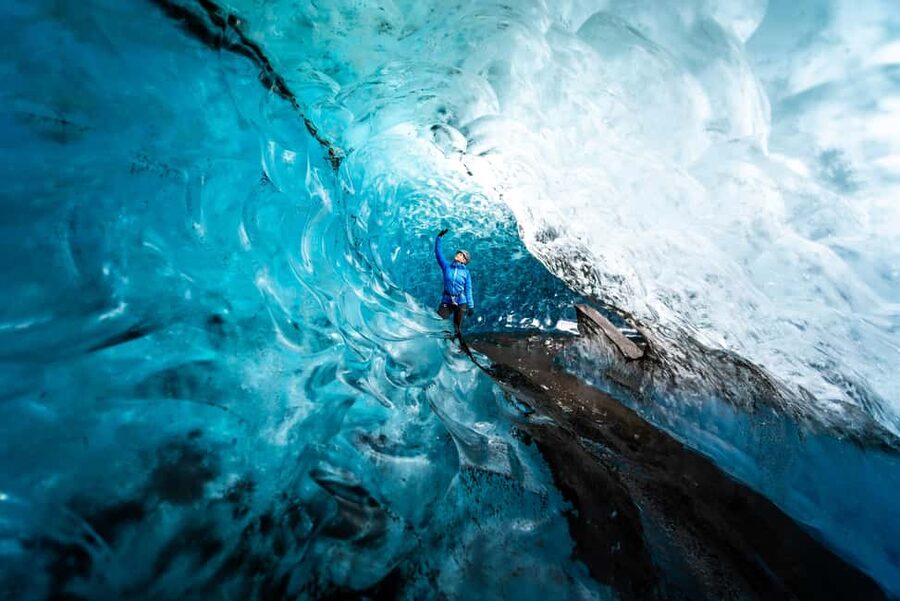
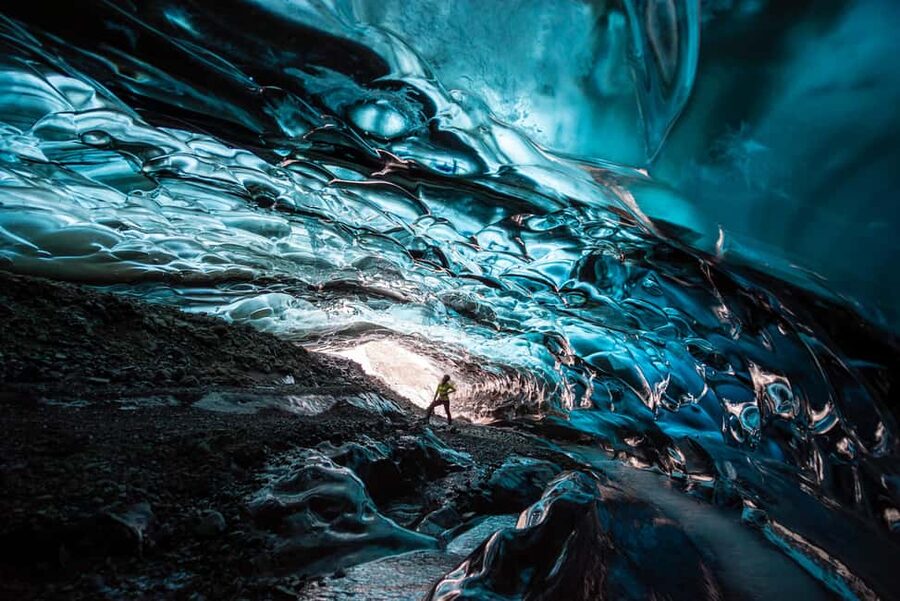
A natural blue ice cave is not a built attraction with fixed walls and lighting. It is a seasonal cavity created by meltwater and glacier movement. The shape, color, safety, and entrance can all change quickly.
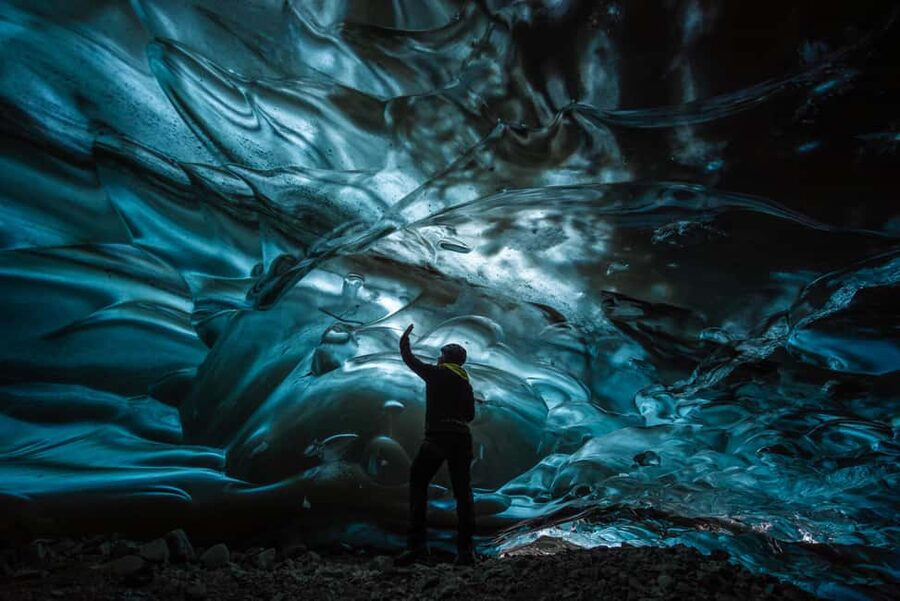
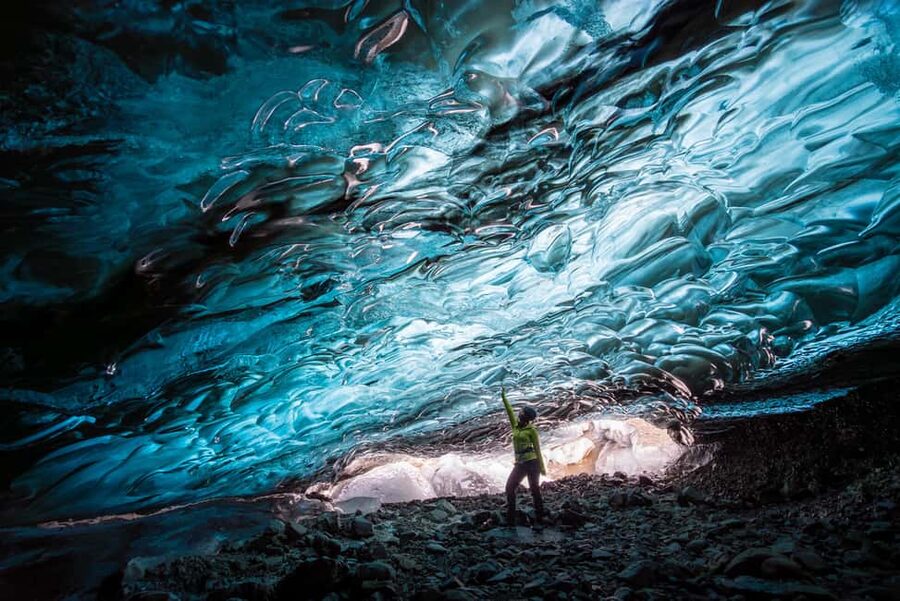
Inside, the ice may appear intensely blue, especially where the walls are thick and light filters through. Some spaces are narrow and tunnel-like. Others open into larger chambers or show layered textures, cracks, and sculpted surfaces. Your guide decides which areas are safe to enter and how far the group should go.
The experience is partly visual and partly educational. You learn why blue ice appears, how the cave changes, and why a cave that was safe recently may no longer be suitable. Guides have also explained glacier motion, climate change, and the local ice system during the hike.
Photography is welcome, and the pace allows time for it. Guides often help position people and take group pictures. Still, do not let the camera become the whole point. Ice caves can look different in person than they do in bright photographs, and the best moments may be the quiet ones between stops.
The important safety point is that no particular cave is guaranteed. If the intended remote cave is flooded, unstable, or otherwise hazardous, the guide may choose another cave, possibly one near the glacier edge that is visited more often. You will be told if the plan changes.
Why the guides matter so much
This is a demanding setting where a good guide does more than lead the way. The guide checks footwear, explains glacier technique, watches the weather, chooses safe routes, and adjusts the pace. That practical care matters more here than a polished speech.
Guides named Martin, Ola, Marcin, Katherina, Luke, and others have been praised for different strengths. Martin is often singled out for clear glacier explanations, patience, and help with photographs. Ola is noted for a friendly manner and careful pacing. Marcin is associated with route changes handled calmly when caves were flooded or unsafe. Katherina has been praised for clear safety instruction and attentive support.
You should also expect some humor and local information along the way. The best guides treat the glacier as a living system rather than a frozen stage set. They explain what you are seeing and why the route might change instead of pretending that every departure follows a perfect script.
One outing included a geologist studying glacier movement, adding a useful scientific angle. That kind of expertise is not something you should assume on every departure, but the tour’s stated focus on glaciology and climate science makes the day more than a scenic walk.
The main drawbacks to weigh
The price is $278 per person, so this is not a casual add-on. You are paying for a specialized 4×4 transfer, a professional glacier guide, technical equipment, a small-group experience, and several hours in a difficult environment.
I think the price can be good value if you specifically want a longer hike and a quieter cave visit. It is less compelling if your priority is simply seeing one blue cave with minimal walking. A shorter activity may suit you better and cost less in time and effort.
The weather is another real limitation. Wind, poor visibility, flooding, unstable ice, or a struggling group member can force a route change, late adjustment, or cancellation. That uncertainty is part of visiting a natural glacier, not a service failure, but you should leave room in your Iceland schedule.
The hike can also become tiring. One person found the long route exhausting and felt that the ice scenery began to look similar after a while. That is fair. The reward comes from the scale, the physical challenge, and the chance of reaching less-visited formations. If you prefer frequent indoor stops and easy walking, this is the wrong outing.
Who should book the remote cave route
I would choose this tour if you:
- Want a serious half-day glacier experience rather than a quick cave visit
- Have good general fitness and can walk about 8 kilometers
- Care about learning how glaciers form and move
- Prefer a small group over a large, fast-moving tour
- Are comfortable with weather-related changes
- Want time for pictures without being rushed
- Have proper ankle-covering hiking boots and suitable winter clothing
I would think twice if you have back, heart, respiratory, or mobility problems, or if you use a wheelchair. The experience is not suitable for children under 12, people with low fitness, or anyone unable to manage uphill walking on ice.
The tour is conducted in English. Since no food, drinks, or winter clothing are included, you need to prepare before arriving at the parking lot.
Is the $278 price worth it?
For a basic blue ice cave photograph, no. There are simpler options. For a longer route into Vatnajökull, a professional guide, technical glacier equipment, and the chance to reach a remote cave, the price is easier to justify.
The strongest value comes from the guide’s time and judgment. A safe route is not always the most direct one, and a beautiful cave may not be the cave shown in an advertisement. You are paying for someone who can read conditions, teach you how to move, and find a worthwhile alternative when the plan changes.
The fact that the tour spends several hours on the glacier also matters. You get more than a transport connection to a cave entrance. You get a demanding walk, explanations of ice and climate, and time to look around rather than being hurried through.
Final call: book it if you want a real glacier day
Book this Jökulsárlón ice-cave tour if you want the most adventurous version of a blue ice experience and have the fitness to match it. The remote route, small groups, patient guides, and flexible cave choices make it more personal than a quick stop at the glacier edge.
Skip it if you want a short, predictable excursion or if an 8-kilometer hike sounds unpleasant. Ice caves are temporary, weather is in charge, and the route may change. But if you accept those limits, this is a strong choice for seeing Vatnajökull at walking pace, with a guide who can turn a cold, rough day into a memorable piece of Iceland.
FAQ
Where does the tour meet?
Meet at the main parking area at Jökulsárlón Glacier Lagoon. Look for a modified 4×4 vehicle with the Ice Walkers logo, and arrive 15 minutes before departure.
How long does the activity last?
The advertised duration is six hours. The schedule includes roughly 40 to 45 minutes of transport each way and several hours around Breiðamerkurjökull.
How far do you hike?
You must be physically able to hike about 8 kilometers, including uphill sections. The glacier portion can last around three to three and a half hours, with the wider glacier segment scheduled for about four and a half hours including stops and safety instruction.
Is previous glacier experience required?
No. A professional guide provides safety instruction, glacier gear, and guidance on how to walk on the ice.
What should you bring?
Bring a hat, gloves, rain gear, food, drinks, and suitable winter clothing. You must wear ankle-covering, relatively stiff hiking boots.
Will I definitely visit the remote blue ice cave?
No particular cave is guaranteed. Ice caves change quickly, and a cave may be flooded or unsafe. The guide will try to visit the most beautiful safe cave available and may choose another route if conditions change.
Can children join the tour?
Children under 12 cannot join. The activity is also not suitable for people with mobility, heart, back, or respiratory problems, wheelchair users, or people with a low level of fitness.
Newly added caves around the world
- Phuket: Starlight Hong Sea Cave & Glowing Plankton by Kayak★ 4.9 · 145 reviews
- Phuket: Monkey Cave, Water Rafting, Zipline with ATV Option★ 3.7 · 161 reviews
- Phuket: Bamboo Rafting, Monkey Cave, and ATV Option★ 3.5 · 129 reviews
- Phong Nha: Zipline Dark Cave & Paradise Cave Exploration★ 4.9 · 84 reviews
- Phranang Cave Sunset with BBQ dinner & Plankton Tour★ 3.2 · 53 reviews
- Phong Nha/Dong Hoi: Phong Nha Cave and Paradise Cave Tour★ 4.9 · 82 reviews
- Phong Nha: Cave Exploration and Zipline Dark Cave Tour★ 4.7 · 87 reviews
- Phong Nha National Park: Paradise Cave Half-Day Tour★ 5.0 · 23 reviews