
Review · REYKJAVIK
3-Day Ice Cave, South Coast, Golden Circle and Northern Lights
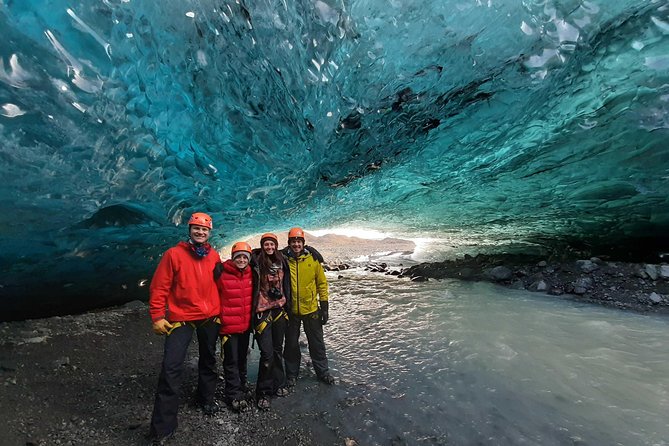
The most striking part of this three-day Iceland trip is the switch from easy roadside wonders to real glacier travel. One moment you’re watching Strokkur erupt, and the next you’re wearing crampons, a helmet, harness, and ice axe on Vatnajökull. The naturally formed blue ice cave and the black-sand beaches give the trip its real Icelandic punch.
I like the large range of scenery packed into three days, and I like that hotels, breakfast, transport, and specialist glacier guides are included. Guides such as Bran, Paul, Max, Petur, and Iskren have earned praise for safe driving, local stories, and flexible extra stops. The tradeoff is a brisk schedule, long hours in the minibus, and demanding walks that are described too softly if you expect an easy stroll.
Key points at a glance
- A rare mix of Golden Circle and glacier country: See Þingvellir, Geysir, Gullfoss, waterfalls, icebergs, and black beaches in one organized trip.
- The glacier hike is real outdoor activity: You walk on ice for about 90 minutes after reaching the glacier, using crampons and safety gear.
- The ice cave changes each winter: This is a natural cave, not a permanent attraction, so its shape, color, and accessibility can differ.
- Two rural hotel nights improve Northern Lights chances: The hotels are away from Reykjavík’s city lights, but auroras are never promised.
- You travel in a small group: The maximum is 19 people, with pickup, WiFi, and transport between stops included.
- Meals are only partly covered: Two breakfasts are included, but you pay for lunch and dinner, and dinner choices may be limited by the route.
Three days from Reykjavík to Iceland’s ice country
At $1,058.14 per person, this is not a cheap bus outing. But the price covers two nights of lodging, two breakfasts, transport from Reykjavík, a glacier hike, specialist equipment, an ice cave trip by super jeep, and an English-speaking guide. If you tried to arrange these pieces separately, you would also need to handle winter roads, hotel bookings, glacier safety, and the long drive east.
I see the value most clearly if you have only three days in Iceland. You get the Golden Circle on the first day, the South Coast and glacier area on the second, and the glacier lagoon, Diamond Beach, and Reynisfjara on the third. You will not have much free time, but you will cover a remarkable amount of ground without driving.
The vehicle is a small minibus with a maximum group size of 19. That is more personal than a large coach, though the back-to-back schedule means you will spend plenty of time seated. The changing views help: lava fields, mountains, waterfalls, farmland, glaciers, ocean, and black sand pass outside the windows.
Pickup begins around 8:00 a.m. and can take up to 30 minutes. Reykjavík’s downtown traffic rules mean the minibus may use a nearby designated bus stop instead of your hotel entrance. Check the assigned stop before departure, and arrive early with your bag ready.
More Ice Cave Tours in Reykjavik
- Reykjavik: Katla Ice Cave & South Coast Tour
★ 4.7 · 1,244 reviews - From Húsafell: Into the Glacier Ice Cave Adventure
★ 4.6 · 718 reviews - Reykjavik: South Coast and Katla Ice Cave Small Group Tour
★ 4.7 · 625 reviews
Day one: Þingvellir, Geysir, and Gullfoss
The first day follows Iceland’s classic Golden Circle route. It is a smart opening because you get major sights without a long hike, leaving the more physical work for the next day.
Þingvellir National Park
Þingvellir, also written Thingvellir, gives you two kinds of Iceland in one stop. Geologically, it is an exposed rift where the North American and Eurasian tectonic plates are moving apart. Historically, it is where Iceland’s parliament was founded in 930.
You have about 45 minutes here. That is enough to walk through the main area and take in the rift, but not enough for a long wander around the park. Iceland’s largest natural lake is also here, with bird and fish life adding a quieter side to the dramatic geology.
The value of a guide is useful at Þingvellir. Without context, the cracks in the ground can look like ordinary rock formations. With a good explanation, you see the site as both a working piece of geology and a place tied to Iceland’s national story.
Gullfoss
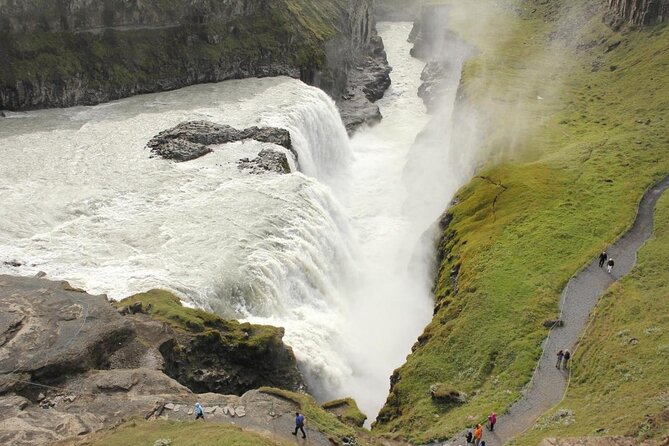
At Gullfoss, meltwater from Langjökull glacier drops into a narrow canyon. The waterfall is broad, loud, and often misty. On a clear day, you may see the glacier in the distance, and sunlight can produce a rainbow over the falls.
The scheduled stop is about 30 minutes. Wear a waterproof shell even if the sky looks calm. The spray can reach the viewing areas, and Icelandic weather can change quickly. You will have time for photographs and the main viewpoint, but this is not a long walk.
More Ice Cave Tours in the world:
- From Vik: Katla Ice Cave and Super Jeep Tour
★ 4.6 · 2,110 reviews - Jökulsárlón: Vatnajökull Ice Cave Guided Tour
★ 4.2 · 2,046 reviews - Skaftafell: Ice Cave Tour and Glacier Hike
★ 4.5 · 1,746 reviews - Jökulsárlón: Crystal Ice Cave Super Jeep Tour
★ 4.1 · 1,681 reviews
Geysir geothermal area
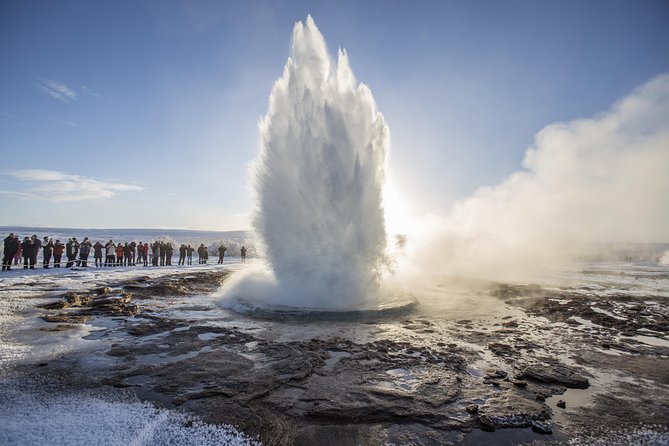
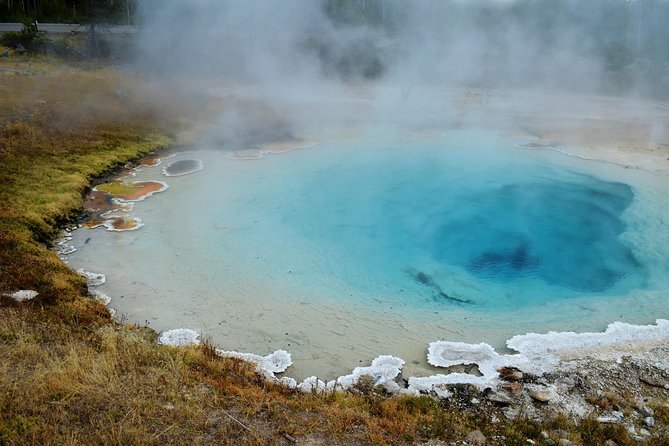
The Geysir area is home to colorful hot springs and two famous geysers. The original Geysir rarely erupts now, but nearby Strokkur usually sends hot water into the air about every five minutes, sometimes reaching 40 meters.
Thirty minutes is generally enough to wait for an eruption or two. Keep to the marked paths. The ground is hot and unstable in places, and the steaming pools are not decorative ponds.
Day one gives you a gentle introduction to Iceland’s natural power. It is also the least strenuous day, which matters because the next stage involves ice, uneven ground, and a long ride toward the southeast.
Day two: waterfalls, glacier boots, and blue ice
The second day is the physical heart of the trip. You leave Reykjavík in the morning and head along the South Coast toward Skaftafell and Vatnajökull. This is when good clothing matters most.
Seljalandsfoss and Skógafoss
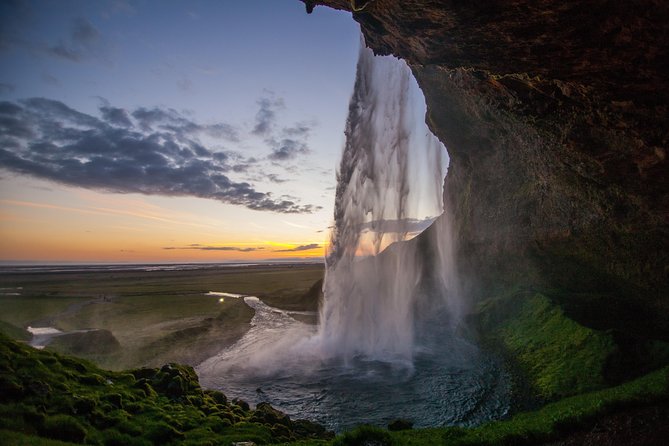
Seljalandsfoss drops from a high cliff and lets you walk behind the falling water when conditions allow. The path is short, but it is wet and can be slippery. Bring waterproof clothing, not just a rain-resistant jacket. Your shoes will also benefit from solid grip.
At Skógafoss, water falls 60 meters into a gorge. A staircase leads to a higher viewpoint, giving you a different angle over the falls and the surrounding country. You have about 30 minutes at each waterfall, so you need to decide quickly between the lower view, the upper steps, and photographs.
The stops are short, but they work well on a driving day. You get two very different waterfalls without using up the time needed for the glacier activities.
The Skaftafell glacier hike
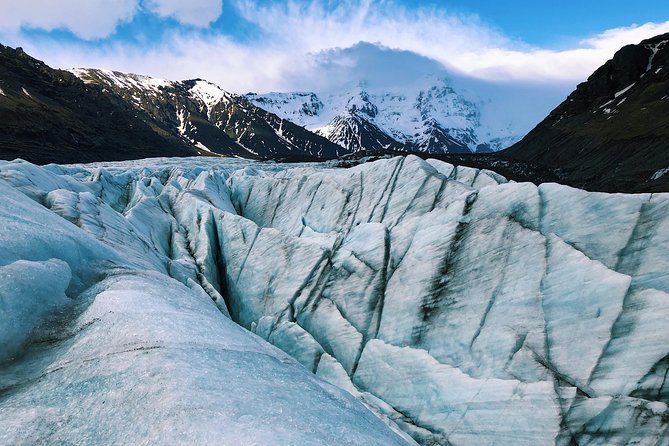
The glacier hike lasts about four hours in total, including preparation and the route to the ice. Specialist guides fit you with crampons, helmets, harnesses, and ice axes before you walk on an outlet glacier connected to Vatnajökull, one of Iceland’s largest glaciers.
The actual time on the ice is about 90 minutes, but do not picture a flat walk across a frozen field. The approach can take about 20 minutes over steep, rocky, uneven ground, and the ice route may include small crevices and changes in surface. One detailed account rated the activity moderate rather than easy, which is the safer way to think about it.
You do not need previous glacier experience. You do need reasonable fitness, balance, and the ability to follow instructions. Waterproof hiking boots that cover the ankles and have hard soles are strongly recommended. You can rent boots, a waterproof jacket, and waterproof trousers when booking, but bringing suitable gear from home may save money.
This is the activity that justifies much of the trip’s price. You are not simply looking at a glacier from a parking area. You are learning how to move on one, with trained guides and proper equipment. The ice, rock, crevasses, and wide views make the experience feel very different from a standard viewpoint stop.
The naturally formed ice cave
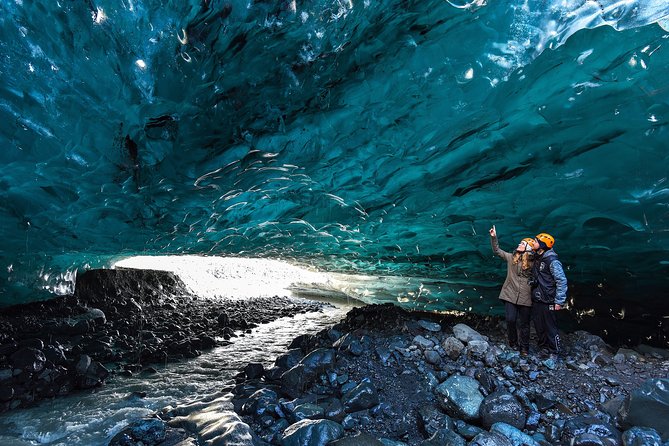
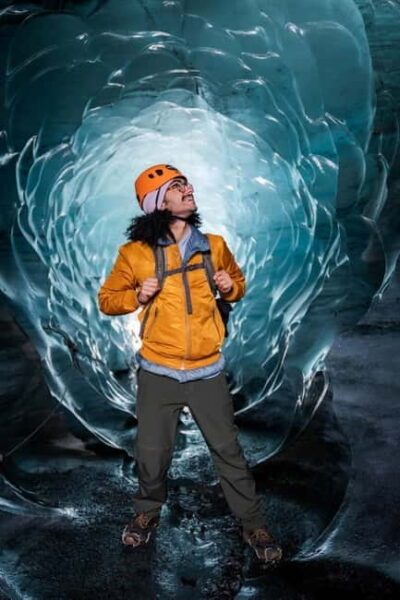
The ice cave is reached after a short but rough hike, then by super jeep across the glacier area. The cave is naturally formed and only accessible in winter, when temperatures are low enough for the formations to remain stable.
Its blue color is the famous feature, but the exact cave cannot be promised. Glaciers move, water enters, and new caves form each year. A cave may be larger, smaller, wetter, or shaped differently from photographs. One November visit found water inside the cave, limiting how far the group could go, yet the ice was still striking.
That uncertainty is part of the experience, not a flaw in the booking. You are seeing a temporary piece of nature. Still, you should book this with flexible expectations rather than a fixed image of a giant blue tunnel.
The super jeep adds a little adventure, but the real point is access. A certified guide and safety gear are required because glacier caves are not safe places to explore alone.
Day three: icebergs, Diamond Beach, and Reynisfjara
The final day begins near Jökulsárlón glacier lagoon, then works back west along the coast. You get some of the most memorable scenery on the route, though the drive back to Reykjavík makes this another long day.
Jökulsárlón glacier lagoon
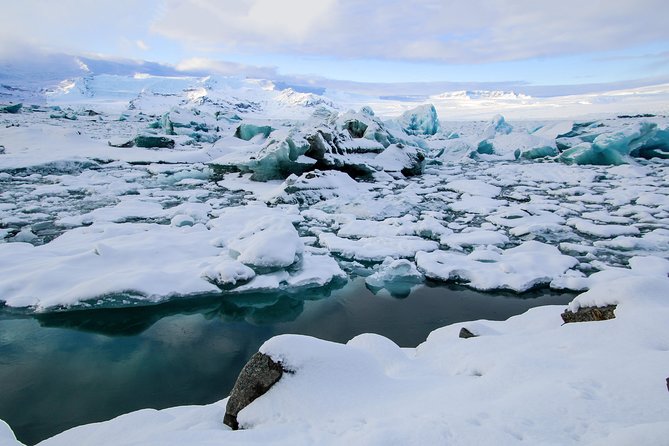
Jökulsárlón is fed by Breiðamerkurjökull, an outlet glacier connected to Vatnajökull. Icebergs break away, float through the deep lagoon, and slowly move toward the sea.
You have about 45 minutes to walk along the shore and watch the ice shift in the water. The setting is quiet, cold, and constantly changing. Some pieces are bright white, while others carry blue tones or dark streaks from volcanic material.
The plan also includes a super jeep ride to a blue ice cave before heading back. The exact order can change with weather, road conditions, and glacier safety. That flexibility is sensible in Iceland, where a perfect schedule on paper can become unsafe within an hour.
Fellsfjara, often called Diamond Beach
Across the road from the lagoon, ice pieces wash onto black volcanic sand. Sunlight catches the clear chunks, making them resemble scattered glass or diamonds.
The stop lasts about 30 minutes. That is enough to walk along a section of beach and photograph the contrast between black sand, white ice, blue ice, and gray ocean. Do not turn your back on the sea. The South Coast is known for powerful waves, and Reynisfjara later in the day requires the same care.
Reynisfjara Beach
Reynisfjara combines black sand, basalt columns, sea stacks, and heavy Atlantic surf. The cliffs and rock pillars offshore make this one of Iceland’s most dramatic coastal stops.
You have about 30 minutes, so stay near the main areas and listen closely to your guide. The waves can reach farther up the beach than expected, and the water is cold and dangerous. In summer, especially from June through August, the cliffs may also provide views of puffins and other nesting birds.
This is a strong final stop because it changes the mood from ice to ocean. You are not simply collecting waterfalls. You are seeing how volcanic rock, glacier ice, and Atlantic water shape the country.
Hotels, food, and Northern Lights chances
Two nights of accommodation and breakfast are included. The hotels are practical rather than luxury resorts. One possible arrangement is Hotel Selfoss for the first night and Hótel Höfn for the second, but properties can change.
The first hotel may offer more comfortable shared areas or better views, while the second may be simpler. Both are intended as warm bases after long days outside. Breakfast is included on both mornings, which saves time and gives you a useful start before departure.
Lunch and dinner are not included. You will stop at cafés, restaurants, or shops during the route, but dinner choices can be limited by arrival time and location. On one evening, the group may eat at the accommodation or a designated restaurant because the bus arrives late. Budget for these meals and do not assume you can choose from several nearby options.
Northern Lights viewing is a welcome extra, not a scheduled show. The hotels are in darker areas to improve your chances, and guides may check conditions during the night. You can still have cloudy skies or weak activity, so do not choose this trip only for the aurora.
What to pack and who should book
Pack waterproof hiking boots with ankle support, a hard sole, and good grip. Add warm layers, gloves, a hat, and waterproof outerwear. The operator offers rentals, including boots for 3,000 ISK and waterproof jackets or trousers for 1,750 ISK each, but rental costs add up quickly.
Bring only one suitcase up to 24 inches per person. Multiple bags are not allowed, and limited vehicle space may require some luggage to go into storage. WiFi is available on board, though the changing scenery is a better reason to look up from your phone.
This trip suits you if you have limited time, want glacier activities without arranging them yourself, and prefer a guide to handle winter roads. It also works well for solo visitors and mixed-age families, as long as everyone can manage uneven ground and follow a tight schedule.
It is less suitable if you want slow mornings, long hikes, or freedom to pick every restaurant. The group must leave each stop on time, and weather can force changes. The maximum of 19 people keeps the experience fairly small, but it is still a group trip.
Is the $1,058 price worthwhile?
For three days, the cost is high but easy to understand. You are paying for two hotel nights, breakfast, a private-style route through major sights, a glacier hike with safety equipment, an ice cave excursion by super jeep, and a guide who also handles the driving.
The strongest value comes from the glacier day. Specialist equipment and trained staff are not optional extras, and arranging that piece independently would take work. The Golden Circle and South Coast stops then fill out the trip without requiring you to rent a car or manage difficult roads.
I would judge the price by your priorities. If you want the most major South Iceland sights in a short stay, it is a strong package. If you want a cheap sightseeing transfer with a few photo stops, it is too expensive.
Should you book this Iceland adventure?
Book it if you want a packed first visit with glaciers, waterfalls, geysers, beaches, and a real chance at the Northern Lights. The guides often add useful stories or extra stops, and the included transport removes much of the stress from planning.
Think twice if the glacier hike sounds tiring, if you dislike long drives, or if you need complete control over meals and timing. Also remember that the ice cave is a living formation and the aurora depends on nature.
For an active three-day introduction to southern Iceland, I would choose this trip with waterproof gear, realistic expectations, and a willingness to accept schedule changes. The best moments are the ones no brochure can fully fix in place: a sudden blue opening in the ice, a waterfall throwing mist across your jacket, or green light appearing above a dark rural hotel.
FAQ
Where does the tour begin?
The tour begins in Reykjavík, with pickup starting at about 8:00 a.m. Pickup can take up to 30 minutes, and some downtown hotels use nearby designated bus stops because of traffic rules.
Is pickup available from Keflavík Airport?
No. Pickup from Keflavík Airport or from outside the greater Reykjavík capital area is not available.
How large is the group?
The tour has a maximum of 19 participants and uses a small minibus.
Are the glacier hike and ice cave equipment included?
Yes. The glacier hike includes safety equipment, and the ice cave trip by super jeep also includes safety equipment. Hiking boots, waterproof jackets, and waterproof trousers are available to rent for additional fees.
Are meals included?
Two breakfasts are included. Lunch and dinner are not included, so you should budget for them separately.
Are the Northern Lights guaranteed?
No. The Northern Lights are a natural phenomenon and cannot be guaranteed. The hotels are located in areas selected to improve viewing chances.
Can the ice cave look different from the photographs?
Yes. The tour visits a naturally formed winter ice cave, and glaciers change each year. The cave’s shape, size, water level, and ice formations may differ from the photographs.
Three-day trips around the world
- All-Inclusive 3 Day/2 Night Halong Luxury Cruise Meals, Cave, Kayaking, Swimming
★ 5.0 · 346 reviews - From Reykjavik: 3-Day South Coast Winter Tour with Ice Cave
★ 4.8 · 171 reviews - Iceland 3-Day Tour Golden Circle, Glacier Lagoon, & Ice Cave
★ 4.8 · 75 reviews
Newly added caves around the world
- Phuket: Starlight Hong Sea Cave & Glowing Plankton by Kayak★ 4.9 · 145 reviews
- Phuket: Monkey Cave, Water Rafting, Zipline with ATV Option★ 3.7 · 161 reviews
- Phuket: Bamboo Rafting, Monkey Cave, and ATV Option★ 3.5 · 129 reviews
- Phong Nha: Zipline Dark Cave & Paradise Cave Exploration★ 4.9 · 84 reviews
- Phranang Cave Sunset with BBQ dinner & Plankton Tour★ 3.2 · 53 reviews
- Phong Nha/Dong Hoi: Phong Nha Cave and Paradise Cave Tour★ 4.9 · 82 reviews
- Phong Nha: Cave Exploration and Zipline Dark Cave Tour★ 4.7 · 87 reviews
- Phong Nha National Park: Paradise Cave Half-Day Tour★ 5.0 · 23 reviews
Reykjavik Cave Tours worth comparing.
Reykjavik: Katla Ice Cave & South Coast Tour
Read our review →
Reykjavik: Snæfellsnes Day Trip with Vatnshellir Lava Cave
Read our review →
From Húsafell: Into the Glacier Ice Cave Adventure
Read our review →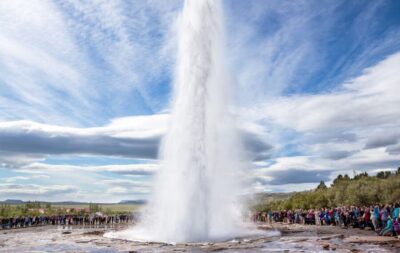
From Reykjavik: Golden Circle and Glacier Ice Cave Tour
Read our review →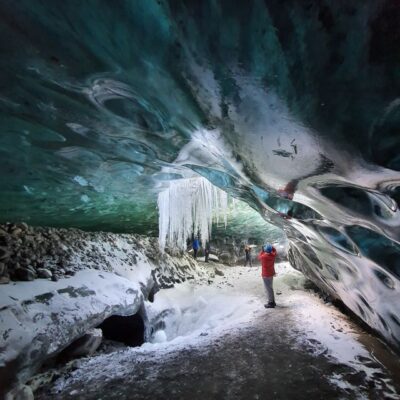
From Reykjavik 2-Day South Coast Tour with Blue Ice Cave
Read our review →
From Reykjavik: Into the Glacier Ice Cave Tour
Read our review →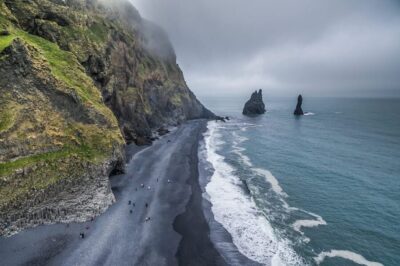
Iceland 3-Day Tour Golden Circle, Glacier Lagoon, & Ice Cave
Read our review →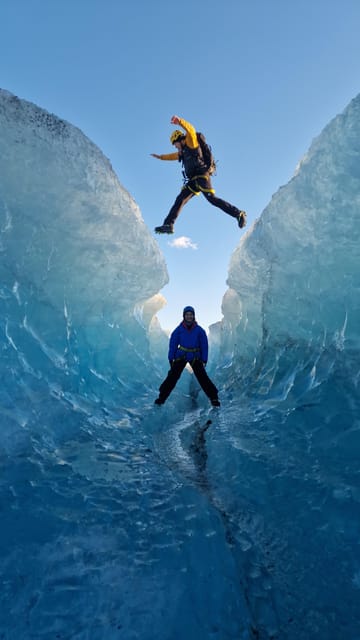
Jökulsárlón: Blue Ice Cave Tour and Glacier Walk
Read our review →Lists this cave tour appears in